Muslim groups urge Kerala to follow TN, West Bengal in 'rejecting' Waqf Amendment Act
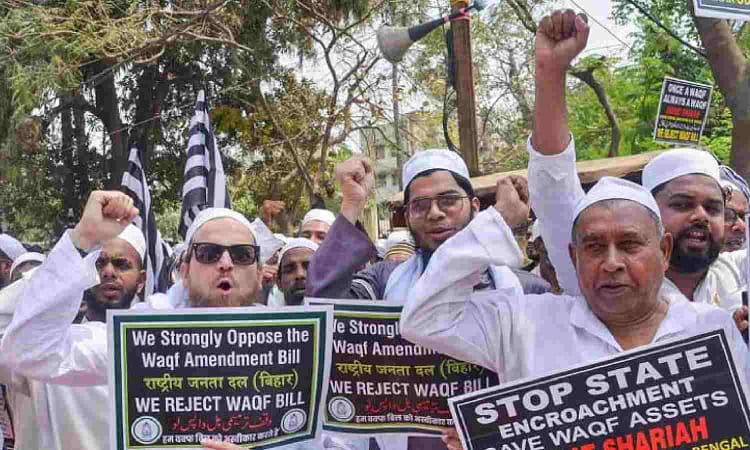
Thiruvananthapuram (PTI): Muslim organisations in Kerala have called on the state's Left government and opposition parties to pass a joint resolution saying the controversial Waqf Amendment Act will not be implemented in the state.
They wanted the state to take a cue from Tamil Nadu and West Bengal. While West Bengal Chief Minister Mamata Banerjee declared that she would not implement the act in her state, Tamil Nadu Assembly passed a resolution demanding the Centre to roll back the Waqf amendment bill even before it was passed by the parliament. DMK, the ruling party in Tamil Nadu, has moved the Supreme Court challenging the Waqf Amendment Act.
"Stalin has already made an announcement, and their assembly has passed a resolution against the implementation of the Wakf Amendment Act. We demand that the Kerala government should also pass such a resolution," Thodiyur Muhammed Kunji Moulavi, General Secretary of the South Kerala Jamiatul Ulama, told PTI on Thursday.
Several other Muslim organisations, which jointly organised a march to the Raj Bhavan in Kerala on Thursday in protest against the recently passed legislation, have raised the same demand.
The Muslim leaders described the amendment as an attempt to "eradicate Muslims from the country" and to seize all their properties, including Waqf assets, which Muslim families have been donating for the benefit of the poor in the country for generations.
"Until the death of the last Muslim in this country, we will not allow this anti-democratic law to be implemented. Our Raj Bhavan march is just the beginning, and we may even organise a massive protest rally to Parliament," said Kadakkal Abdul Azeez Moulavi, President of the Kerala Muslim Jamaath Federation.
He said that, along with the Muslims in this country, all those who believe in secularism and democracy would join hands to fight against the newly amended Waqf Act.
The Muslim associations have threatened to organise larger protests in the coming days and expressed hope that the Supreme Court will, by then, take a democratic decision against the amendments.
CPI national executive member and former MP, Panniyan Raveendran, who also participated in the programme, said that all those who oppose the religious polarisation of the BJP/RSS would join hands with their Muslim brethren to fight against such discrimination.
"We know how we live and the love we have for each other. The BJP or RSS do not even deserve to utter the name of Hindu. This is an organised attempt to loot properties for their corporate friends. After targeting Muslims, they are now targeting Christians," Raveendran claimed.
The Muslim organisations stated that they would continue their peaceful protests against the amendments and would also seek legal remedies against the implementation of an anti-democratic law.
The Waqf (Amendment) Act, which was passed by Parliament last week, has come into force from April 8, 2025.
While the BJP-led NDA had rallied in support of the bill, the Opposition INDIA bloc united in opposing it.
Let the Truth be known. If you read VB and like VB, please be a VB Supporter and Help us deliver the Truth to one and all.
Bhojshala case: Disputed structure built from remains of pre-existing temples, claims ASI
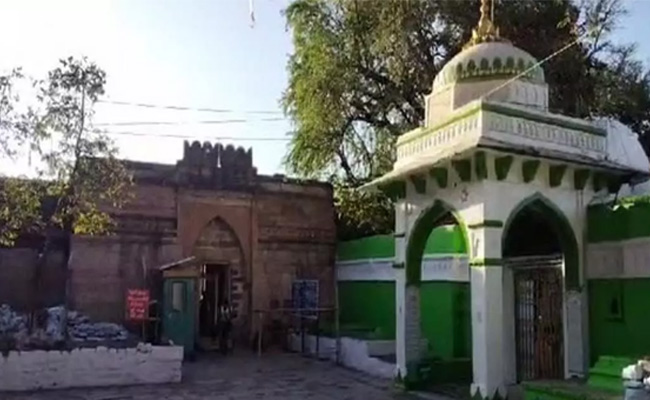
Indore (PTI): The ASI has told the Madhya Pradesh High Court that a massive structure dating back to the Paramara kings' rule existed at the disputed Bhojshala temple-Kamal Maula mosque complex, and the current structure was built from the remains of temples.
The Archaeological Survey of India (ASI) made the claim on Tuesday based on its 98-day scientific survey and over 2,000-page report.
The Hindu community considers Bhojshala a temple dedicated to Vagdevi (Goddess Saraswati), while the Muslim side claims the monument as the Kamal Maula Mosque. The disputed complex is protected by the ASI.
During the hearing before Justices Vijay Kumar Shukla and Alok Awasthi of the HC's Indore bench, Additional Solicitor General Sunil Kumar Jain, representing the ASI, presented a detailed account of the scientific survey conducted two years ago at the complex.
Referring to the ASI's survey report, he said, "Retrieved architectural remains, sculptural fragments, large slabs of inscriptions with literary texts, Nagakarnika inscriptions on pillars, etc, suggest that a large structure associated with literary and educational activities existed at the site. Based on scientific investigations and archaeological remains recovered during the investigations, this pre-existing structure can be dated to the Paramara period."
It can be said that the existing structure was made from the parts of earlier temples, based on scientific investigations, survey and archaeological excavations conducted, study and analysis of retrieved finds, study of architectural remains, sculptures, and inscriptions, art and sculptures, Jain said quoting the report.
Summarising the report, he also drew the court's attention to the fact that the archaeological study identifies that many architectural components, such as pillars and beams, were originally part of temple structures before being repurposed for a mosque.
"The evidence of this transition includes Sanskrit and Prakrit inscriptions that were damaged or hidden, alongside sculptures of deities and animals that were often mutilated or defaced," Jain contended.
The report also states that "all Sanskrit and Prakrit inscriptions are older than the Arabic and Persian inscriptions, indicating that users or engravers of the Sanskrit and Prakrit inscriptions occupied the place earlier".
In light of the Muslim side's earlier objections, the bench wanted to know why there were some discrepancies in the ASI's responses regarding the status of the disputed complex in the cases filed over the years.
The Additional Solicitor General argued that earlier studies of the complex involved only officials, while the current survey involved scientists and the use of advanced technologies such as Ground Penetrating Radar (GPR).
The hearing in the Bhojshala case will continue on Wednesday.
The high court has been regularly hearing four petitions and one writ appeal regarding the religious nature of the Bhojshala temple-Kamal Maula mosque complex since April 6.