Nagarjuna Sagar dam row: 'Andhra, Telangana agree to revert to water release terms as on Nov 28'
Hyderabad (PTI): Andhra Pradesh and Telangana have agreed to Union Home Secretary Ajay Bhalla's proposal that both states revert to the release of Nagarjuna Sagar waters as on November 28, after he held a video conference on Friday with chief secretaries and DGPs of both states on the dispute over the dam.
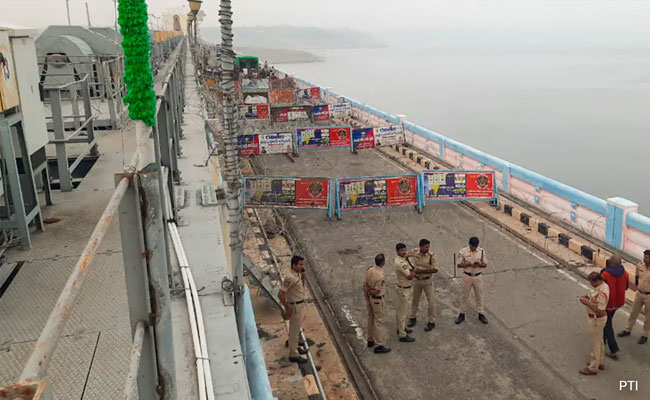
Andhra Pradesh took charge of part of the Nagarjuna Sagar Dam on November 29 using state police and "unilaterally" began releasing water through the right canal, leading to tensions between the two states.
However, the states have accepted Bhalla's proposal to revert to the release of Nagarjuna Sagar waters as on November 28, even as the CRPF will supervise the dam, a press release from the Telangana government said here today.
Telangana Chief Secretary Santhi Kumari alleged that on the November 29 night, about 500 armed policemen from the neighbouring state came to Nagarjuna Sagar Dam and damaged the CCTV cameras and released about 5,000 cusecs of water by opening the head regulators located at gate number 5 and 7.
The move by Andhra Pradesh created "law and order issues" in Telangana subsequently, when polling for the state assembly electionswas going on, she said, expressing concern that it would seriously disrupt the drinking water supply of two crore people of Hyderabad and surrounding areas.
Meanwhile, two cases were registered against Andhra Police in Nalgonda district of Telangana after they allegedly took control of half of the Nagarjuna Sagar dam, barricading a part of it and restraining the entry of Telangana police and irrigation department officials on the site, police said on Friday.
The cases were booked against AP Police under relevant sections of the IPC on charges of wrongful restraint, trespass and mischief, among others. The Telangana Police are also in the process of adding sections under the Public Property Damage Act against them, a senior police official told PTI.
On the intervening night of November 29 and November 30, a large contingent of police forces from Andhra Pradesh "barged" in at the Nagarjuna Sagar dam site in Nalgonda district around 1 am and allegedly pushed aside the Special Protection Force (SPF) of Telangana guarding the access points of the dam, resulting in tensions between the two states.
The AP Police force then took control of half of the dam, which has 26 gates, and erected several layers of barricades and barbed wire around it. Subsequently, AP Irrigation authorities also released water from the right canal, Telangana police had said.
Two complaints were filed against AP Police, one by an official of the Telangana Special Protection Force, who accused AP Police of causing damage to the gate and CCTVs and forcefully evicting Telangana SPF personnel from access points where they were posted as part of security.
The SPF official also said that they were wrongfully restrained by AP Police.
The second complaint was lodged by Telangana Irrigation department authorities against AP Police, accusing them of damage and wrongful restraint, police said.
Additional police personnel from Telangana were deployed following the incident, the official added.
Nagarjuna Sagar dam, built over river Krishna, is under the control of Telangana government, they said.
Let the Truth be known. If you read VB and like VB, please be a VB Supporter and Help us deliver the Truth to one and all.
4 held for sexually assaulting woman, girl on moving bus after social media alert in UP's Agra
Agra (UP) (PTI): Four people were arrested, after a prompt response by police following a social media alert, for allegedly sexually assaulting a woman and a girl inside a moving bus here, officials said on Tuesday.
According to an official police statement, at 12:27 am on April 27, information was received on the social media platform X about an incident of sexual assault on a bus travelling from Kanpur to Ahmedabad, which was approaching Namner crossing in Agra.
Acting under the direction of Police Commissioner Deepak Kumar, the Agra Police social media team immediately alerted the Rakabganj police station within minutes and coordinated with the victims to confirm the incident and obtain the exact location, it stated.
Police teams launched intensive checking at Namner crossing and intercepted the bus as it reached the spot. The four accused involved in the incident were apprehended on the spot, and legal action was initiated against them, the statement said.
The police said the swift response and coordination between the social media team and field units ensured timely action, bringing relief to the victims and other passengers, who expressed gratitude towards the police, it added.