NDA govt will fall in a year; INDIA bloc may pose as alternative: AAP's Sanjay Singh
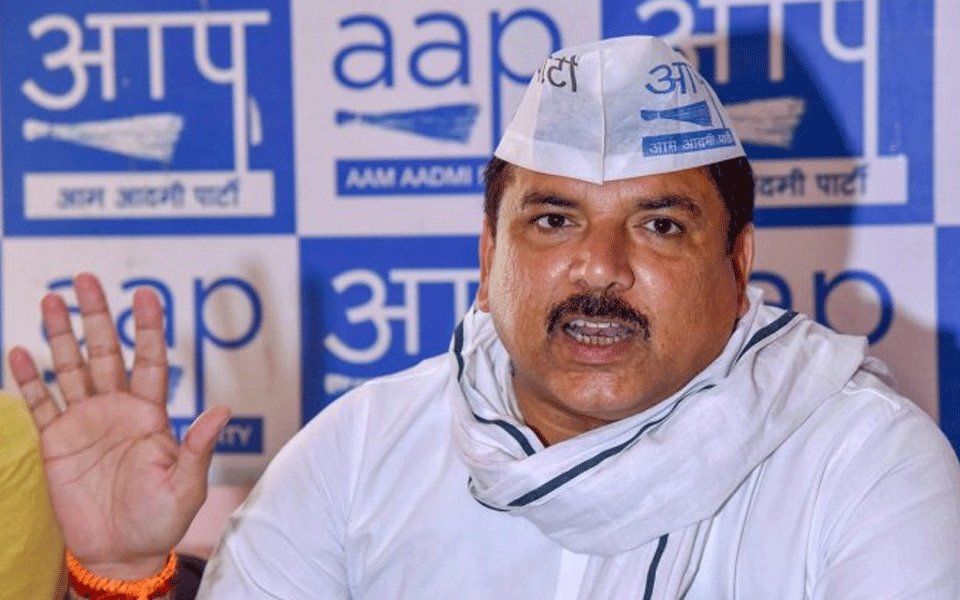
Noida, Jun 13: Aam Aadmi Party leader Sanjay Singh on Thursday claimed that the coalition government at the Centre will not be able to run beyond a year and the INDIA bloc will present itself as an alternative whenever there is an opportunity.
The Rajya Sabha MP also said that if any of the NDA allies puts up its candidate for the post of Speaker in the Lok Sabha then INDIA bloc parties may consider extending support to them.
The AAP leader, who was in Noida for a meeting of the party's Uttar Pradesh unit, also slammed the BJP over the jailing of the opposition leader.
"Today you have put our chief Arvind Kejriwal in jail, Manish Sisodia, Satyendar Jain, Hemant Soren in jail. I too was in jail for six months. Sanjay Rawat, Anil Dshmukh etc are in jail. The BJP will break down its ally parties. You want to do politics by suppressing the opposition, the people of this country will not tolerate this," Singh said.
The AAP leader said the way the BJP gave "token ministries" to allies, was "a clear indication that the BJP will break its allies and this coalition government will not run beyond one year."
"We have seen one NDA government fall down in 13 days, another in 13 months and now this third government of Narendra Modi will not be able to complete one year.
"We are monitoring the political activities and whenever there is an opportunity for an alternative government, the current government, the dictatorial government, will be removed," Singh told reporters.
He said the AAP has appealed to TDP and other NDA partners that if the BJP does not appoint their leader as Speaker, the INDIA bloc parties "will consider extending support to them."
"This is my personal opinion that if the Speaker belongs to the Bharatiya Janata Party then there will be three major losses. First, it will shatter the Constitution.
"Second, we have seen for the first time that 150 MPs were suspended and sent out of the parliament for the first time in history ... The third point is that small parties which have two or three MPs will be broken down. Parties like RLD, JDS, TDP, JDU," he claimed.
"I'm not saying all this without any substance. I am a member of Rajya Sabha and the BJP has broken four TDP members there. This was done when the TDP was not a member of the NDA. The TDP must remember the BJP's history," he added.
Singh alleged that the BJP also indulged in political manipulations to form its government in Madhya Pradesh, Uttarakhand, Arunachal Pradesh, Karnataka, Maharashtra. "This is what they do."
The executive meeting here was attended by all eight Uttar Pradesh units of the party.
"In the coming days, we have to expand the party in Uttar Pradesh and that is what we discussed here today. We will have a conference for party workers in Lucknow on July 14," Singh said.
Let the Truth be known. If you read VB and like VB, please be a VB Supporter and Help us deliver the Truth to one and all.
Mamata visits Bhabanipur EVM strong room, warns against counting irregularities
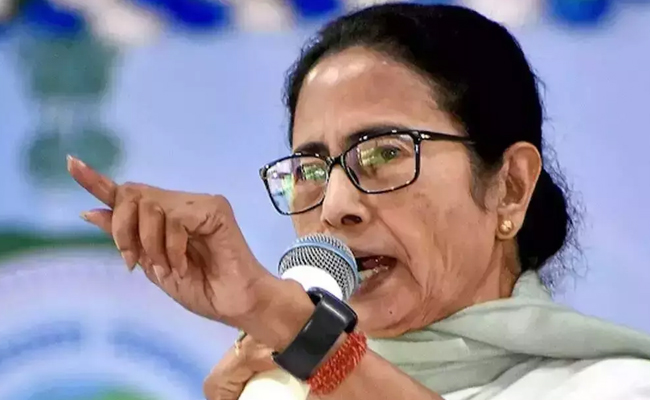
Kolkata (PTI): West Bengal Chief Minister and TMC supremo Mamata Banerjee early Friday warned against any attempt to tamper with the counting process, hours after she visited an EVM strong room in Bhabanipur, alleging possible malpractice.
Banerjee, who emerged around 12:07 am after spending nearly four hours at the counting centre for her Bhabanipur constituency housed in Sakhawat Memorial School in south Kolkata, said only one person would be allowed inside the designated counting area.
"Either the candidate or one agent can stay upstairs. I have also suggested installation of a CCTV camera for the media," she told reporters.
Stressing the need for transparency, she said, "It is essential to maintain transparency. People’s votes must be protected. I rushed here after receiving complaints. The central forces initially did not allow me to enter."
Sounding a stern note ahead of the May 4 counting, she added, "If there is any plan to tamper with the counting process, it will not be tolerated."
On Thursday evening, Banerjee had reached the Bhabanipur Assembly segment counting centre, which houses the strong room for EVMs used in the April 29 polling, citing suspicion of tampering with the machines.
She entered the premises along with her election agent and remained inside for hours, even as Kolkata Mayor and TMC candidate from the Kolkata Port segment Firhad Hakim reached the spot but could not meet her.
"I reached here upon learning that the chief minister has arrived. But I couldn’t meet her since she was already inside the premises, exercising her right as a candidate to visit strong rooms. I wasn’t allowed there. I will not be able to confirm what exactly is transpiring inside," Hakim said.
The development coincided with protests by TMC candidates Kunal Ghosh and Shashi Panja outside the Khudiram Anushilan Kendra in north Kolkata, where they staged a sit-in alleging irregularities and possible tampering of EVMs stored in strong rooms, leading to face-offs between TMC and BJP supporters.
Earlier in a video message, Banerjee had urged party leaders, workers and polling agents to maintain a 24-hour vigil on EVM strong rooms, alleging that the BJP could attempt to tamper with the machines before counting begins.
Her remarks come amid heightened political tension in the state following a fiercely contested Assembly election, with parties closely monitoring arrangements and raising concerns over transparency.