NDA will secure record win, 'jungle raj people' will suffer their worst defeat: PM Modi
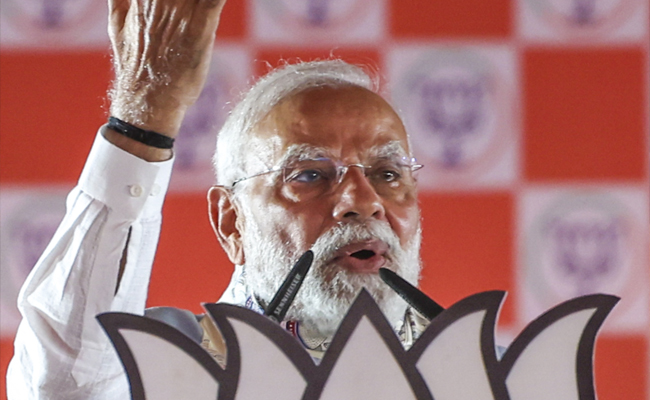
New Delhi (PTI): Prime Minister Narendra Modi on Tuesday asserted that the people of Bihar have made up their mind to ensure that the NDA breaks the record of its scale of victory in the last 20 years, while the "jungle raj people" would suffer their worst defeat at the hustings in the state.
Modi said he is addressing rallies in Bihar and every rally is breaking the record of the previous one, with women coming in very large numbers.
"The women workers of the Bihar BJP are doing splendid work with the resolve of 'Mera Booth, Sabse Mazboot'," Modi said, interacting with women BJP-NDA workers in Bihar via NaMo App.
"I have been observing the polls closely and it is confirmed that the NDA is winning and it is winning big. So I have no questions about the victory but (I want) there should be more and more polling," the prime minister said.
Interacting with a BJP worker who said there is tremendous enthusiasm among the people for the NDA, Modi said her words echo the feeling prevailing among the poor, Dalits, Maha Dalits, backward and extremely backward.
"People of Bihar have made up their mind to break the record of the scale of victory of the NDA in the last 20 years while the 'jungle raj people' will suffer their worst defeat in the state," he said.
The prime minister has been using the "jungle raj" analogy to attack the Mahagathbandhan. 'Jungle raj' is an apparent reference to the time when Bihar was under the rule of RJD chief Lalu Prasad and his wife Rabri Devi.
In his remarks, Modi said the NDA government is committed to improving the ease of living for women and empowering them.
Bihar will go to polls in two phases on November 6 and 11. The counting of votes will be taken up on November 14.
The INDIA opposition bloc has declared Rashtriya Janata Dal (RJD) leader Tejashwi Yadav its chief ministerial candidate for the Bihar polls.
Let the Truth be known. If you read VB and like VB, please be a VB Supporter and Help us deliver the Truth to one and all.
Madhu Kishwar booked over misleading content on social media
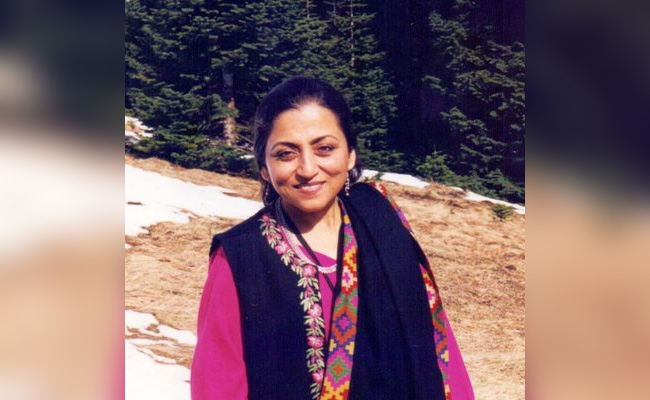
Chandigarh (PTI): Madhu Kishwar has been booked following a complaint by a Chandigarh resident over the alleged circulation of forged and misleading content on social media.
An FIR has been lodged against Kishwar and some other social media users under relevant sections, including 196 (criminalises acts that promote enmity, hatred, or ill-will between groups based on religion, race, language), 336 (1) (forgery) and 356 (criminal defamation) of Bharatiya Nyaya Sanhita and the IT Act at Police Station Sector-26 here.
According to an official statement issued by the Chandigarh police on Monday, a city-based complainant on April 19 alleged that some forged and misleading social media posts and video clips with obscene text and content were being circulated by various social media users, misidentifying the person in the video.
Further investigation into the matter is underway.
As per the complainant, it is a deliberate act of creating a false electronic record using obscene words and phrases, having knowledge and sufficient reason to believe that the posts are misleading and false, with the intent to cause damage or injury.
The video, which circulated with the intent to cause harm to the reputation of a constitutional authority and to disturb public peace and tranquility, should be investigated, and appropriate action should be taken, according to the complainant.
As per the complainant, the person seen in the video is a travel vlogger whose wife regularly posts updates about their activities on social media. The original video was shared from her social media account.
"As per the statement of the woman, she disclosed that the person in the video shared from her account is her husband. Statements of her husband and another lady in the video have also been recorded during preliminary investigation," said police in the statement.
Meanwhile, Kishwar, in a social media post, said a team of Chandigarh police had visited her late Monday night to serve her notice regarding the FIR registered against her.
"Since the law forbids the police to visit or arrest women after dark and before sunrise, I spoke on phone to the leader of the delegation. She told me that their team has come to serve notice regarding an FIR registered against me in Chandigarh. I insisted that they go by the law and come in the morning," she wrote on X.