Nepal, India discuss revising transit treaty

Kathmandu, April 24: Nepalese and Indian officials began talks here on Tuesday to revise a Transit Treaty allowing a transit facility to Kathmandu through Indian waterways.
A sub-committee level meeting under the Inter-Governmental Committee (IGC) kicked off in Kathmandu, reports Xinhua news agency.
The commerce secretary level talks will start on Thursday.
During Nepali Prime Minister K.P. Sharma Oli's visit to India from April 6 to 8, the two countries issued a joint statement on new connectivity through inland waterways, opening the door for Nepal to reach the sea through waterways for the first time.
If Nepal establishes direct access to the sea through waterways, experts said that it would reduce the cost of doing trade for the landlocked Himalayan nation.
"The two sides are going to discuss on technicalities of incorporating the issue in the Transit Treaty," Rabi Shankar Sainju, joint secretary at the Ministry of Industry, Commerce and Supply, told Xinhua.
"As it is the first time that two sides are discussing on adding waterway as mode of transit facility, we will basically discuss and try to finalize the content to be incorporated in the Treaty."
According to Madhav Belbase, joint secretary at the Water and Energy Commission, Nepal and India might have to form a joint study team to conduct the procedure.
Let the Truth be known. If you read VB and like VB, please be a VB Supporter and Help us deliver the Truth to one and all.
US VP JD Vance says Lebanon not part of ceasefire, calls it ‘misunderstanding’
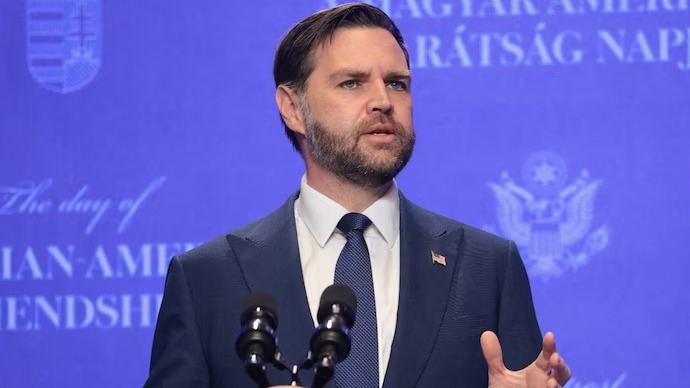
Budapest/Washington: US Vice President J D Vance has said that Lebanon was never included in the ceasefire understanding with Iran, describing the confusion as a “legitimate misunderstanding”.
Speaking to reporters before departing from Hungary, Vance said, “I think the Iranians thought that the ceasefire included Lebanon and it just didn’t. We never made that promise.”
He stressed that the United States had not included Lebanon in the scope of the ceasefire at any stage.
His remarks come amid continued Israeli strikes in Lebanon, where more than 200 people were reported killed, even as ceasefire talks between Iran and the US move forward.
Vance said Israel had “offered … to check themselves a little bit in Lebanon because they want to make sure that our negotiation is successful”.
He warned that if Iran allows the situation in Lebanon to affect the negotiations, it could derail the talks.
“If Iran wants to let this negotiation fall apart in a conflict where they were getting hammered over Lebanon, which has nothing to do with them and which the United States never once said was part of the ceasefire, that’s ultimately their choice,” he said.