New NCERT textbooks: Mughals, Delhi Sultanate dropped; 'sacred geography', Maha Kumbh added
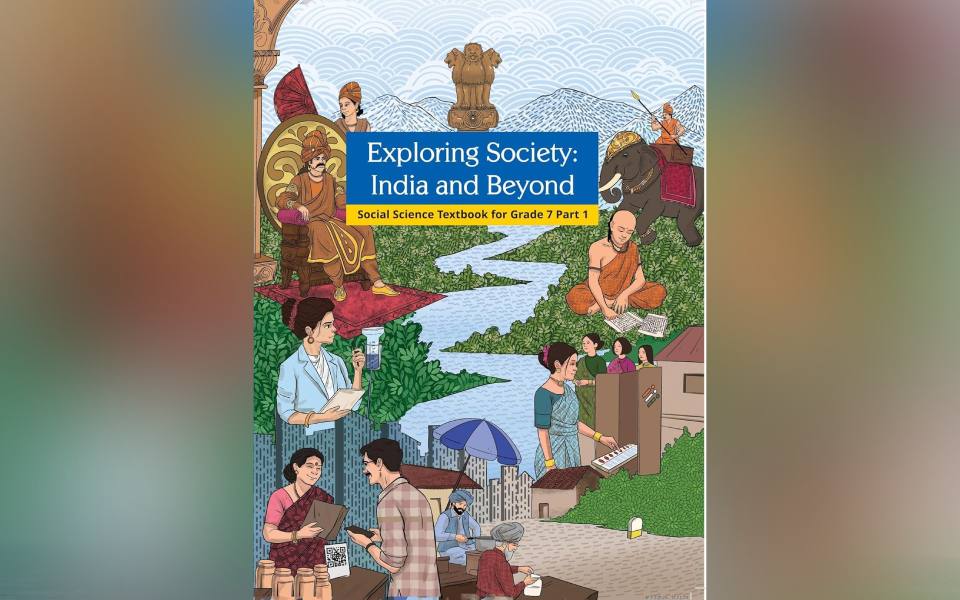
New Delhi, Apr 27 (PTI): All references to Mughals and Delhi Sultanate have been dropped from class 7 NCERT textbooks, while chapter on Indian dynasties, 'sacred geography,' references to Maha Kumbh, and government initiatives like Make in India and Beti Bachao, Beti padhao are among the new additions.
The new textbooks released this week have been designed in line with the new National Education Policy (NEP) and the National Curriculum Framework for School Education (NCFSE) 2023, which emphasise incorporating Indian traditions, philosophies, knowledge systems, and local context into school education.
When contacted, NCERT officials said these are only first part of the book and second part is expected in coming months. They, however, did not comment on whether the dropped portions will be retained in the second part of the book.
While NCERT had previously trimmed sections on the Mughals and Delhi Sultanate — including detailed account of dynasties like Tughlaqs, Khaljis, Mamluks, and Lodis and a two-page table on Mughal emperors' achievements as part of its syllabus rationalisation during the COVID-19 pandemic in 2022–23, the new textbook has now removed all references to them.
The book now has all new chapters with no mention of Mughals and Delhi Sultanate throughout.
The Social Science textbook "Exploring Society: India and Beyond" has new chapters on ancient Indian dynasties like the Magadha, Mauryas, Shungas, and Sātavāhanas with a focus on "Indian ethos."
Another new edition in the book is a chapter called "How the Land Becomes Sacred" that focuses on places considered sacred and pilgrimages across India and outside for religions like Islam, Christianity, Judaism, and Zoroastrianism, Hinduism, Buddhism and Sikhism.
The chapter introduces concepts like "sacred geography" detailing networks of such places as 12 jyotirlingas, the char dham yatra, and the "Shakti pithas." The chapter also details such places as river confluences, mountains, and forests, which are revered.
The text includes a quote from Jawaharlal Nehru, who described India as a land of pilgrimages — from the icy peaks of Badrinath and Amarnath to the southern tip at Kanyakumari.
The textbook claims that while the varna-jati system initially provided societal stability, it later became rigid, particularly under British rule, leading to inequalities.
The Maha Kumbh mela held in Prayagraj earlier this year also finds mention in the book and states that how around 660 million people participated in it. There is no mention of the stampede in which 30 pilgrims died and several injured.
References to government initiatives like Make in India, Beti Bachao Beti Padhao and the Atal Tunnel, have been included in the new textbook.
The book also has a chapter on the Constitution of India, which mentions that there was a time when people were not allowed to fly the national flag at their homes.
"This changed in 2004 when a citizen felt it was his right to express pride in his country and challenged the rule in court. The Supreme Court agreed, saying that flying the flag is part of the Fundamental Right to Freedom of Expression. We can now fly the tricolour with pride, keeping in mind that it should never be dishonoured," the chapter read.
In English textbook "Poorvi," out of 15 stories, poems, and narrative pieces, nine are by Indian writers or feature content and characters that are Indian, including works by Rabindranath Tagore, APJ Abdul Kalam, and Ruskin Bond.
The earlier textbook called "Honeycomb" had 17 stories, poems, and other writings, including four by Indian writers.
The revamp of NCERT textbooks has been met with criticism from opposition parties which equate the revamp with "saffronisation."
NCERT Director Dinesh Prasad Saklani had in an interview to PTI last year claimed, "teaching about riots can make young children negative citizens."
Let the Truth be known. If you read VB and like VB, please be a VB Supporter and Help us deliver the Truth to one and all.
EC role, Hindu vote consolidation among factors for BJP win in Bengal polls: J-K CM Omar
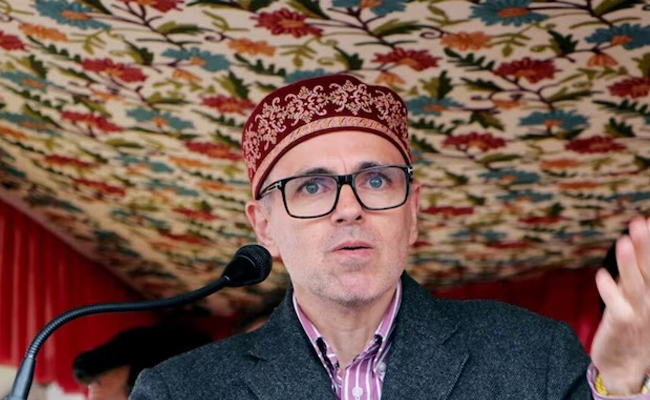
Srinagar (PTI): Jammu and Kashmir Chief Minister Omar Abdullah on Tuesday attributed the BJP's West Bengal win to a "significant role" played by the Election Commission (EC), alongside a consolidation of Hindu votes and a fractured minority mandate.
Abdullah also said the INDIA bloc needs to define its role in the political landscape of the country and make it clear whether the opposition alliance was limited to the parliamentary elections or extended to the state elections as well.
Talking to PTI Videos, Abdullah hinted that the EC has compromised its neutrality by conducting the Special Intensive Revision (SIR) in West Bengal and linked it to the BJP's gains in the state, claiming large-scale deletion of legitimate voters.
On the performance of the BJP in the just concluded assembly elections, Abdullah said the saffron party has almost nothing to show in southern states.
"So then you look at West Bengal and Assam. Yes, the BJP improved its tally in Assam. There are various reasons for that. You know as well as I do, what those are. West Bengal, I think we need to look at the results very carefully," he said.
"The easiest explanation for the West Bengal result is the serious curtailing of voter list," Abdullah said.
"Voters found their names deleted. People who served in uniform and fought for this country on the borders, who were considered Indian citizens all their lives, were suddenly held to a higher standard and not allowed to vote. Something is not right," he said.
While alleging that the EC played a "significant part" in the results, the chief minister admitted the outcome was multifaceted and noted a consolidation of over 60 per cent of the Hindu vote towards the BJP and a "significant fracture" in the minority vote, particularly in seats where Muslims constitute over 50 per cent of the population.
"There is no doubt that the role of the Election Commission played a significant part in the results but we will also have to look at the other factors," he said.
He said the results of West Bengal cannot be compared to those in other states. "The situation was unique to West Bengal. The SIR that was done, the way in which the voter lists were changed, the sort of minute scrutiny that the Election Commission subjected West Bengal to, the role of the central investigative agencies.
"All of these are situations that at least in recent electoral history of India are unique to West Bengal. So to suggest that we can learn lessons from West Bengal and implement them in other parts of the country, I think would not be correct," he said.
Abdullah had recently said that if the West Bengal results throw a surprise, the role of EC will come under scrutiny.
However, during Tuesday's interview, the chief minister said he still maintains that electronic voting machines (EVMs) do not lead to vote theft.
"What we saw in West Bengal...I know there are a lot of people who believe that the EVMs themselves are flawed. I am not a proponent of that conspiracy theory.
"But I do believe that the Election Commission has done itself no favours in the way in which it has gone about both the process of delimitation and the process of finalisation of electoral rolls," he said and cited the example of delimitation exercise in Jammu and Kashmir or Assam.
"These are clear examples of how the process was done to benefit one party or in the case of Jammu and Kashmir, one party and its allies. And the results speak for themselves. You created seven new seats in Jammu and Kashmir and out of those six seats were won by the BJP. You redrew assembly constituencies to benefit one particular party or its allies. And the same is true for West Bengal as well," he said.
Referring to the INIDA bloc, he said the election results were no new message for the alliance.
"We need to decide what the INDIA bloc is for. Is it only for Parliament or for state elections as well?" he asked.
"What happened in West Bengal is unfortunate. The Congress and TMC fought against each other. Now the Congress agrees with Mamata Banerjee that 100 seats were stolen, but the fact is they fought each other," he said.
Despite the friction, Abdullah reaffirmed the "pre-eminent position" of the Congress within the opposition alliance, dismissing the idea of any other party assuming the mantle.
"The Congress is the only party other than the BJP with a pan-India presence. All of us acknowledge this," he stated.
"To suggest someone else can assume a leadership role would be incorrect. Kharge Sahib is the president of the Congress, and by virtue of that, he assumes leadership of the INDIA bloc meetings. That is the way it should be," the chief minister said.
Abdullah said any 'Common Minimum Programme' would depend on whether the opposition alliance decides to fight state assembly elections collectively, noting that he would share his specific views with the bloc internally rather than through the media.