NMC puts on hold its regulations mandating doctors to prescribe generic drugs
bar them from endorsing any drug brand
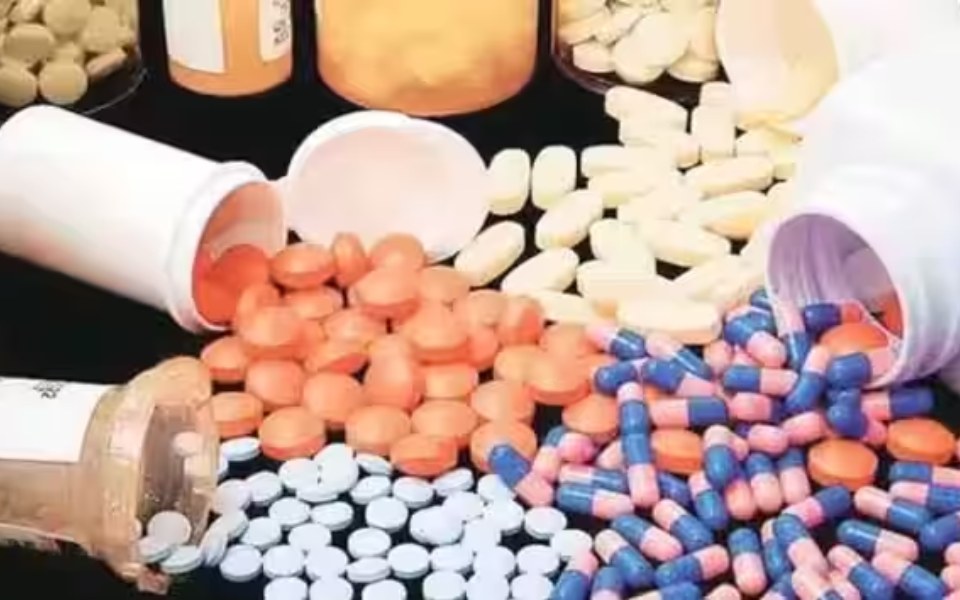
New Delhi, Aug 24: The National Medical Commission (NMC) on Thursday put on hold the regulations that make it mandatory for doctors to prescribe generic drugs and bar them from accepting gifts from pharma companies or endorsing any drug brands.
The Registered Medical Practitioner (Professional Conduct) Regulations, 2023, were published on August 2.
However, the Indian Medical Association (IMA) and Indian Pharmaceutical Alliance (IPA) had expressed concern over the NMC making it mandatory to prescribe generic medicines saying this was not feasible because of the uncertainty about their quality.
They also suggested that registered medical practitioners should be allowed to attend conferences sponsored by pharmaceutical companies or the allied health sector.
They said the regulation barring doctors from attending conferences sponsored by pharma companies warrants reconsideration and also demanded that associations and organisations should be exempted from the purview of NMC guidelines.
Members of the IMA and IPA had met Mansukh Mandaviya on Monday and expressed their concerns over the regulations.
The NMC in its 'Regulations relating to Professional Conduct of Registered Medical Practitioners" stated that all doctors must prescribe generic drugs, failing which they will be penalised and even their licence to practice may also be suspended for a period.
It also asked doctors to avoid prescribing branded generic drugs.
In a notification issued on Thursday, the NMC said, "... That National Medical Commission Registered Medical Practitioner (Professional Conduct) Regulations, 2023, are hereby held in abeyance with immediate effect.
"That for removal of doubts, it is clarified that the National Medical Commission Registered Medical Practitioner (Professional Conduct) Regulations, 2023, shall not be operative and effective till further Gazette Notification on the subject by the National Medical Commission."
The commission also said that it adopts and makes effective with immediate effect the "Indian Medical Council (Professional Conduct, Etiquette and Ethics) Regulations, 2002", as if the same have been made by the commission by virtue of the powers vested under the National Medical Commission Act, 2019.
"That for removal of doubts, it is clarified that Indian Medical Council (Professional Conduct, Etiquette and Ethics) Regulations, 2002, shall come into force with immediate effect," the notification by NMC said.
According to the regulations, registered medical practitioners and their families "must not receive any gifts, travel facilities, hospitality, cash or monetary grants, consultancy fee or honorariums, or access to entertainment or recreation from pharmaceutical companies or their representatives, commercial healthcare establishments, medical device companies, or corporate hospitals under any pretext".
However, this does not include salaries and benefits that registered medical practitioners may receive as employees of these organizations, the regulations stated.
Also, these practitioners should not be involved in any third-party educational activity like CPD, seminar, workshop, symposia, conference, etc., which involves direct or indirect sponsorships from pharmaceutical companies or the allied health sector.
A registered medical practitioner "individually or as part of an organization/ association shall not give to any person or to any companies or to any products or to software/platforms, whether for compensation or otherwise, any approval, recommendation, endorsement... concerning any drug brand, medicine, nostrum remedy, surgical, or therapeutic article, apparatus or appliance or any commercial product or article with respect of any property, quality or use thereof or any test, demonstration or trial thereof, for use in connection with his name, signature, or photograph in any form or manner of advertising through any mode nor shall he boast of cases, operations, cures or remedies...", the regulations said.
The practitioners who attend to the patient will be fully accountable for his actions and entitled to the appropriate fees.
"In case of abusive, unruly, and violent patients or relatives, the registered medical practitioners can document and report the behaviour and refuse to treat the patient. Such patients should be referred for further treatment elsewhere," the regulations said.
It also specified that use of alcohol or other intoxicants during duty or off duty which can affect professional practice will be considered as misconduct.
Also, for the first time, the term emergency has been defined as 'life and limb saving procedure. Previously, the term emergency was not clearly defined.
According to the regulations, any request for medical records to a registered medical practitioner responsible for patient records in a hospital either by the patients or authorized attendant has to be duly acknowledged and documents has to be supplied within 5 working days instead of the existing provision of 72 days.
In case of medical emergencies, efforts should be made to make the medical records available at the earliest.
Let the Truth be known. If you read VB and like VB, please be a VB Supporter and Help us deliver the Truth to one and all.
President Donald Trump to feature on limited edition US passports
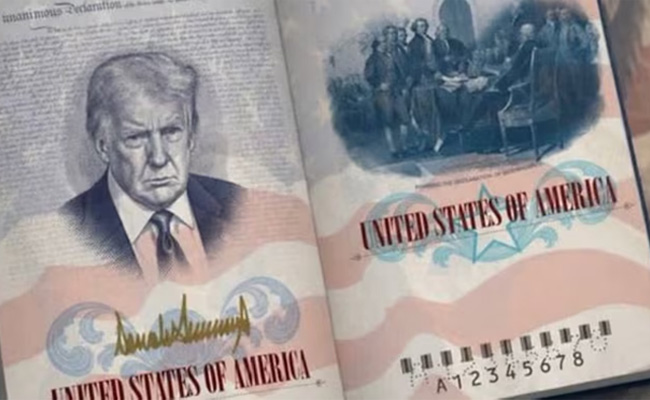
Washington (PTI): The State Department is all set to unveil a limited-edition US passport with pictures of President Donald Trump and the Founding Fathers to commemorate the 250th anniversary of American independence in July.
The special passports will be available only to those who show up in person at the Washington Passport Agency and not anywhere else across the country.
The Department of State shared images of the limited edition passports on its social media accounts.
One page of the passport carries Trump's image surrounded by the text of the Declaration of Independence and the American flag along with the president's signature in gold.
Another page features the famous painting of the founding fathers at the signing of the Declaration of Independence.
The passports, which are set to be released this summer, are part of the Trump administration’s broader "America250" celebration, which also includes a Grand Prix race on the National Mall in August and a UFC fight on the White House South Lawn in June.
"As the United States celebrates America's 250th anniversary in July, @StateDept is preparing to release a limited number of specially designed US Passports to commemorate this historic occasion,” State Department spokesman Tommy Pigott said in a post on X.
A State Department official told Fox News Digital that the new designs will be available for "any American citizen" who applies for a passport when the rollout happens and will continue for as long as there is availability.
“These passports will feature customised artwork and enhanced imagery while maintaining the same security features that make the US Passport the most secure documents in the world,” Pigott said in a statement.
In October, the Department of Treasury proposed minting a one dollar coin featuring Trump’s image on it, to mark the 250th anniversary of American Independence.
According to draft images confirmed as real by US Treasurer Brandon Beach, one side of the coin would feature Trump’s profile, along with the words “LIBERTY,” “IN GOD WE TRUST,” and “1776-2026.”
The other side of the coin would feature Trump standing with a clenched right fist in front of an American flag and the words “FIGHT FIGHT FIGHT” — a reference to his chant after the 2024 assassination attempt at his campaign rally in Butler, Pennsylvania.