No diplomatic ties with Yemen: Centre to HC on mother's plea seeking to save daughter on death row
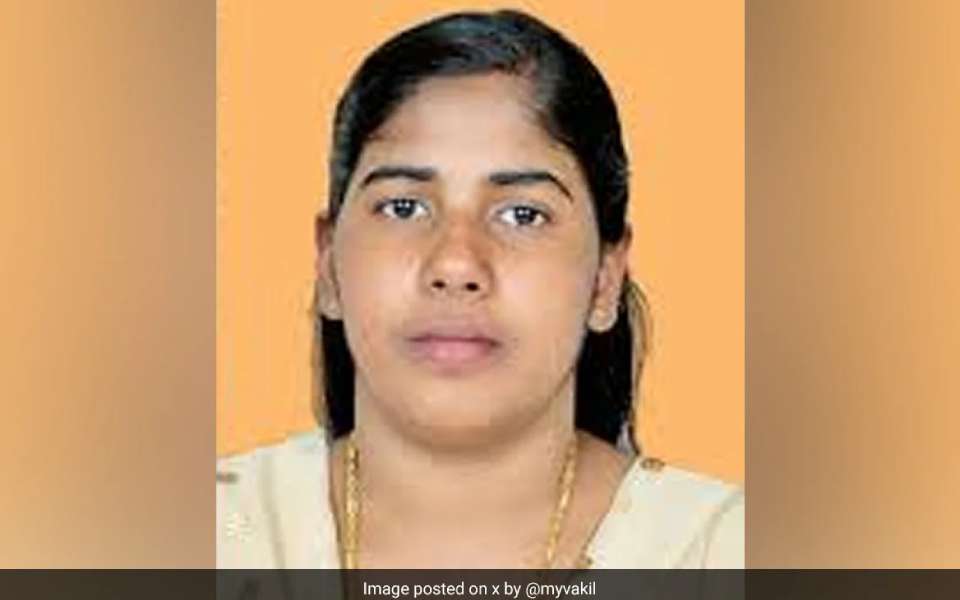
New Delhi, Dec 4: The Delhi High Court Monday asked the Centre whether it was willing to grant permission to the mother of a Kerala woman, who is on death row in Yemen for killing a Yemeni national, along with three others to travel to that country to negotiate with the victim's family about paying blood money to save her daughter from the gallows.
The central government counsel informed Justice Subramonium Prasad that India does not have diplomatic ties with Yemen and it has closed down its embassy there. The counsel said it would not be desirable for the mother to visit the foreign nation currently riven by strife.
"The situation in the Middle East is not good. It is not desirable to travel to Yemen in this situation. India will not be able to help if anything happens to the petitioner (mother) there. We don't want a ransom demand situation should arise there," the counsel, representing the Centre, submitted.
Yemen's Supreme Court had on November 13 dismissed the appeal of Nimisha Priya, who was working as a nurse in the west Asian country, against her sentence.
Priya has been convicted of murdering Talal Abdo Mahdi, who died in July 2017, after she injected him with sedatives in order to get back her passport from his possession.
It was alleged that Priya administered him sedatives so she could take back her passport while he was unconscious but he died of an overdose.
Priya's mother moved the high court earlier this year seeking permission to go to Yemen in spite of a travel ban for Indian nationals and negotiate the "blood money" to save her daughter.
Blood money refers to the compensation paid by offenders or their kin to the family of a murder victim.
Advocate Subhash Chandran K R, who represented the petitioner, said some Indians running businesses in Yemen and currently in India are being granted permission to travel there.
The counsel said they know some Indians who have valid Yemeni visas and they are willing to accompany the woman and negotiate blood money with the victim's family.
The high court asked the petitioner's counsel to file an affidavit by tomorrow stating the details of those willing to travel to Yemen with the woman.
It listed the matter for December 11 for further hearing.
The woman had filed the plea seeking facilitation of her travel to Yemen for urgent hearing on December 2 on which the court had issued notice to the Centre and sought its response.
The petitioner's lawyer had said a letter informing about the Supreme Court of Yemen dismissing Priya's appeal was received on December 1 and her execution can take place anytime.
The lawyer said the petitioner was not asking the government to pay blood money and was only seeking permission to travel to Yemen.
The plea sought the court's direction to the Union government to facilitate the travel of the petitioner, Priya's 10-year-old daughter, and two other adult family members to Yemen to try and save her after negotiating with the victim's family.
The 'Save Nimisha Priya International Action Council' had approached the high court last year and sought direction to the Centre to "facilitate diplomatic interventions as well as negotiations with the family of the victim on behalf of Nimisha Priya to save her life by paying blood money in accordance with the law of the land in a time-bound manner".
The petition alleged Mahdi had forged documents to show he and Priya were married and abused and tortured her.
The high court had last month asked the Centre to take a decision within a week on the woman's request to travel to Yemen.
The high court had earlier refused to direct the Centre to negotiate payment of blood money to save Priya's life but asked it to pursue legal remedies against her conviction.
Let the Truth be known. If you read VB and like VB, please be a VB Supporter and Help us deliver the Truth to one and all.
4 held for sexually assaulting woman, girl on moving bus after social media alert in UP's Agra

Agra (UP) (PTI): Four people were arrested, after a prompt response by police following a social media alert, for allegedly sexually assaulting a woman and a girl inside a moving bus here, officials said on Tuesday.
According to an official police statement, at 12:27 am on April 27, information was received on the social media platform X about an incident of sexual assault on a bus travelling from Kanpur to Ahmedabad, which was approaching Namner crossing in Agra.
Acting under the direction of Police Commissioner Deepak Kumar, the Agra Police social media team immediately alerted the Rakabganj police station within minutes and coordinated with the victims to confirm the incident and obtain the exact location, it stated.
Police teams launched intensive checking at Namner crossing and intercepted the bus as it reached the spot. The four accused involved in the incident were apprehended on the spot, and legal action was initiated against them, the statement said.
The police said the swift response and coordination between the social media team and field units ensured timely action, bringing relief to the victims and other passengers, who expressed gratitude towards the police, it added.