No law student be detained from sitting in exams for lack of attendance: Delhi HC
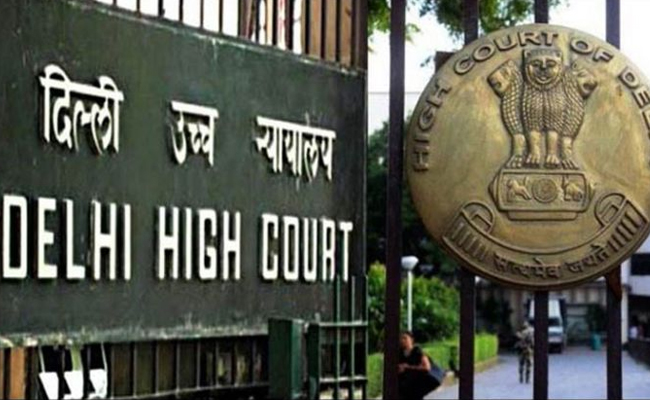
New Delhi (PTI): The Delhi High Court on Monday ruled that no law student in the country should be detained from sitting in examinations due to lack of minimum attendance.
The high court, which passed a slew of directions in relation to mandatory attendance requirement in law colleges, asked the Bar Council of India (BCI) to modify the mandatory attendance norms.
Due to shortage of attendance, student’s promotion to next semester class cannot be withheld, it said.
A bench of Justices Prathiba M Singh and Amit Sharma passed the order while disposing of a suo motu petition, initiated by the Supreme Court, in relation to the death of law student Sushant Rohilla by suicide in 2016 after allegedly being barred from sitting for the semester exams due to lack of requisite attendance.
“Having heard at length the submission of all stakeholders in this case over the course of hearing and having considered the stark realities that have come to the surface, this court is strongly of the view that norms education in general and legal education in particular, cannot be made so stringent so as to lead to mental trauma, let alone death of a student,” the bench said while pronouncing the verdict.
Rohilla, a third year law student of Amity, had hanged himself at his home here on August 10, 2016 after his college allegedly barred him from sitting for the semester exams due to lack of requisite attendance. He left behind a note, saying he was a failure and did not wish to live.
The present petition was initiated by the Supreme Court in September 2016 following the incident but was transferred to the high court in March 2017.
While pronouncing the judgment, the high court said, the Bar Council of India (BCI) should undertake a stakeholder consultation, including student bodies, parents and teachers for this purpose, in an expeditious manner in order to safeguard the life and mental health of students keeping in mind the impact on students at detention or non-appearance in exams due to mandatory attendance requirements can have.
“While the consultations by the BCI are underway, in the interregnum, it is directed as under -- no student enrolled in any recognised law college, university or institution in India shall be detained from taking examination or be prevented from further academic pursuits of career progression on the ground of lack of minimum attendance,” the bench said.
It added that no law college, university or institution should be permitted to mandate norms of attendance, norms which are over and above the minimum percentage prescribed by the BCI.
In so far as mandatory attendance norms fixed by the BCI are concerned, all law colleges, universities and institutions recognised which impart three year and five year degrees should, with immediate effect, implement accelerative measures, including, firstly, weekly notification of attendance of students to online portal or a mobile app, monthly notice to parents and legal guardians regarding any shortage in attendance, conducting extra physical or online classes for such students who do not fulfil the minimum attendance norms.
Let the Truth be known. If you read VB and like VB, please be a VB Supporter and Help us deliver the Truth to one and all.
No unannounced load shedding in Kerala, outages due to overload, says Minister
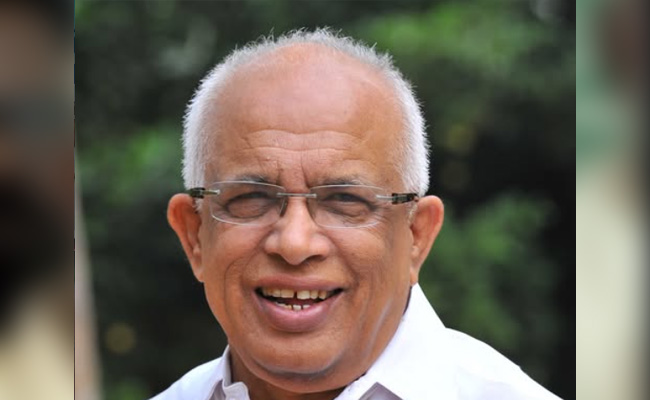
Palakkad (PTI): Kerala Electricity Minister K Krishnankutty on Saturday said there was no unannounced load shedding in the state, attributing recent power interruptions to temporary overload caused by high consumption.
Clarifying concerns raised from various parts of the state, the minister said the disruptions are not deliberate but occur when demand peaks, particularly between 10 pm and 11 pm.
"It is not being done intentionally. Power consumption has risen sharply, and when there is excessive and indiscriminate usage, the system experiences overload, leading to natural supply interruptions," he told reporters here.
His remarks come amid complaints that several areas have been witnessing frequent power cuts, often lasting around 15 minutes and occurring multiple times during the night.
Krishnankutty said the state's power demand has crossed 6,195 MW, putting pressure on the supply system. He added that around 70 per cent of Kerala's electricity is procured from outside, and existing power banking arrangements have been exhausted.
"We have approached the Regulatory Commission seeking permission to purchase more power. However, this will come at a higher cost," he said.
The minister said the government is trying to avoid increasing electricity tariffs and urged consumers to exercise restraint in usage to help manage the situation.
Responding to opposition criticism over the ruling LDF's earlier claims of a decade without power cuts, he said the current situation is not unique to Kerala.
A power crisis is emerging across the country, he said, and sarcastically asked the Opposition to take note of the role of natural factors in this.
Krishnankutty expressed confidence that the situation would improve within two days, while cautioning that long-term energy security would depend on enhancing in-state power generation.
He also warned that future generations could face serious challenges if adequate electricity production capacity is not developed within Kerala.