No wonder his good friend in New Delhi does not want to hug him: Cong's dig at PM Modi
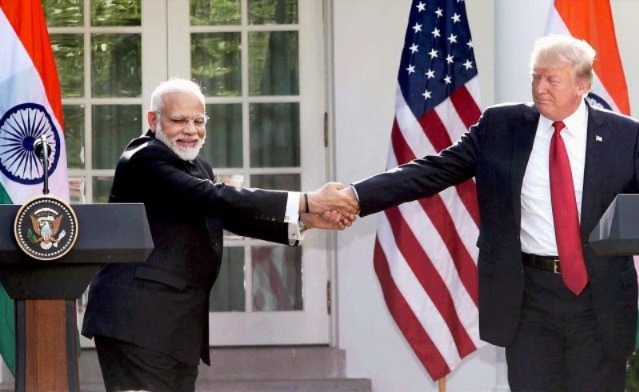
New Delhi (PTI): The Congress on Wednesday took a swipe at Prime Minister Narendra Modi over US President Donald Trump repeating his claim that he stopped the conflict between India and Pakistan using trade, and said "no wonder" the American leader's good friend in New Delhi "does not want to hug him any more".
Congress general secretary in-charge communications Jairam Ramesh shared on X a video clip of Trump's remarks in Japan in which he repeated his claim that he stopped the India-Pakistan military conflict using trade.
"So far he has said it 54 times. He has said it in the US, Qatar, Saudi Arabia, Egypt, and the UK. He has said it mid-flight and on land. Now President Trump has said it again, while addressing business leaders in Japan last evening," Ramesh said on X.
"No wonder his good friend in New Delhi does not want to hug him any more," the Congress leader said.
In his remarks in Japan on Tuesday, Trump reiterated that he ended the India-Pakistan military conflict.
"A lot of the wars that I stopped were because of tariffs. And, frankly, I did a great service to the world because of tariffs, because of trade. If you look at India and Pakistan, they were going at it.
"Seven planes were shot down. Seven brand-new, beautiful planes were shot down, and they were going at it, two big nuclear powers. I said to Prime Minister Modi, and I said to the prime minister and the Field Marshal over in Pakistan, I said that we're not going to do any trade if you're going to be fighting," Trump said.
"(They said) 'no, no, one thing has nothing to do with the other' and I said it has a lot to do with the other. We said we are not doing any deals if you are going to fight and in about 24 hours that was the end of that, it was amazing," the US president said, referring to the stopping of the India-Pakistan conflict in May.
Last month, in his address to world leaders from the UN podium, Trump had repeated his claim that he stopped the conflict between India and Pakistan.
India has been consistently maintaining that the understanding on cessation of hostilities with Pakistan was reached following direct talks between the Directors General of Military Operations of the two militaries.
Let the Truth be known. If you read VB and like VB, please be a VB Supporter and Help us deliver the Truth to one and all.
Man booked for duping 7 persons of Rs 91 lakh on promise of awarding govt works

Mumbai (PTI): The Mumbai police have registered a case against a man for allegedly duping seven persons of Rs 91 lakhs on the promise of awarding them works of different government departments, an official said on Tuesday.
The accused was identified as Satish Kadam, a resident of Nanded in Marathwada region, an official said.
A complaint was filed by Hanumant Vadje, who alleged that the accused cheated him and six others of around Rs 91 lakh by promising to give them various works of Urban Development and Social Justice Department, he said.
The fraud occurred between 2024 and 2026, with Kadam collecting money in cash and into his accounts, police said, adding he had returned some amount to them partially.
Multiple cheques issued by the accused bounced, prompting the victim to lodge a complaint at the Marine Drive police station. Based on the complaint, a case of cheating and criminal breach of trust was registered against him.
The case is under further investigation, the official said.