Not possible to bring petrol, diesel in GST regime even for next 8-10 years: Sushil Modi
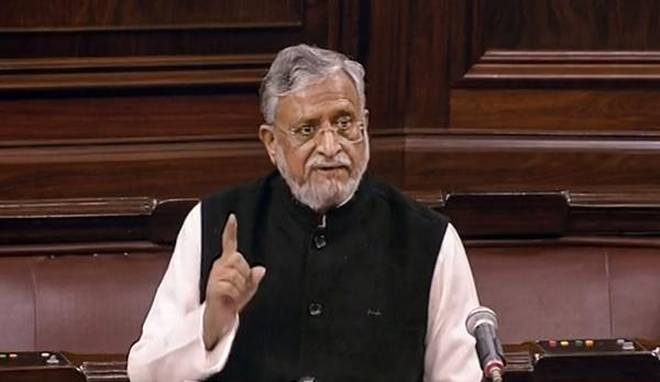
New Delhi, Mar 24: Bringing petrol and diesel under the GST regime is not possible for the next 8-10 years as no state is ready to face the annual revenue loss of over Rs 2 lakh crore on this account, BJP member Sushil Kumar Modi said in Rajya Sabha on Wednesday.
Speaking in support of the Finance Bill, the former finance minister of Bihar dared the opposition to raise the matter in the GST Council, saying no chief minister or finance minister from non-NDA ruled states has opposed any decision of the GST Council.
The Centre and states collectively collect over Rs 5 lakh crore tax on petroleum products, Modi said.
The statement assumes significance in view of the outcry over the rise in petrol price for the past over one year that touched Rs 100 per litre in some states and the demand by the Congress and some other parties that petrol and diesel be brought under the GST regime.
Finance Minister Nirmala Sitharaman had on Tuesday said in Lok Sabha that she would be "glad" to discuss the suggestion of bringing petrol and diesel under the ambit of the Goods and Services Tax at the next meeting of the GST Council.
Sushil Modi said it is easy for opposition leaders to make statements outside, but no one raises these issues within the GST Council.
"Repeatedly, the issue of putting petrol and diesel in the GST regime is being raked up. I have been associated with the GST for a long time, I want to know from the House, that if petrol and diesel are put under the GST regime, who will compensate for the loss of revenue of over Rs 2 lakh crore to states," he asked.
"I want to tell this House that it is not possible to put petrol and diesel under the GST in the next eight to 10 years, as no state is ready to lose Rs 2 lakh crore revenue, be it the Congress or any other government," he said.
He said the Centre and states together earn over Rs 5 lakh crore annually from tax on petroleum products.
"People in the opposition make fun of the GST regime and someone has also said it is 'Gabbar Singh Tax'. If you have the courage....all states have a presence there ... (Congress-ruled) Chhattisgarh or Rajasthan, no chief minister or finance minister has ever opposed the GST structure.
"It is easy to make statements outside, but you need courage as displayed by Narendra Modi to implement the GST. Had there been any other prime minister, he would not have been able to implement the GST," Sushil Modi told the House.
He explained that if petroleum products are brought under the GST, 28 percent tax would be collected on them as that is the highest slab in the tax regime.
"Presently, 60 percent tax is being collected on petroleum products. This would result in a shortfall of Rs 2 lakh crore to 2.5 lakh crore (to both the Centre and states)," he explained in the House.
"If we collect 28 percent tax on petroleum products, then only Rs 14 would be collected (per litre) against Rs 60 at present," he pointed out.
"If petrol or diesel price is Rs 100 (per litre) then the tax component is Rs 60 which includes Rs 35 for Centre and Rs 25 for respective states. Besides out of the Rs 35 tax per litre, 42 percent goes to states," Modi added.
He also slammed those casting doubts on the use of revenue generated from diesel and petrol, stressing that the money is used for development activities.
"It is said that the tax collected on petrol, diesel goes into the pocket of the government. There is no separate pocket of the government. From where will the money come for providing electricity and tap water to all households. The spending of tax collection on the welfare of the country is being challenged," the BJP leader lamented.
Sushil Modi had been the convener of the GST Council in his capacity as the finance minister of Bihar for a long time.
In the first reduction in rates in over a year, petrol price on Wednesday was cut by 18 paise per litre and diesel by 17 paise per litre as international oil prices tumbled to the lowest since early February.
Petrol price was cut to Rs 90.99 per litre in Delhi from Rs 91.17 per litre. Diesel now comes for Rs 81.30 a litre in the national capital, down from Rs 81.47 previously. Rates have been reduced across the country and vary from state-to-state depending on the local incidence of taxation (VAT).
The prices were last reduced on March 16, 2020.
Let the Truth be known. If you read VB and like VB, please be a VB Supporter and Help us deliver the Truth to one and all.
Two injuries, one DNF, a DQ as India end messy World Relays campaign
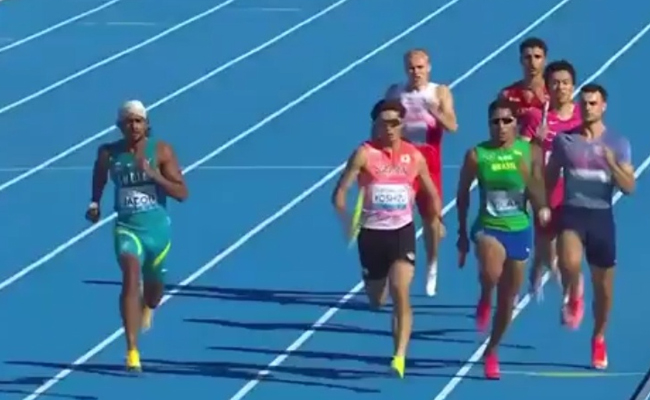
Gaborone (Botswana) (PTI): Amoj Jacob and Ragul Kumar got injured during the men's 4x400m and 4x100 races respectively as India ended their World Athletics Relays campaign in disappointment on the second day of competitions here on Sunday.
The Indian camp had high hopes of making the 2027 World Championships in the men's 4x400m relay but the team did not finish (DNF) the race as Jacob suffered cramps and pulled out of the race after taking the baton from the first leg runner Dharamveer Choudhary. Rajesh Ramesh and Vishal TK were to run in the third and fourth legs.
Those teams which could not qualify for the 2027 Beijing World Championships by reaching the final round of each of the six relay events on Saturday were given another chance in the second qualification round on Sunday.
The top two teams in each of the two heats (in all six relay events) booked the Beijing ticket on Sunday.
India will now have to try and qualify for the World Championships through the Top Lists of the World Athletics, which is a long and tedious process.
In the men's 4x100m race, third leg runner Ragul Kumar fell down the track after failing to hand over the baton inside the exchange zone to fourth leg runner Gurindervir Singh, which clearly showed the lack of coordination among the runners.
Harsh Santosh Raut and Animesh Kujur ran the first two legs.
The Indian quartet was disqualified and Kumar was seen being taken away from the Field of Play with the help of the volunteers.
It was a comedy of errors in the case of the women's 4x100m race, which saw the baton being dropped during an exchange between first leg runner Tamanna and second runner Nithya Gandhe, though the Indians finished the race in 53.09 seconds.
Gandhe started running quite a distance, but after realising that the baton was not in her hand, she turned and ran back to pick it up.
The only silver-lining for the Indian contingent was the national record time in the mixed 4x100m relay race, though the quartet of Ragul Kumar, Nithya Gandhe, Animesh Kujur and Sneha SS finished sixth in heat number two with a time of 41.35 seconds, bettering the previous national mark of 42.30 seconds set in March in Chandigarh.
The mixed 4x400m relay quartet of Theerthesh P Shetty, Kumari Saloni, Nihal William and Rashdeep Kaur ended at fifth in heat number one with a time of 3 minutes and 19.40 seconds.
On Saturday, all the five Indian relay teams had failed to make it to the respective final rounds and thus missed out on the 2027 World Championships berths.