Noticeable reduction in vehicular movement on Delhi roads after GRAP-4 imposed: Govt
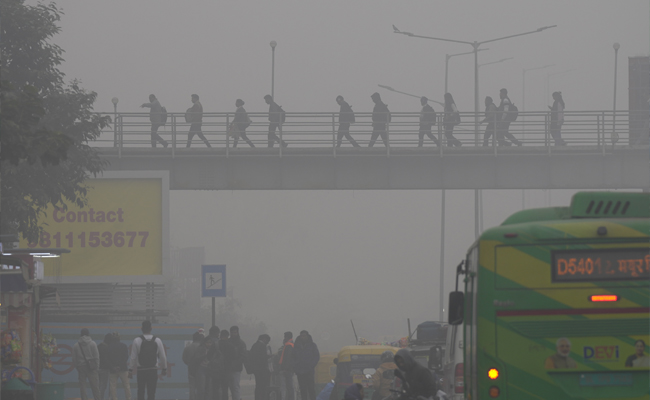
New Delhi (PTI): The Delhi government said a noticeable reduction in vehicular movement was observed on the city roads following strict enforcement of anti-pollution measures under GRAP-4, with increased public compliance with the Pollution Under Control (PUC) norms.
In response to rising air pollution levels in the capital, the Delhi government on Thursday undertook a comprehensive monitoring exercise to assess the impact of the stringent measures implemented for pollution control, said an official statement.
Chief Minister Rekha Gupta reviewed feedback received from her cabinet colleagues and their respective departments, and observed that the measures implemented by the government have delivered positive results on the ground.
ALSO READ:SC calls PIL on packaged drinking water standards ‘luxury litigation’
Following the government's directives, a noticeable reduction in vehicular movement was observed on Delhi's roads compared to normal days.
In a significant trend, a large number of vehicle owners voluntarily obtained Pollution Under Control (PUC) certificates, which the government termed a positive indicator of growing public awareness.
The Delhi government asserted that it is fully complying with the directions issued by the Commission for Air Quality Management (CAQM). In accordance with these directions, Stage IV of the Graded Response Action Plan (GRAP-4) is currently in force in the capital.
Under GRAP-4, intensive inspection and enforcement drives were conducted, and strict action was taken against violations, the statement said.
According to a joint report of the Delhi Transport Department and the Delhi Traffic Police, a total of 210 enforcement teams were deployed for this special drive, including 126 teams of the Delhi Traffic Police and 84 teams of the Delhi Transport Department. During the campaign, stringent action was taken against vehicles operating without valid PUC certificates, with a total of 3,746 challans recorded against such vehicles.
The government said monitoring and strict enforcement will continue in the days ahead to reduce vehicular emissions and provide immediate relief to public health.
Let the Truth be known. If you read VB and like VB, please be a VB Supporter and Help us deliver the Truth to one and all.
Maharashtra sets up state vaccination task force to strengthen immunisation programme

Mumbai (PTI): The Maharashtra government has set up a State Vaccination Task Force to strengthen the regular immunisation programme and review the progress of related campaigns, a health department official said on Monday.
The State Vaccination Task Force will comprise at least 29 members and will be headed by the administrative head of the health department, he informed.
The government has also constituted separate district-level and municipal vaccination task forces to improve implementation and address challenges at the grassroots level, he said.
Municipal task forces, chaired by respective civic commissioners, have been constituted in view of the vast urban population in Maharashtra and the role of civic bodies in implementing different health programmes.
The district-level task forces will function under the chairmanship of collectors.
"Complete immunisation of children at the appropriate age is an extremely simple, cost-effective and highly effective measure to reduce child mortality and the prevalence of diseases among kids. Immunisation is a powerful tool for reducing illness in children," maintained the official.
To ensure full vaccination of all children, the state government implements various campaigns from time to time as per the central government guidelines, he pointed out.
"Active participation and cooperation of other relevant government departments are essential (in making these campaigns successful)," according to the official.
The state-level body will review the regular immunisation programme, associated campaigns and vaccine-preventable diseases in detail. It will also conduct focused assessments of high-risk districts and municipal corporations, including vacancies at district, municipal and sub-district levels, availability of cold chain equipment, resource gaps and training requirements, he noted.
The state task force will review allocation and utilisation of funds for immunisation and ensure timely action by officers concerned based on reports from district and municipal task forces and state-level monitoring mechanisms, the official said.
It will also ensure active coordination and participation of other government departments in immunisation drives, while district and municipal task forces will carry out similar functions at their respective levels, the official added.