ONGC Employees’ Body Accuses Modi Govt of Turning ‘A Cash Rich Company To A High Debt Company’

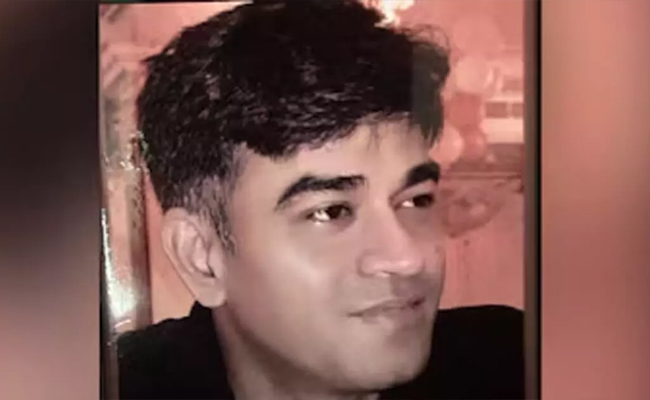
The trade union body of Oil and Natural Gas Corporation (ONGC) has accused the Narendra Modi government of “interfering with the decision making and spending” of the company, which was “evident with the selection of Sambit Patra as the Independent Director of ONGC, who otherwise does not qualify for the said post, as the selection has been challenged in the highest court of the country.”
In a letter addressed to PM Modi, dated September 4, 2018, Employees Mazdoor Sabha (EMS) has also accused the BJP government of crony capitalism by “offering control to private players in several promising fields, which may lead to severe setback to national interests.”
The four-page long letter cites several such dubious decisions taken by the BJP-led government of India:
Acquisition of GSPC gas blocks.
The letter details that ONGC was ordered to acquire the said GSPC gas blocks for Rs. 8000 cr, even though GSPC had been unable to find gas even after spending Rs 19,576 crore in 10 years.
“During 2016, Government of India forced ONGC to acquire gas blocks in the Krishna Godavari basin, belonging to GSPC, for a total consideration of Rs 8000 crores…Even after GSPC spent large sums of money, hired foreign experts and imported sophisticated equipments, they could not find gas, then why was ONGC asked to pay Rs 8000 crores to acquire this block?,” the letter read.
It added, “It is a clear case that ONGC had been brought to bail out GSPC for the misdemeanours on the part of the officials responsible for the same.”
Buying GoI’s entire stake in HPCL for Rs. 36,915 crore, at a price 14% higher than HPCL’s closing share price.
The letter also accuses the GoI of repressing the future growth of ONGC, by asking it to buy government’s entire 51.11% stake in Hindustan Petroleum Corporation Limited (HPCL), in an off-market deal which was 14% higher than the closing share price of HPCL. The employees body has termed it a ‘desperate attempt by the GoI to fund its fiscal deficit gap.”
Offering control to private players in several producing fields, at the cost go ONGC
The letter notes, “The nomination fields account for nearly 85 per cent of ONGC’s crude output and the decision to hand over these fields to private players will cause ONGC more harm than good”
It adds that this decision to hand over control “is an irreversible process and may lead to severe setback to national interests.”
Pressuring ONGC and other PSUs to increase CSR funding to govt projects that the GoI should be funding in the first place.
The letter also stated that the government has been exerting huge pressure on Public Sector Undertakings to increase their CSR fundings on various projects, which otherwise should have been funded by the central government.
“The major projects conceived by the Government of India viz. LPG distribution, construction of toilets, adoption of villages for development, providing solar lights and distribution of sanitary napkins in girls’ school, to name a few, are being funded by ONGC and similar PSUs which leaves with very less funds for the concerned work centre to focus on supporting responsible and sustainable initiatives in the areas where they are operating.”
“The GoI is trying to gain undue mileage by implementing its projects fully through the CSR funds of CPSEs.” it added.
The constant interference by the Narendra Modi-led government has turned ONGC from a “cash rich company to a high debt company,” it states
Stating that any further interference in the activities of ONGC shall be counter-productive and a great loss to the nation as well as National Exchequer, the employees body has given a notice period of three months to give a free hand to ONGC to take its own decision.
ONGC employees’ body has further warned the BJP government of “resorting to any direct action, as deemed fit, by the Confederation of Trades Union in ONGC, without giving any further notice.”
Courtesy: newscentral24x7.com
Let the Truth be known. If you read VB and like VB, please be a VB Supporter and Help us deliver the Truth to one and all.
Sujit Nair raises concerns over speculation of DMK-AIADMK understanding to block TVK
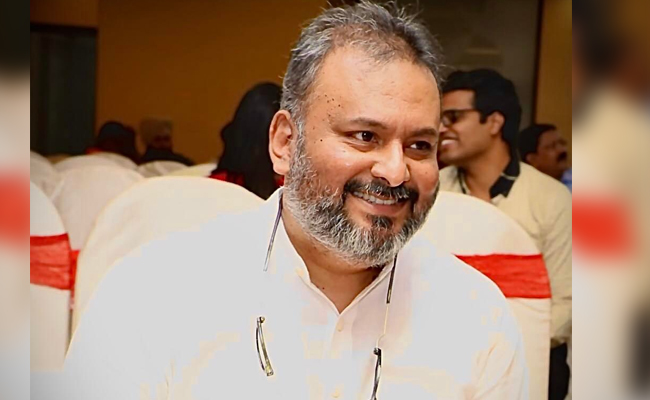
Chennai: Journalist and political commentator Sujit Nair has expressed concern over speculation that the Dravida Munnetra Kazhagam and the All India Anna Dravida Munnetra Kazhagam could explore a post-poll understanding to prevent Vijay-led Tamilaga Vettri Kazhagam from forming the government in Tamil Nadu.
In a social media post, Sujit Nair said the election verdict in Tamil Nadu reflected a clear public demand for political change and argued that the mandate should be respected irrespective of political preferences.
Referring to reports and political discussions surrounding a possible understanding between the DMK and AIADMK, he said he hoped such developments remained only speculative conversations and did not turn into reality.
Nair stated that if such an alliance were to take shape, it would raise serious questions about ideological politics in the country. He said TVK had emerged through a democratic electoral process and that the legitimacy to govern in a parliamentary democracy comes from the people’s verdict.
According to him, attempts to prevent an electoral winner from forming the government through unexpected political arrangements may be constitutionally valid, but many people could view them as politically opportunistic.
He further said that such a move could particularly affect the political image of the DMK, which has historically projected itself around ideology, social justice and opposition politics. Nair said that in ideological terms, the DMK appeared closer to TVK than to the AIADMK, and joining hands with its long-time political rival only to remain in power could weaken its broader political narrative.
He added that the same questions would apply to the AIADMK as well, as the party had spent decades positioning itself against the DMK and such an arrangement could create discomfort among its cadre and supporters.
Drawing a comparison with Maharashtra politics in 2019, Nair said he had expressed similar views when the Shiv Sena formed an alliance with the Indian National Congress and the Nationalist Congress Party after the Assembly elections.
He said post-poll alliances between long-standing political rivals often create a public perception that ideology and electoral mandates become secondary when political power equations come into play.
Nair also said such developments increase public cynicism towards politics and reinforce the belief among voters that ideology is often sidelined after elections.
He maintained that the Tamil Nadu verdict was emphatic and said respecting both the spirit and substance of the mandate was important for the credibility of democratic politics.