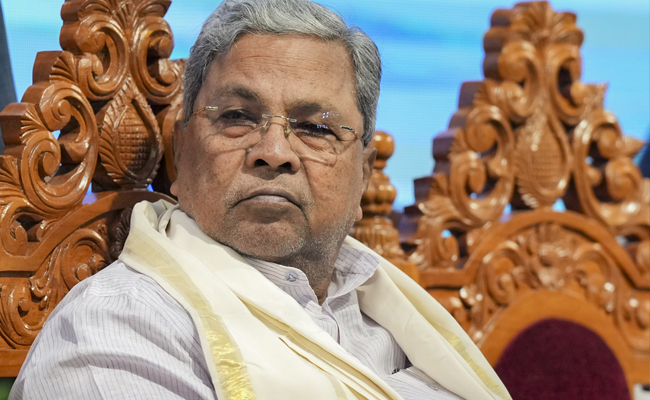
Operation Nanhe Farishte: RPF rescues over 580 children in South Western Railway Zone
_vb_60.webp)
Bengaluru: In a significant step towards protecting vulnerable children, the Railway Protection Force (RPF) of the South Western Railway (SWR) zone has successfully rescued 583 children between April 2024 and March 2025 under its rescue initiative, ‘Operation Nanhe Farishte’.
Of the total rescued, 480 were boys and 103 were girls, according to the data accessed by The Hindu. These children were either reunited with their families or placed under institutional care.
Launched in July 2017, Operation Nanhe Farishte — which means "Little Angels" — is a dedicated mission to identify and safeguard children in distress or suspicious circumstances at railway stations and onboard trains. It specifically aims to prevent children from falling victim to trafficking, child labour, and other forms of exploitation.
“Although hundreds of children have been rescued in the last year, no case of trafficking has been registered by the RPF in the past three years within the SWR zone,” The Hindu quoted Manjunath Kanmadi, Chief Public Relations Officer (CPRO) of South Western Railway as saying. However, officials noted that the operation continues to play a vital role in safeguarding children before harm can occur.
Kanmadi explained that once a child is found under suspicious circumstances, they are brought to the RPF office for an initial inquiry to determine their background — whether they are runaways, missing, mentally challenged, kidnapped, struggling with substance abuse, abandoned, or potential victims of child labour. “They are first brought to a helpdesk, given food, rest, medical check-up and counselling, before being placed in safe custody,” he added.
Despite playing a key role in rescue operations, the RPF does not have the legal authority to arrest suspected traffickers under the Immoral Traffic (Prevention) Act, 1956.
The operation relies heavily on support from NGOs, which assist in identifying vulnerable children, conducting initial enquiries, and training RPF personnel in child protection practices; these organisations also help raise public awareness, the report added.
Authorities have urged the public to stay vigilant and report any suspicious activity involving children at railway stations. Citizens can reach out through the security helpline at 182, the National Childline at 1098, or the police helpline 100.
Let the Truth be known. If you read VB and like VB, please be a VB Supporter and Help us deliver the Truth to one and all.
Bhojshala case: Disputed structure built from remains of pre-existing temples, claims ASI
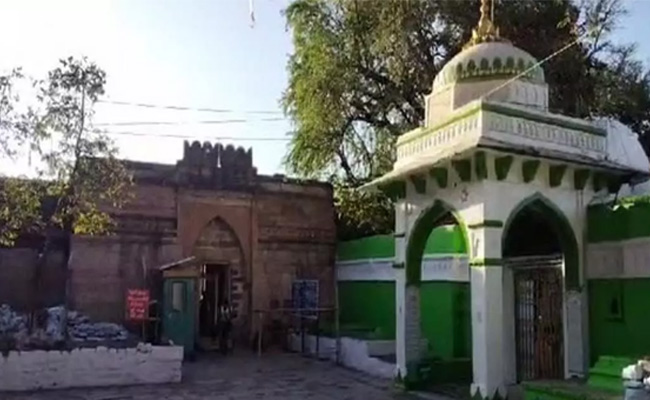
Indore (PTI): The ASI has told the Madhya Pradesh High Court that a massive structure dating back to the Paramara kings' rule existed at the disputed Bhojshala temple-Kamal Maula mosque complex, and the current structure was built from the remains of temples.
The Archaeological Survey of India (ASI) made the claim on Tuesday based on its 98-day scientific survey and over 2,000-page report.
The Hindu community considers Bhojshala a temple dedicated to Vagdevi (Goddess Saraswati), while the Muslim side claims the monument as the Kamal Maula Mosque. The disputed complex is protected by the ASI.
During the hearing before Justices Vijay Kumar Shukla and Alok Awasthi of the HC's Indore bench, Additional Solicitor General Sunil Kumar Jain, representing the ASI, presented a detailed account of the scientific survey conducted two years ago at the complex.
Referring to the ASI's survey report, he said, "Retrieved architectural remains, sculptural fragments, large slabs of inscriptions with literary texts, Nagakarnika inscriptions on pillars, etc, suggest that a large structure associated with literary and educational activities existed at the site. Based on scientific investigations and archaeological remains recovered during the investigations, this pre-existing structure can be dated to the Paramara period."
It can be said that the existing structure was made from the parts of earlier temples, based on scientific investigations, survey and archaeological excavations conducted, study and analysis of retrieved finds, study of architectural remains, sculptures, and inscriptions, art and sculptures, Jain said quoting the report.
Summarising the report, he also drew the court's attention to the fact that the archaeological study identifies that many architectural components, such as pillars and beams, were originally part of temple structures before being repurposed for a mosque.
"The evidence of this transition includes Sanskrit and Prakrit inscriptions that were damaged or hidden, alongside sculptures of deities and animals that were often mutilated or defaced," Jain contended.
The report also states that "all Sanskrit and Prakrit inscriptions are older than the Arabic and Persian inscriptions, indicating that users or engravers of the Sanskrit and Prakrit inscriptions occupied the place earlier".
In light of the Muslim side's earlier objections, the bench wanted to know why there were some discrepancies in the ASI's responses regarding the status of the disputed complex in the cases filed over the years.
The Additional Solicitor General argued that earlier studies of the complex involved only officials, while the current survey involved scientists and the use of advanced technologies such as Ground Penetrating Radar (GPR).
The hearing in the Bhojshala case will continue on Wednesday.
The high court has been regularly hearing four petitions and one writ appeal regarding the religious nature of the Bhojshala temple-Kamal Maula mosque complex since April 6.