Oppn parties attack Amit Shah for remarks against Nehru; BJP hits back
New Delhi, Dec 7: Opposition parties attacked Home Minister Amit Shah for his remarks against India's first prime minister Jawaharlal Nehru, with Congress leaders saying nobody has the right to insult those who fought against British Rule and offered everything to support the freedom struggle.
BJP leaders, however, asserted that whatever Shah said in the Lok Sabha about Nehru is correct, and history has to be told.
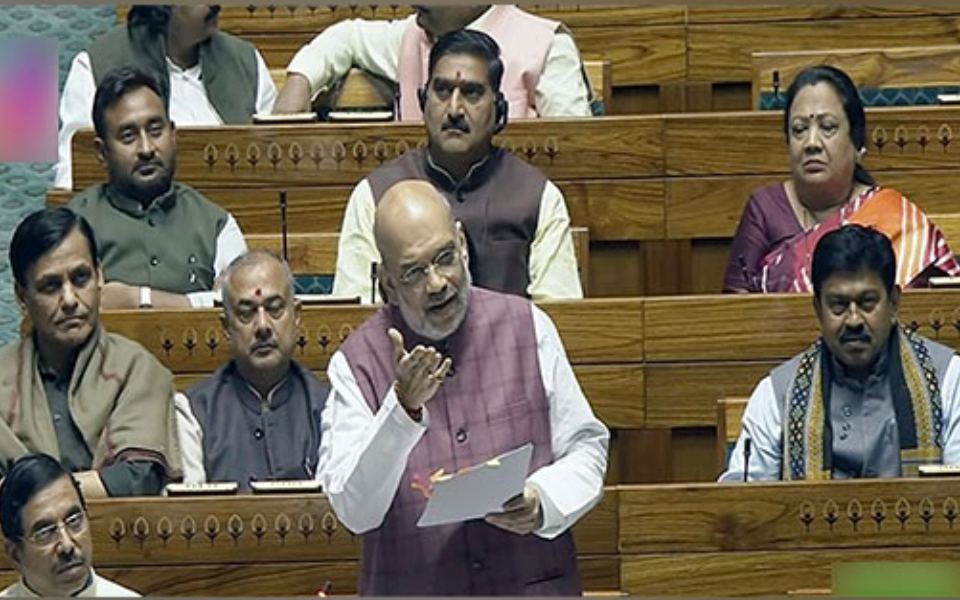
Shah on Wednesday blamed Nehru's "two major blunders" -- declaring a ceasefire without winning the entire Kashmir and taking the issue to the United Nations -- for the sufferings of the people of Jammu and Kashmir.
The home minister trained his guns at Nehru while replying to a debate in the Lok Sabha on the Jammu and Kashmir Reservation (Amendment) Bill and the Jammu and Kashmir Reorganisation (Amendment) Bill.
Reacting to Shah's remarks, Congress general secretary and Rajya Sabha MP Jairam Ramesh wrote on X, "Today in the Lok Sabha, the home minister made deliberately provocative and blatantly false statements on Nehru's role in J&K in 1947 and 1948".
"Dr Farooq Abdullah immediately called out the distorian masquerading as a pseudo-historian," he said. Abdullah is the National Conference's president and represents Srinagar in the Lower House of Parliament.
"These are tactics to derail the Congress and INDIA's narratives, and I for one will not fall into the Shah trap. His office should get him to read Chandrasekhar Dasgupta's masterly book, 'War and Diplomacy in Kashmir' in which many such myths have been exposed," Ramesh added.
Congress MP Manish Tewari described Shah's remarks against Nehru as "absolutely erroneous" and told PTI that "in hindsight with a six by six vision, you can find fault with any decision of the government".
"Ceasefire happened because the then government was advised by the commander-in-chief of the Indian Army General Roy Bucher," he said, asserting that the ceasefire was "inevitable" then.
Tewari said, "In so far as taking the matter to the United Nations is concerned, let's not forget that the world was emerging from the devastating second world war which had killed millions and millions of people. The atomic bomb had been used for the first time."
He said the United Nations was created as an institution to end all future wars and India was a signatory to the UN convention even before it became independent.
"Therefore, the government at that point in time sought the intervention of the United Nations to make Pakistan vacate the territory it was illegally occupying, it was not a wrong decision," the Anandpur Sahib MP added.
Congress Rajya Sabha MP and party's Gujarat unit president Shaktisinh Gohil said nobody has the right to make such comments against India's first prime minister who fought against British Rule and offered everything to support the freedom struggle.
"Be it Sardar Vallabhbhai Patel, Nehru ji, Baba Saheb Ambedkar, they fought against the British, offered everything that they had including ancestral property on the feet of Mahatma Gandhi for freedom struggle," he said.
"Nehru and Patel were two sides of the same coin. The comment that he (Amit Shah) has made today is an insult to Sardar Vallabhbhai Patel and Nehru ji. Nobody has the right to do so," he said, adding, "Making such comments at this time is an insult to the country, Sardar Patel, Nehru Ji and their policies. Such politics is not good for the country at all".
Congress Rajya Sabha MP Pramod Tiwari slammed Shah for his remarks, saying, "We would not have got freedom, if Pandit Nehru, Mahatma Gandhi and other freedom fighters were not there. What Nehru saved amid those adverse circumstances (in Kashmir), thanks for that," he added.
RSP leader and Lok Sabha member N K Premachandran said it was "quite unfortunate" on the part of central cabinet ministers describing India's first prime minister's "activities as Nehruvian blunders".
"They are saying that these are the mistakes of the then prime minister (Nehru). Maybe a mistake but using the word blunder means it is a stupid mistake," he said and asked, "Is it the way of addressing the first prime minister of the country, freedom fighter and architect of modern India."
"I don't say that it's unparliamentary. Maybe there is no technical defect in it. But at the same time we have to maintain the decorum and have mutual respect for each other, be it is treasury benches or opposition side," Premchandran told PTI.
Abdullah said, "They have always had differences with Nehru. There is nothing new in it. They will never acknowledge Nehru's work. So it keeps happening. This is politics".
BJP leader and Union Minister Giriraj Singh described Shah's remarks about Nehru as correct and claimed that "happiness" has returned in Jammu and Kashmir since the scrapping of Article 370.
Another BJP MP Sadhvi Pragya Singh Thakur described Shah's remarks on Nehru as "most appropriate" and added, "History has to be told in the present".
Today in the Lok Sabha, the Home Minister made deliberately provocative and blatantly false statements on Nehru’s role in J&K in 1947 and 1948. Dr. Farooq Abdullah immediately called out the Distorian masquerading as a pseudo-historian. These are tactics to derail the Congress…
— Jairam Ramesh (@Jairam_Ramesh) December 6, 2023
Let the Truth be known. If you read VB and like VB, please be a VB Supporter and Help us deliver the Truth to one and all.
TMC will be voted back to power in Bengal: Tejashwi Yadav
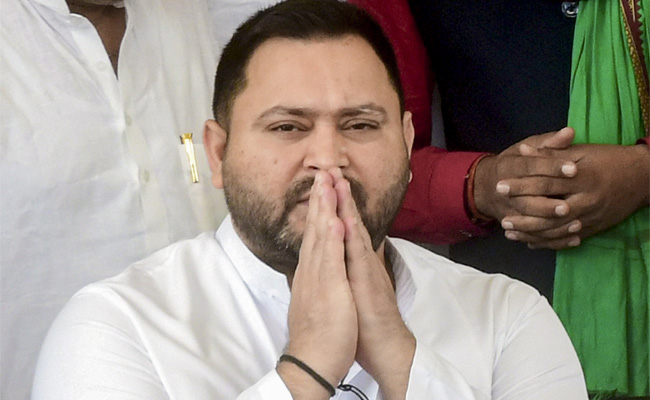
Patna (PTI): Leader of Opposition in Bihar assembly, Tejashwi Yadav, on Tuesday exuded confidence that the Mamata Banerjee-led TMC will again be voted to power in West Bengal.
Yadav returned to Patna after a four-day poll campaign in West Bengal.
“The atmosphere there is euphoric and people want to bring Didi (Mamata Banerjee) back to power. I am fully confident that the TMC will win the election,” he told reporters here.
He said that a large number of people from Bihar living in West Bengal share a lot of love and respect for Mamata Banerjee.
Responding to BJP’s allegations that the TMC had “ruined” West Bengal during its tenure, the RJD leader said the “entire country has been ruined under the Narendra Modi-led government”.
“I want to ask one question to Modi ji – you have been prime minister for more than 11 years, tell me one thing you have done for Bengal,” Yadav said.
The first phase of elections to the 294-member West Bengal assembly was held on April 23, while the second phase will take place on April 29. Votes will be counted on May 4.