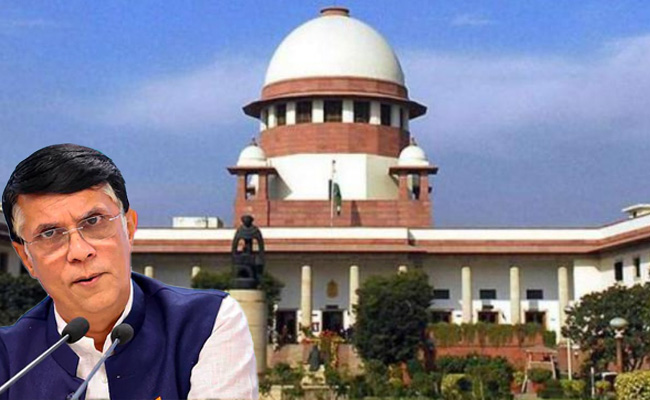
Opposition slams Ex-BJP spokesperson Aarti Sathe’s Bombay HC appointment, cites judicial concerns
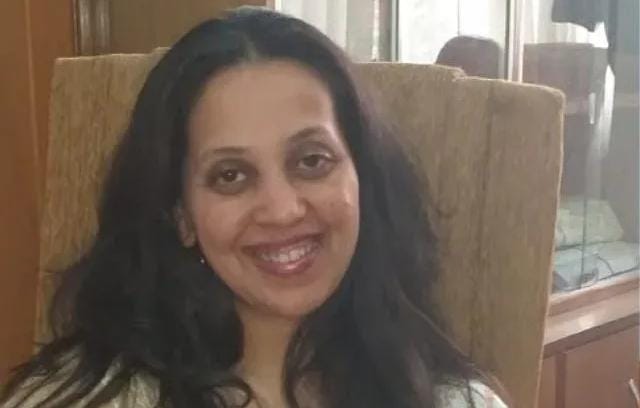
Mumbai: The Supreme Court Collegium’s recommendation to appoint advocate Aarti Arun Sathe as a judge of the Bombay High Court has triggered intense political debate and constitutional concerns in Maharashtra. Critics allege that the move compromises the doctrine of separation of powers, a foundational principle of India’s democracy.
The controversy stems from Sathe’s recent political past. A seasoned tax lawyer with over 20 years of experience, Aarti Sathe served as the head of the BJP’s legal cell in Mumbai and was officially appointed as the party’s spokesperson in February 2023. She resigned from that position and gave up her primary membership of the BJP in January 2024, citing "personal and professional reasons."
However, just 19 months after serving as a public representative of the ruling party, her name was recommended on July 28, 2025, by the Supreme Court Collegium, headed by Chief Justice B. R Gavai, for appointment to the Bombay High Court. This has sparked concerns about judicial neutrality and raised the spectre of political interference in judicial appointments.
Leading the criticism is NCP (Sharad Pawar faction) MLA Rohit Pawar, who posted the BJP’s official appointment letter of Sathe on social media, questioning whether a person who publicly represented the ruling party can now deliver judgments free from political bias.
“Appointing a party spokesperson as a judge is nothing short of a betrayal of democracy,” Pawar said. “Can anyone assure us that such a person’s judgments will be entirely free of political motivation? Doesn’t this cast a shadow of doubt over the entire judicial process?” he asked.
Pawar further questioned whether this appointment violates the basic constitutional principle of separation between the executive and the judiciary. “Isn’t this an attempt to turn the judiciary into a political arena?” he remarked. “The common citizen comes to court expecting impartial justice. Such appointments shake the very foundation of that belief,” he added.
He clarified that his objections were not to Sathe’s professional credentials but to the timing and political context of her appointment. “This recommendation should be reviewed, and the Chief Justices must intervene to issue appropriate guidance,” Pawar urged.
The Maharashtra Congress echoed similar concerns. “Appointing a BJP spokesperson as a judge is the height of political mockery. It is an insult to democracy,” said a party spokesperson.
The BJP has staunchly defended the recommendation. “Sathe resigned from both the spokesperson post and the party over a year ago. She currently has no ties with the BJP,” said Navnath Ban, head of BJP’s media department.
BJP national spokesperson Keshav Upadhye went a step further, citing past instances of political figures being appointed to the bench. “Justice Baharul Islam was a Rajya Sabha MP from the Congress and was later appointed to the judiciary before returning to Parliament. What does the Congress and Rohit Pawar have to say about that?” he asked.
According to Upadhye, Sahthe’s selection was based entirely on merit and followed due process by the Collegium.
Currently, the Bombay High Court operates with only 66 judges out of a sanctioned strength of 94, highlighting the urgent need to fill vacancies. However, critics warn that addressing judicial shortages must not come at the cost of compromising the independence of the judiciary.
Let the Truth be known. If you read VB and like VB, please be a VB Supporter and Help us deliver the Truth to one and all.
Right to vote under threat, must be made fundamental right: Cong's Jairam Ramesh
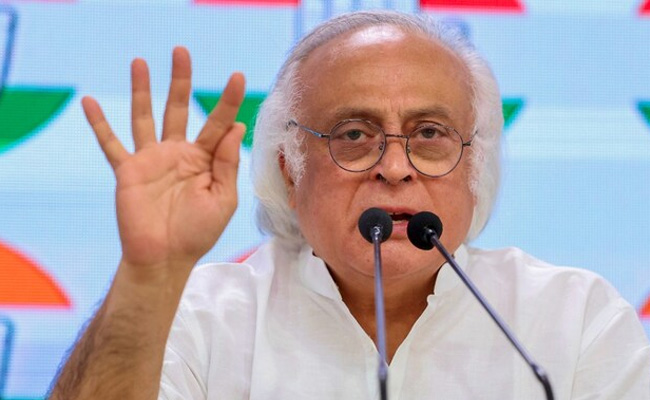
New Delhi (PTI): Congress leader Jairam Ramesh alleged on Thursday that the right to vote is under threat and the time has come when it should be made a fundamental right for citizens.
Speaking with reporters, Ramesh lashed out at Chief Election Commissioner (CEC) Gyanesh Kumar, saying the Election Commission (EC) has never been as compromised as it has been under him.
"The rot started under his predecessor. This man is a player and not a neutral observer," the Congress leader said, slamming Kumar.
Kumar is completely compromised and has become a player in elections, he alleged.
"Home Minister Amit Shah had talked about three Ds -- detect, delete and deport. So we want to know how many non-Indian citizens have been detected, how many have been deleted and how many have been deported," Ramesh said, adding that the right to vote is now under threat.
On opposition parties submitting a fresh notice in the Rajya Sabha, seeking to move a motion for the CEC's removal, the Congress leader said they will continue to make efforts for Kumar's removal as he is "compromised".
Ramesh also batted for the right to vote to be recognised as a fundamental right.
"I believe that the time has come that the right to vote should be made a fundamental right. It is a statutory right, it is not a fundamental right. Fundamental rights are justiciable," he said.
The former Union minister said this was discussed in the Constituent Assembly, but it was eventually decided that it should be made part of the Constitution.
B R Ambedkar and Jagjivan Ram had warned that in the future, governments might try to disenfranchise voters, he added.
"Once and for all, include the right to vote as a fundamental right for Indian citizens," Ramesh asserted.