Panel recommends major reforms for entrance exams to enhance security with efficiency
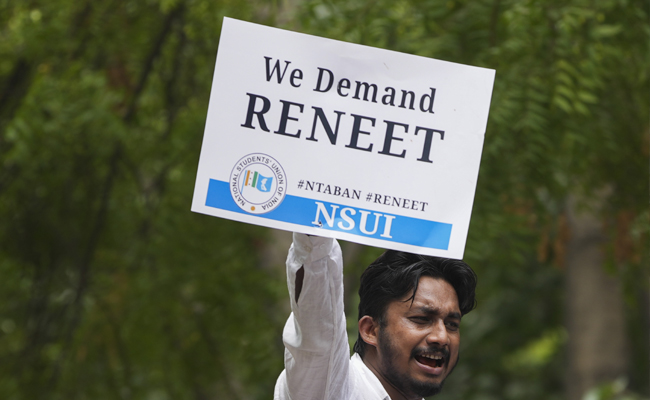
A seven-member committee led by former ISRO chief Dr. K. Radhakrishnan has submitted key recommendations to the Education Ministry to overhaul the administration of national entrance exams, following the recent NEET paper leak. The panel, constituted to review exam security protocols and the functioning of the National Testing Agency (NTA), has proposed several reforms aimed at streamlining operations and minimizing the risk of future leaks.
The committee’s recommendations include introducing hybrid exam models, conducting multi-stage NEET exams, rationalizing subject choices for the Central University Entrance Test (CUET), and strengthening the NTA’s staffing with more permanent personnel.
The panel suggests delivering question papers digitally to examination centers, while students mark their answers on OMR sheets. This hybrid approach would reduce the number of people handling the papers, a crucial step given that the NEET-UG paper leak in Hazaribagh, Jharkhand, reportedly occurred due to improper handling at a private exam center. The digital transmission of question papers closer to the exam time would also eliminate reliance on printing presses and storage in strong rooms, enhancing security.
The panel recommends maximizing the use of online exams where possible, while discouraging the involvement of private service providers to maintain control over exam administration. It suggests expanding government-owned exam centers and employing more permanent NTA personnel to reduce dependency on outsourced staff.
The report advocates for limiting the number of subjects in CUET to ease the burden on students and maintain security. Currently, CUET allows candidates to appear in up to six subjects, increasing logistical complexity and security risks. The panel questions the need for science students to reappear in the same subjects already covered in board exams and suggests CUET focus on general aptitude with some subject-specific knowledge.
Given the large number of medical aspirants—nearly 20 lakh registered for NEET-UG this year—the panel has recommended conducting NEET in multiple stages, similar to the two-tier Joint Entrance Exam (JEE). It has also proposed capping the number of NEET attempts to prevent misuse of the open-attempt policy.
The Radhakrishnan committee emphasizes the need for greater government control over exams by increasing the number of in-house centers and reducing reliance on private institutions. It also recommends recruiting more permanent staff to the NTA, which currently operates with a heavy reliance on contractual employees.
The expert panel, in addition to Dr. Radhakrishnan, includes prominent members such as former AIIMS Director Dr. Randeep Guleria, Hyderabad Central University Vice-Chancellor B.J. Rao, IIT Madras Professor Emeritus Ramamurthy K, Karmayogi Bharat Board Member Pankaj Bansal, IIT Delhi Professor Aditya Mittal, and Education Ministry Joint Secretary Govind Jaiswal.
Let the Truth be known. If you read VB and like VB, please be a VB Supporter and Help us deliver the Truth to one and all.
Sujit Nair raises concerns over speculation of DMK-AIADMK understanding to block TVK
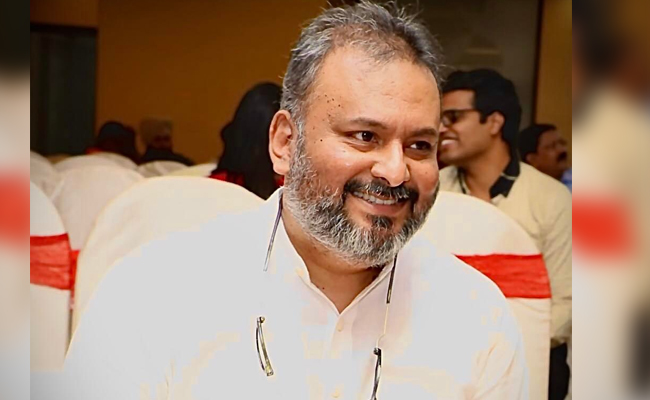
Chennai: Journalist and political commentator Sujit Nair has expressed concern over speculation that the Dravida Munnetra Kazhagam and the All India Anna Dravida Munnetra Kazhagam could explore a post-poll understanding to prevent Vijay-led Tamilaga Vettri Kazhagam from forming the government in Tamil Nadu.
In a social media post, Sujit Nair said the election verdict in Tamil Nadu reflected a clear public demand for political change and argued that the mandate should be respected irrespective of political preferences.
Referring to reports and political discussions surrounding a possible understanding between the DMK and AIADMK, he said he hoped such developments remained only speculative conversations and did not turn into reality.
Nair stated that if such an alliance were to take shape, it would raise serious questions about ideological politics in the country. He said TVK had emerged through a democratic electoral process and that the legitimacy to govern in a parliamentary democracy comes from the people’s verdict.
According to him, attempts to prevent an electoral winner from forming the government through unexpected political arrangements may be constitutionally valid, but many people could view them as politically opportunistic.
He further said that such a move could particularly affect the political image of the DMK, which has historically projected itself around ideology, social justice and opposition politics. Nair said that in ideological terms, the DMK appeared closer to TVK than to the AIADMK, and joining hands with its long-time political rival only to remain in power could weaken its broader political narrative.
He added that the same questions would apply to the AIADMK as well, as the party had spent decades positioning itself against the DMK and such an arrangement could create discomfort among its cadre and supporters.
Drawing a comparison with Maharashtra politics in 2019, Nair said he had expressed similar views when the Shiv Sena formed an alliance with the Indian National Congress and the Nationalist Congress Party after the Assembly elections.
He said post-poll alliances between long-standing political rivals often create a public perception that ideology and electoral mandates become secondary when political power equations come into play.
Nair also said such developments increase public cynicism towards politics and reinforce the belief among voters that ideology is often sidelined after elections.
He maintained that the Tamil Nadu verdict was emphatic and said respecting both the spirit and substance of the mandate was important for the credibility of democratic politics.