Par panel urges govt to develop legal, tech solutions to act against those behind AI-based fake news

New Delhi, Sep 14 (PTI): A parliamentary committee has asked the government to develop concrete legal and technological solutions for identifying and prosecuting individuals and entities responsible for spreading Artificial Intelligence-generated fake news.
The Standing Committee on Communications and Information Technology, in its draft report, called for a balanced approach for deploying AI to curb fake news, noting that the technology is being used to detect misinformation but can be a source of misinformation as well.
The draft report of the committee, headed by BJP MP Nishikant Dubey, was recently submitted to Lok Sabha Speaker Om Birla. It will be tabled in Parliament during the next session.
The Committee also urged for "close coordination between the Ministry of Information and Broadcasting, Ministry of Electronics and Information Technology (MeitY), and other ministries and departments concerned to develop concrete legal and technological solutions for identifying and prosecuting individuals and entities responsible for disseminating AI-generated fake news", according to sources.
The Committee has recommended inter-ministerial coordination for exploring the feasibility of licensing requirements for AI content creators and mandatory labelling of AI-generated videos and content.
The committee's suggestions are not binding on the government. However, the government often looks to implement them as parliamentary committees are representative of Parliament, and their recommendations often carry the weight of bipartisan spirit.
The Ministry of Electronics and Information Technology, the Committee noted, has constituted a nine-member panel to examine problems related to the "issue of deepfakes".
Two projects to detect fake news currently underway are: fake speech detection using a deep learning framework and design and development of software for detecting deepfake videos and images, it said.
While stating that advances in technology, particularly in AI, offer promising solutions to address concerns over fake news, the Committee highlighted the related ministries' stand that AI is evolving and works on the use of pre-existing information available on the internet.
In its present state, it cannot be used for a subject as complicated as fact-checking, the ministries told the Committee.
But AI could be used to flag potentially fake news and misleading content for review by human intervention as a second layer of monitoring, the Committee added.
The Committee said various research projects and initiatives are exploring AI's use in combating fake news.
"AI and machine learning (ML) technologies are increasingly being employed to enhance the ability to detect, verify, and prevent the spread of misinformation and disinformation," it said.
The Committee, which made wide-ranging recommendations following months of interactions with different stakeholders, called fake news a "serious threat" to public order and democratic process, and called for amending penal provisions, increasing fines and fixing accountability to deal with the issue.
It also favoured mandatory presence of a fact-checking mechanism and an internal ombudsman in all print, digital and electronic media organisations.
The Committee, however, has added that this should involve and emerge from a consensus-building exercise among media bodies and relevant stakeholders.
Let the Truth be known. If you read VB and like VB, please be a VB Supporter and Help us deliver the Truth to one and all.
Delhi court sentences CBI joint director to 3 months' imprisonment in IRS officer assault case
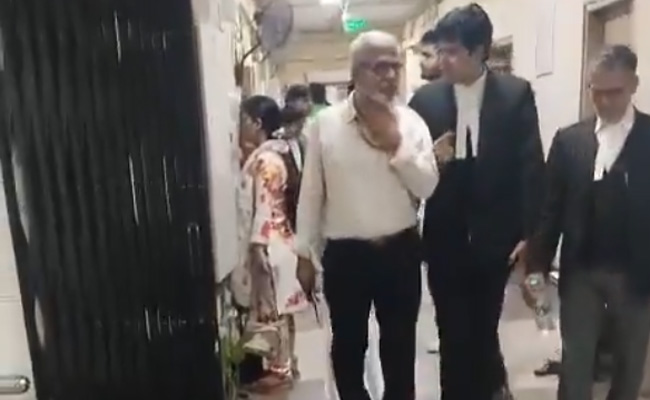
New Delhi (PTI): A Delhi court has sentenced two CBI officers to three months' imprisonment for assaulting and trespassing into the residence of an Indian Revenue Service (IRS) officer during a raid over two decades ago.
Judicial Magistrate Shashank Nandan Bhatt was hearing the arguments on the sentence against the convicted retired police officer V K Pandey and Ramneesh, who was serving as a superintendent of police when the raid was conducted in 2000.
Ramneesh is at present a joint director at the Central Bureau of Investigation (CBI).
The court also fined Rs 50,000 each to both the accused.
Both were accused under IPC sections 323 (voluntarily causing hurt), 427 (mischief) and 448 (criminal trespass) in a complaint filed by IRS officer Ashok Kumar Aggarwal.
The case pertained to an incident on October 19, 2000, when a CBI team carried out a search and arrest operation at Aggarwal's residence in Paschim Vihar.
Aggarwal alleged that the officials forcibly entered his house in the early hours, assaulted him and violated legal procedures during the arrest.
#WATCH | Delhi | Former IRS officer assault case. | Tis Hazari Court sentenced CBI joint director Ramneesh and Retired ACP Vivek Pandey to 3 months sentence in an assault case filed by former IRS officer Ashok Agarwal. The court has granted them bail to challenge the judgment.… https://t.co/RwAxjMrWDK pic.twitter.com/2FlkG4rDs0
— ANI (@ANI) April 28, 2026