Parliamentary panel adopts report on Waqf bill by majority; opposition slams move
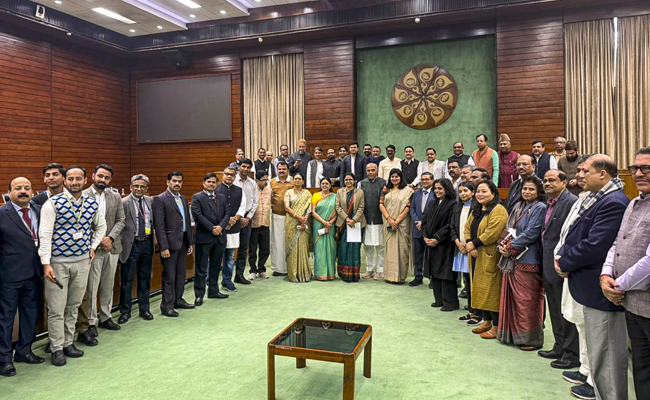
New Delhi (PTI): A parliamentary panel examining the Waqf Amendment Bill on Wednesday adopted by a majority vote its report that contained changes suggested by ruling BJP members, prompting the opposition to dub the exercise as an attempt to destroy the Waqf boards.
The Joint Committee of Parliament (JPC) on the Waqf (Amendment) Bill, chaired by BJP member Jagdambika Pal, adopted the report on the draft legislation by a 15-11 majority vote. Opposition members were submitting dissent notes to the report.
BJP members insisted that the bill, introduced in Lok Sabha in August last year, seeks to bring modernity, transparency and accountability in the management of Waqf properties, while the opposition termed it as an attack on the constitutional rights of the Muslim community and interference in the functioning of the Waqf boards.
Speaking to reporters after the 38th sitting of the committee, Pal said the report will be presented to Lok Sabha Speaker Om Birla on Thursday and tabled in both Houses of Parliament during the Budget Session beginning Friday.
A key concern of the opposition was the appointment of non-Muslims on the Waqf Board, which they claimed was violative of Article 26 of the Constitution that granted citizens freedom to manage their religious affairs, including establishment and maintenance of institutions for religious and charitable purposes.
"You have violated our rights granted under Article 26 of the Constitution. You talked about Uniform Civil Code, but there are Hindu Endowment Board, Sikh Boards, Christian boards which do not have non-Hindus, non-Sikhs, and non-Christians as members. But why does this not extend to Muslims? This is an attempt to destroy the Waqf Boards," Congress member Imran Masood told reporters here.
At its meeting on Monday, the committee had adopted 14 amendments to the bill, all proposed by BJP members and rejected every change suggested by the opposition members, including Congress, DMK, TMC, AAP, Shiv Sena-UBT and the AIMIM.
Trinamool leader Kalyan Banerjee claimed the observations and recommendations of the committee were "wholly perverse".
The BJP members contended that the amendments suggested by the opposition were intended to uphold the 1995 law and negate the spirit of the Waqf Amendment Bill-2024.
"All these amendments are not in the interest of the Waqf. These will destroy the Waqf board and increase interference of the central government in their functioning," AIMIM leader Asaduddin Owaisi said.
He said the evacuee properties could also be taken over by the government.
"This will not be acceptable to the masses, especially the Muslim community. We reject this Waqf amendment. Muslims will lose their masjids," Owaisi said.
According to the amendments accepted by the committee, the state Waqf boards will now include one member from the Muslim OBC community, ensuring broader representation.
It also has provisions that allow the state government to establish separate Waqf boards for Aghakhani and Bohra communities and safeguard women’s inheritance rights in Waqf Alal Aulad (family waqfs).
The amendments also allow the income from Waqf Alal Aulad to support widows, divorced women, and orphans, if specified by the waqif (creator of the waqf).
Pal claimed that many of the amendments approved by the committee have addressed several concerns of opposition members as well, adding the Bill once enacted will help Waqf board in discharging its duties transparently and more effectively.
For the first time, "pasmanda" (backward) Muslims, the poor, women and orphans have been included among beneficiaries of the Waqf, an endowment made by Muslims for charitable religious purposes, he said.
The committee held 38 meetings in the national capital since its constitution on August 8 last year and toured several state capitals to consult stake holders.
"This report is a significant document that empowers the Muslim community," BJP member Tejasvi Surya said.
DMK's A Raja said that the draft report was circulated among the 31-member committee late Tuesday night and members got very little time to peruse the voluminous document.
While the adopted bill accepts the government's stand of removing the "Waqf by user" clause in the existing law, it has added that no cases will be reopened against such properties on a retrospective basis provided these are not in dispute or belong to the government.
The report made it clear that the provisions to omit the 'Waqf by user' definition of a Waqf property will be with prospective effect.
It has also endorsed the government's move to include non-Muslims in Waqf boards, saying they can be "beneficiaries, parties to disputes, or otherwise interested in Waqf matters".
It, however, does away with the enquiry power vested with the district collector concerned in cases of disputes with the government, giving the authority to the state government to designate an officer senior to the collector to probe the matter.
The Waqf (Amendment) Bill, 2024 was referred to the JPC on August 8, 2024, following its introduction in Lok Sabha by Union Minority Affairs Minister Kiren Rijiju.
The Bill aims to amend the Waqf Act, 1995, to address issues and challenges in regulating and managing Waqf properties.
Let the Truth be known. If you read VB and like VB, please be a VB Supporter and Help us deliver the Truth to one and all.
Family of injured driver in murder of Suvendu's aide seeks exemplary punishment
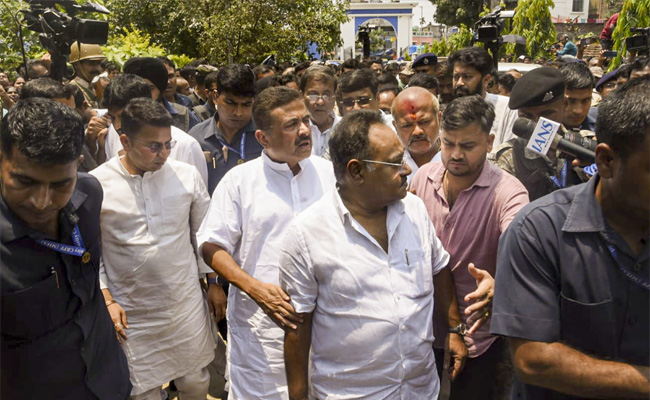
Kolkata (PTI): The family of Buddhabeb Bera, the driver injured in the shooting that killed BJP leader Suvendu Adhikari's close aide Chandranath Rath, demanded exemplary punishment for those responsible and urged the new government to ensure such incidents do not happen in West Bengal.
Rath was shot dead in Madhyamgram near Kolkata on Wednesday night, triggering a political storm in the state. Bera, who was driving the vehicle at the time of the attack, sustained gunshot wounds and is currently undergoing treatment at a private hospital.
Family members said they learned about the incident through television and immediately left for Kolkata.
ALSO READ: Trump says EU has until July 4 to approve last year's trade deal or it will face higher tariffs
"We came to know from TV reports that my nephew had been shot. We still do not know who carried out the attack or why it happened," Buddhabeb's uncle Biswajit Bera said.
"Our only wish now is that he recovers and returns home safely," he added.
Buddhabeb, 25, hails from Majnaberia village in the Chandipur police station area in Purba Medinipur district.
According to family members, he mostly stays in Kolkata for work and visits home occasionally during weekends.
Besides his parents, his younger brother, sister-in-law and several relatives have also travelled to Kolkata following the incident.
Demanding strict action against the perpetrators, the uncle said, "We want the government to conduct a proper investigation and identify those directly involved in the crime. They should be given exemplary punishment so that such incidents do not happen again in West Bengal and no other family has to go through this grief."
A neighbour, Ranjana Ghorai, also sought stringent punishment for those behind the attack.
"In our neighbourhood, we call him Sona. We want exemplary punishment for the people responsible for this incident," she said.
Rath's family members have demanded life imprisonment for the accused, while Adhikari has called for capital punishment for those involved in the killing.