Petrol price at 2-yr high of Rs 83 per litre, diesel at 73.32
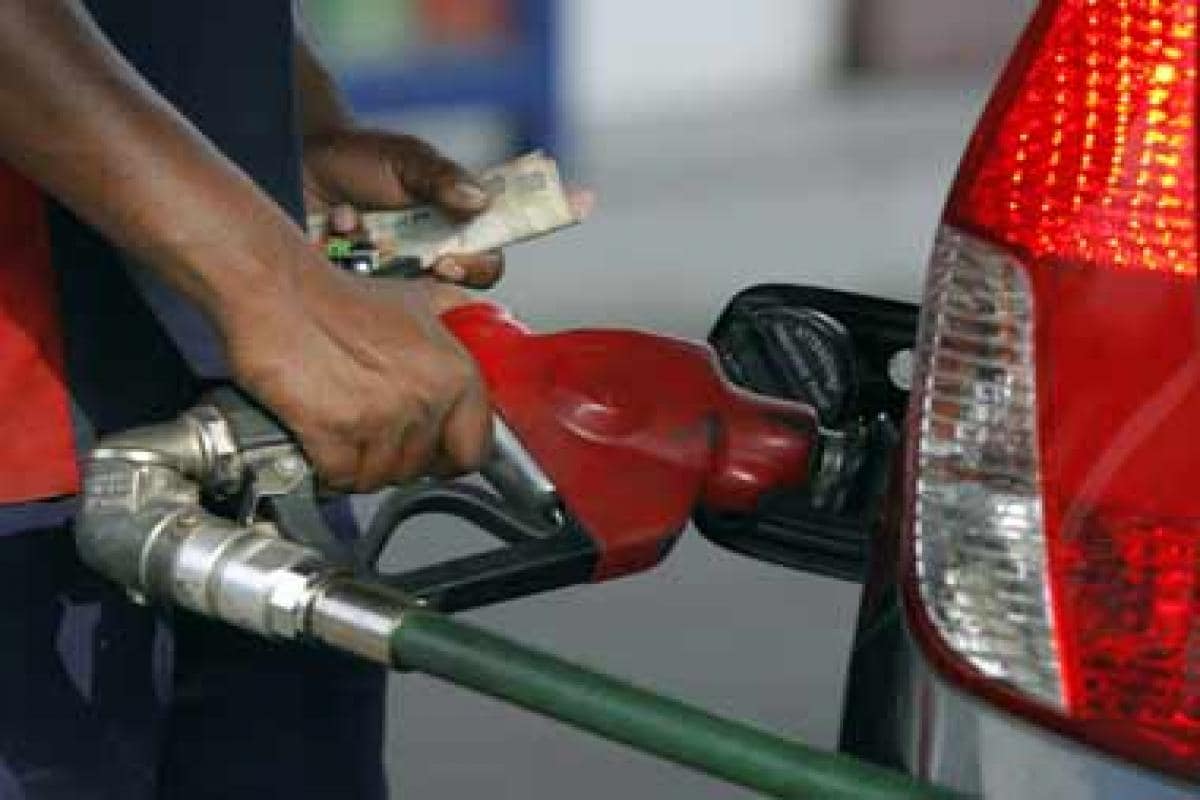
New Delhi: Petrol price on Saturday breached the Rs 83 per litre-mark in Delhi for the first time in more than two years after a rally in international oil prices forced the 13th increase in rates in the last fortnight.
Petrol price on Saturday was raised by 27 paise per litre and diesel by 25 paise, according to a price notification of oil marketing companies.
Petrol price in Delhi rose to Rs 83.13 per litre from Rs 82.86. Diesel rates went up from Rs 73.07 to Rs 73.32 per litre.
This is the highest rate for petrol and diesel since September 2018 and followed the 13th increase in rates since November 20 when oil companies resumed daily price revision after nearly a two-month hiatus.
In 16 days, the petrol price has gone up by Rs 2.07 per litre and diesel rate has risen by Rs 2.86.
ICICI Securities said vaccine hopes are driving oil prices up.
Brent crude oil is up 34 percent from lows in end-October 2020 driven by the hope that COVID-19 vaccines would lead to demand recovery.
"The oil price surge is despite a second wave of Covid in Europe and US (which has led to demand recovery reversal), and surge in Libyan oil output from 0.1 million barrels per day (BPD) to 1.25 million BPD," it said.
Oil cartel OPEC plus its allies like Russia, (called OPEC+), deciding to raise output from January 2021 more modestly than earlier agreed is likely to ensure global supply deficit even in the first quarter of 2021. "Thus, OPEC+ has done its part to prevent supply surplus until the vaccine boosts demand," it added.
Brent has risen from USD 36.9 per barrel on October 30 to USD 49.5 on December 4.
IEA estimates the global oil supply deficit at 2.1-2.8 million BPD in Q3-Q4 calendar year 2020. However, a surplus of 0.4 million was likely in Q1 2021 if OPEC+, as agreed in April 2020, was to prune output cuts from 7.7 million BPD to 5.8 million BPD from January.
"However, we now estimate supply deficit of 0.5 million BPD in Q1 2021 and 0.2-2.8 million BPD in Q2-Q4 as OPEC+ has decided to raise output by just 0.5 million BPD in January 2021 and by not more than 0.5 million BPD in later months and only after deliberations," ICICI Securities said.
Prior to the November 20 hike in rates in India, petrol prices had been static since September 22, and diesel rates hadn't changed since October 2.
Public sector oil marketing companies - Indian Oil Corporation (IOC), Bharat Petroleum Corporation Ltd (BPCL), and Hindustan Petroleum Corporation Ltd (HPCL) - revise rates of petrol and diesel daily based on benchmark international oil price and foreign exchange rate.
They had, however, resorted to calibrating the rates since the pandemic broke out with a view to avoiding volatility in retail prices.
The 58-day hiatus in petrol price revision and 48-day status quo on diesel rates were preceded by no change in rates between June 30 and August 15 and an 85-day status quo between March 17 and June 6.
In Mumbai, the petrol price on Friday was raised to Rs 89.78 per litre from Rs 89.52, while diesel rates went up from Rs 79.66 to Rs 79.93.
Rates vary from state to state depending on the incidence of local sales tax or VAT.
Let the Truth be known. If you read VB and like VB, please be a VB Supporter and Help us deliver the Truth to one and all.
Tribals, Scheduled Castes preserved India's identity and soul despite foreign invasions: Bhagwat
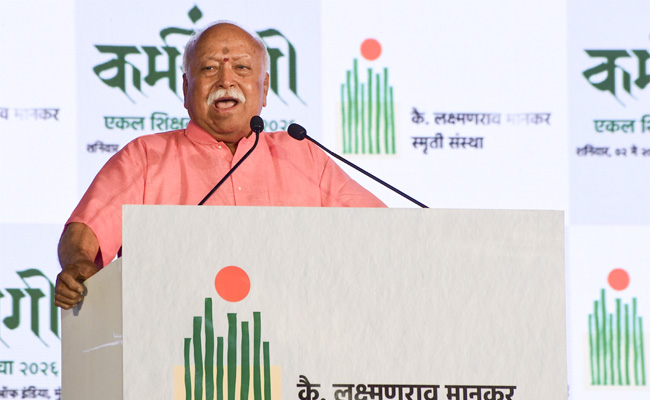
Mumbai (PTI): RSS chief Mohan Bhagwat has said that despite foreign invasions and hardships, tribal communities and Scheduled Castes preserved the country's identity and soul, stressing the need to integrate them into the mainstream development process.
He was speaking on Saturday at the Karmayogi awards ceremony in Mumbai, where Union Road Transport and Highways Minister Nitin Gadkari was also present.
"Human life is defined by giving back to the world, as we are all part of one great family. A person works and spends for the betterment of society, not as a favour, but out of duty. In serving others, we foster our own development. By helping others to thrive, we elevate ourselves and grow as human beings. This principle is the core value of this Indian land, commonly known as a Hindu society," Bhagwat said.
"This is the society's enduring ethos, which has survived for thousands of years. For various reasons, partly because of our indifference and partly because of foreign invasion, those who preserved this ethos paid a heavy price," he said.
The foreign invaders found that this ethos, this value system of the society is its soul and the key to keeping it alive. So they ensured that those who tried to preserve this soul would be uprooted and face extreme hardships, the Rashtriya Swayamsevak Sangh (RSS) chief noted.
But despite foreign invasions and hardships, tribal communities and Scheduled Castes preserved the country's identity and its soul, he said.
"Despite such adversities, the country's core identity remained intact among tribal communities and those belonging to SC and ST groups," he said, emphasising the need to integrate them into the mainstream development process while ensuring they receive equal access to services and facilities.
Referring to global developments, Bhagwat said the present world is "stumbling forward" and struggling to maintain balance, and asserted that India could emerge as a stabilising force.
The country must not only safeguard its own interests but also extend support to the world, he said.
"The world should get to see that the country is not only solving its own misery and sorrow but also helping the world to address similar issues," he said.
The RSS chief stressed that service to society is not a favour but a duty that contributes to one's own development.
Helping others grow also elevates individuals and strengthens the collective fabric of society, he said.
The so-called educated and developed sections have, over time, distanced themselves from these communities, Bhagwat pointed out, and called for the need to bridge this gap.
The identities preserved by these communities represent the true identity of Indian society, he said and underlined that without identity, existence itself is at risk.