PIL on EVM: Bombay HC issues notices to EC, Centre, Maharashtra
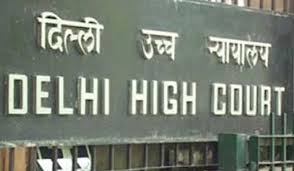
Mumbai, Sep 19 : In a significant development, the Bombay High Court on Wednesday ordered issuing of notices to the Election Commission of India (EC), Maharashtra State Election Commission (M-SEC) and two public sector makers of electronic voting machines (EVM) and others in a public interest litigation filed by an RTI activist.
The directions were given by Justice S.S. Kemkar and Justice S.V. Kotwal when the PIL filed by activist Manoranjan S. Roy came up for admission.
Others being served notices are the Union Home Ministry, IT Department and Maharashtra Government. The two EVM manufacturers are Electronics Corporation of India Ltd. and Bharat Electronics Ltd. The matter is expected to come up for further hearing after two weeks, according to the lawyer for Roy, P. Pawar of Pawar & Co.
The petitioner, among other things, had highlighted the manner in which a large number of EVMs and Voter Verified Paper Audit Trail (VVPATs) were being ordered by the EC and various SECs and that there were huge contradictions in the figures of orders and supplies made by the two manufacturers.
In recent RTI queries raised by Roy, it had been revealed how the Bengaluru-based BEL had despatched large quantities of electronic voting machines by 'hand-delivery' and ‘by post' to various unidentified recipients.
BEL said it had despatched 820 balloting units (BUs) of the machines in bulk packaging, and on two occasions in April (2017) it sent 245 (VVPAT) machines ‘By Hand', to certain recipients and destinations, according to the RTI replies given to Roy.
Roy told IANS that on both the occasions, BEL did not state to whom the consignments of BUs were ‘posted' or from where the entire lot of the ‘hand-delivered' VVPATs originated and whether they were received safely by the intended recipients.
Roy said that for the entire lot of 820 BUs sent through India Posts, there are only nine Docket Nos. assigned for the total consignment, which comprises two boxes with 50 BUs each and one box each with 60, 70, 80, 90, 100, 110 and 210 BUs.
"This is misleading as each box has a specific size depending on the dimensions of the BUs. The BEL's reply shows the entire consignment was posted in only nine boxes, though the Indian Posts does not accept -- nor is equipped to handle -- such huge parcels," Roy said.
BEL said on April 6 and April 10, 2017, that it delivered VVPATs in three parcels -- 65, 70 and 110, respectively -- ‘By Hand' and ‘urgent delivery' to avoid the regular logistics route.
In March this year, Pawar & Company had filed Roy's PIL, seeking detailed investigations into the delivery of EVMs and a ban on deploying EVMs/VVPATs till the outcome of the probe.
As the country prepares for the 2019 general elections, several instances of "indiscriminate" orders and deliveries of EVMs have emerged in RTI responses, Roy said.
Between 1989-1990 to 2015-2016, BEL supplied 125,149 EVMs to Karnataka, 169,975 to Bihar, 159,900 to Uttar Pradesh, 140,500 to Tamil Nadu, 87,325 to Andhra Pradesh, 50,850 to Gujarat, 50,050 to Rajasthan, 23,000 to Jharkhand, 10,000 to Delhi, 3,000 to Manipur and 2,000 to Sikkim.
Inexplicably, BEL also supplied 500 EVMs to Chandigarh, which is the only city to get its own machines. Elsewhere, the EVMs go to the respective states from where they are distributed. Roy demanded that BEL -- and the Election Commission of India -- must explain why Chandigarh got this differential treatment.
According to information received by Roy, in 2013-2014, BEL supplied the highest number of VVPATs -- 2,455 -- to Karnataka, followed by 2,275 to Bihar, 2,140 to Gujarat, 1,500 to Mizoram, 1,475 to Tamil Nadu, 130 to Delhi and 25 to EC.
The other EVM supplier ECIL, Hyderabad, said in response to RTI queries that in 2014-2015 it had supplied 10,000 VVPATs to the Commission (EC).
Significantly, ECIL earlier said it had not supplied a single EVM to any state between 2006-2007 till 2013-2014.
In another communication under RTI, ECIL stated that in 2004-2005 it had supplied 91,050 BUs and 91,050 Control Units (CUs) and from 2014 to 2017 it had sent out 294,337 BUs and 109,075 CUs.
"So where are all these huge number of machines now? The ECIL and EC must clarify," Roy said.
Kerala State Election Commission (KSEC) said in response to RTI queries that in 2015 it had ordered 128,154 EVMs, comprising 9,753 boxes of BUs and 3,125 boxes of CUs. Each box has an average capacity of holding 10 BUs or CUs, depending on the model.
Roy said that there was inadequate accounting of EVMs at various stages, raising questions about the sanctity of the machines on which the Indian democracy was so dependent.
Also, there were no proper records of the EVMs that were actually deployed for elections, the details of defective/defunct machines, the different types of models acquired and used and the type of software-hardware used, he added.
Further, in view of the latest statement by the EC that EVMs used in recent Delhi University elections were supplied by manufacturers directly and were 'distinctly different' than those supplied to the Commission, detailed accounting of the machines is required, Roy told IANS.
Let the Truth be known. If you read VB and like VB, please be a VB Supporter and Help us deliver the Truth to one and all.
Bhojshala case: Disputed structure built from remains of pre-existing temples, claims ASI
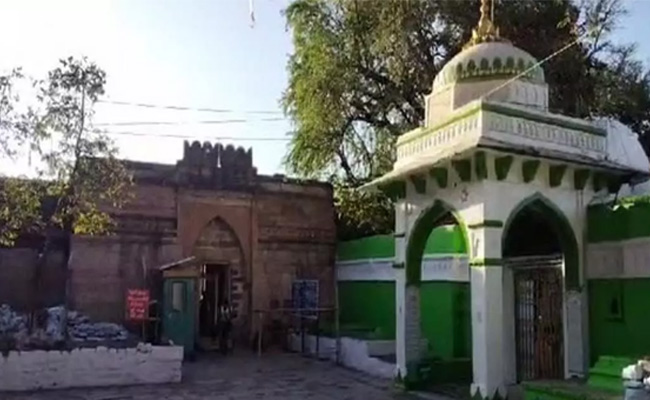
Indore (PTI): The ASI has told the Madhya Pradesh High Court that a massive structure dating back to the Paramara kings' rule existed at the disputed Bhojshala temple-Kamal Maula mosque complex, and the current structure was built from the remains of temples.
The Archaeological Survey of India (ASI) made the claim on Tuesday based on its 98-day scientific survey and over 2,000-page report.
The Hindu community considers Bhojshala a temple dedicated to Vagdevi (Goddess Saraswati), while the Muslim side claims the monument as the Kamal Maula Mosque. The disputed complex is protected by the ASI.
During the hearing before Justices Vijay Kumar Shukla and Alok Awasthi of the HC's Indore bench, Additional Solicitor General Sunil Kumar Jain, representing the ASI, presented a detailed account of the scientific survey conducted two years ago at the complex.
Referring to the ASI's survey report, he said, "Retrieved architectural remains, sculptural fragments, large slabs of inscriptions with literary texts, Nagakarnika inscriptions on pillars, etc, suggest that a large structure associated with literary and educational activities existed at the site. Based on scientific investigations and archaeological remains recovered during the investigations, this pre-existing structure can be dated to the Paramara period."
It can be said that the existing structure was made from the parts of earlier temples, based on scientific investigations, survey and archaeological excavations conducted, study and analysis of retrieved finds, study of architectural remains, sculptures, and inscriptions, art and sculptures, Jain said quoting the report.
Summarising the report, he also drew the court's attention to the fact that the archaeological study identifies that many architectural components, such as pillars and beams, were originally part of temple structures before being repurposed for a mosque.
"The evidence of this transition includes Sanskrit and Prakrit inscriptions that were damaged or hidden, alongside sculptures of deities and animals that were often mutilated or defaced," Jain contended.
The report also states that "all Sanskrit and Prakrit inscriptions are older than the Arabic and Persian inscriptions, indicating that users or engravers of the Sanskrit and Prakrit inscriptions occupied the place earlier".
In light of the Muslim side's earlier objections, the bench wanted to know why there were some discrepancies in the ASI's responses regarding the status of the disputed complex in the cases filed over the years.
The Additional Solicitor General argued that earlier studies of the complex involved only officials, while the current survey involved scientists and the use of advanced technologies such as Ground Penetrating Radar (GPR).
The hearing in the Bhojshala case will continue on Wednesday.
The high court has been regularly hearing four petitions and one writ appeal regarding the religious nature of the Bhojshala temple-Kamal Maula mosque complex since April 6.