PM degree row: Something of 'interest to public' and public interest not same, DU tells HC
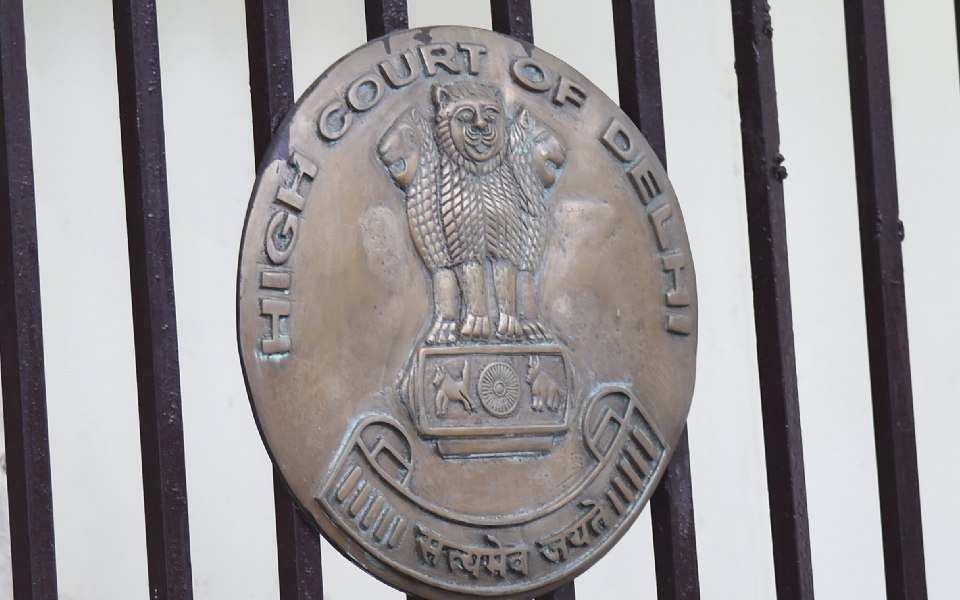
New Delhi, Feb 11 (PTI): In a matter over making public PM Narendra Modi's degree, Delhi University on Tuesday argued in the Delhi High Court that something of "interest to public" was not the same as "public interest", warranting a disclosure under RTI.
Solicitor general Tushar Mehta, representing DU, made the argument before Justice Sachin Datta in relation to an order of the Central Information Commission (CIC) on December 21, 2016, allowing inspection of records of all students who cleared the BA exam in 1978 -- the year Prime Minister Modi also passed it.
The high court had stayed the CIC order on January 23, 2017.
"Mere curiosity that 'I want to know about it what is your objection' cannot be an argument. Public may get interested in something but it may not be public interest..Is there any public interest in this matter? Answer in the facts of this case is no," Mehta said.
In its plea challenging the CIC decision, DU called it an order that was “arbitrary” and “untenable in law” as the information sought to be disclosed was a “third party personal information”.
He said DU held the information in a fiduciary capacity and "mere curiosity" in the absence of public interest did not entitle anyone to seek private information under the Right to Information (RTI) law.
Senior counsel Sanjay Hegde, appearing for the RTI applicant who sought the information before the CIC, defended the order and submitted the marks obtained by a student were not held in a fiduciary capacity by an education institution.
He said "elected offices" favoured disclosure of several information, like their assets, to enable a voter to make a decision and academic qualification also fell in the same category.
Hegde argued the RTI Act provided for disclosure of such information in greater public good.
"The fact that it relates to an old degree does not immunise the information from being republished.. Marks, whether pass or fail, are not external or pre-existing information given by a student in fiduciary capacity. It is generated by the university in the process," he submitted.
Hegde added, "No private person has come to say don't disclose it. University has come."
Senior advocate Trideep Pais, representing some of the intervenors, argued under the RTI Act, any information which was more than 20 years old ought to be provided irrespective of the exemptions of privacy and fiduciary relationship under the law.
The varsity, he said, had even live-streamed its convocation and the information sought in the case was available with DU as it was "preserved forever".
RTI activists Anjali Bhardwaj, Nikhil Dey and Amrita Johri sought to intervene in the matter to assist the court on certain legal issues but the bench said it wasn't hearing a PIL and granted liberty to the intervenors to file a written synopsis of their submissions.
Mehta objected to the intervention application and said they had no locus standi in a litigation between two entities simply because they were "experts".
The RTI applicant and the intervenors, said Mehta, were "busy bodies" and "meddlesome interlopers". He cautioned against the abuse of the RTI law, which according to him served a "good purpose".
"A third person can't walk up and say give me personal information of A, B, C because I am curious about it. This is a classic case — not only the applicant who has applied for the degree is a busy body and intermeddler but also the others who want to be heard on law that is settled," he added.
The DU counsel said educational qualification was private and could not be unjustifiably demanded and the interest of public in a private matter was against privacy.
This is not a case where there is any requirement of degree as eligibility criteria and nobody out of curiosity can demand details of other students, Mehta said.
The DU has said it was "completely illegal" for the CIC to direct the disclosure of an information, which is available to it in a fiduciary capacity.
The RTI Act, it said, was reduced to a "joke" with queries seeking records of all students who passed the BA examination in 1978, including the Prime Minister.
The CIC, in its order, asked DU to allow inspection and rejected the argument of its public information officer that it was third party personal information, observing there was “neither merit, nor legality” in it.
The university was directed to "facilitate inspection" of the register which stored the complete information on results of all students who cleared the BA exam in 1978 along with their roll number, names of the students, fathers' names and marks obtained, and provide a certified copy of the extract, free of cost.
The matter would be heard on February 19.
Let the Truth be known. If you read VB and like VB, please be a VB Supporter and Help us deliver the Truth to one and all.
Karnataka to approach SC seeking permission to continue MGNREGA
Bengaluru (PTI): The Karnataka Cabinet on Thursday decided to approach the Supreme Court seeking permission to continue implementation of MGNREGA in the state, contending that the Centre had repealed the rural employment guarantee law without consultation and failed to put in place any alternative mechanism under the VB-G RAM G Act.
Briefing reporters after the Cabinet meeting, Karnataka Law and Parliamentary Affairs Minister H K Patil said the state would immediately move the apex court seeking permission to prepare and implement the annual action plan for rural employment works, while also challenging what it described as an infringement on the constitutional rights of states.
The parliament passed VB-G RAM G in December that replaces MGNREGA.
Patil explained that the Cabinet decided to approach the court seeking permission for the State Government to prepare an action plan in this regard. Since the Centre’s stand interferes with the constitutional rights of state governments, the Cabinet has also decided to challenge this issue before the appropriate court
“There are two points here. One is that they have come in the way of our constitutional right of providing the right to work. That has been halted, and, therefore, the State Government has decided to approach the Supreme Court. The second point is that the Government of India has not provided any alternative,” the Minister said.
The Central Government has not yet issued a notification to implement the VB-G RAM G Act, nor has it made any alternative arrangements and hence continuing Mahatma Gandhi National Rural Employment Guarantee Act (MGNREGA) is unavoidable in the public interest, the Minister said.
“Therefore, in the interest of the public, farmers and agricultural labourers, we must continue MGNREGA. For that purpose, the Cabinet has decided to approach the court seeking permission for the State Government to prepare the action plan for this year,” he added.
The Minister also said the Centre had only permitted continuation of pending and spillover MGNREGA works without releasing grants or announcing a fresh action plan.
“The Centre itself has said that pending, spillover and half-done MGNREGA works can continue. That means MGNREGA is actually still functioning in practice. But there is no new action plan,” he said.
Patil said the state had already passed a resolution on the issue, while Chief Minister Siddaramaiah had written to the Prime Minister and the Rural Development Minister had held discussions with Union Ministers.
Replying to questions, the minister said the state would move court “as immediately as possible.”
He clarified that the state was seeking permission to formulate and implement this year’s action plan under the existing framework.
“What we are asking the Supreme Court is to allow us to have the action plan for this year and implement it,” he said.
The Cabinet also held detailed discussions on the final report submitted by the State Education Policy Commission headed by former UGC chairman Professor Sukhadeo Thorat.
Patil said a Cabinet sub-committee would be constituted to examine the report and recommend measures for implementation.
“No decision has been taken yet. The Cabinet sub-committee will recommend what should be accepted and what should be modified,” he said.
He said the report comprised around eight volumes and covered issues relating to financial implications, human resources, curriculum reforms, deemed universities, unitary universities and newly established universities. The Chief Minister has been authorised to constitute the sub-committee.
The Cabinet also approved the Karnataka Motor Transport and Other Related Workers’ Social Security and Welfare Amendment Bill, 2026, transferring welfare administration of transport-related workers from the Labour Department to the Transport Department.
The Cabinet further approved establishment of three new industrial estates in Kalaburagi, Yadgir and Surpur under the Karnataka State Small Industries Development Corporation and Kalyana Karnataka Region Development Board schemes at an estimated cost of Rs 200 crore.
The Cabinet also approved amendments to Karnataka Civil Services (General Recruitment) Rules, 2026, providing two per cent reservation in state civil services appointments for sportspersons.