PM Modi 'most acceptable leader' for majority of people from minority communities: Mukhtar Naqvi
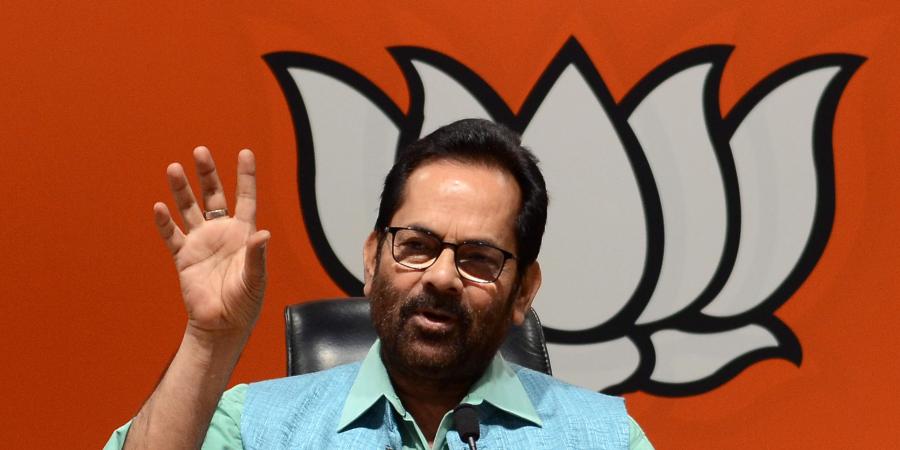
New Delhi, Dec 17: Prime Minister Narendra Modi is the "most acceptable leader" for a majority of the people from minority communities and they admire him and his government, Minority Affairs Minister Mukhtar Abbas Naqvi said on Thursday.
He also dismissed a South Asia State of Minorities Report 2020 that has reportedly claimed that India has become increasingly intolerant of religious minorities, and asserted that the country is "safest" in the world for the people of minority communities.
In an interview with PTI, Naqvi said such "experimental reports keep coming" but a lot of work has been done for the social, economic and educational empowerment of the minorities in the last six years which will continue going forward.
Asked about the perception of the Modi government among minorities, he said, "Apart from the traditional and professional Modi bashers, among the minorities, he is the most acceptable leader."
"Majority among the minorities are admiring Modi, his government's working and the atmosphere of equal opportunities," Naqvi said, stressing that he was not talking in terms of votes.
No person from the six notified minorities -- Muslims, Sikhs, Christians, Buddhists, Jains and Zorastrians (Parsis) -- can say that there is discrimination done against anyone under Modi's rule, he said.
Minorities have an equal share in all development schemes and there is an atmosphere of equal opportunity, the minister said.
"Under Modi 's rule, over four crore children of minorities get scholarships, drop out rates among girls from the minority communities has gone down, their participation in central government jobs has gone up to 10 per cent and also in the civil services, in the last few years so many from the minority communities have been selected," he said.
Their selection in civil services is not because of the government but due to their own hard work. However, the atmosphere of discrimination was done away with by the Modi government, he said.
The minister also hailed the District Development Council (DDC) and the Ladakh Autonomous Hill Development Council polls in the Union Territories of Jammu and Kashmir and Ladakh, and said the response of people, who are openly participating in the democratic process, was "very encouraging".
Separatists, terrorists and anti-India forces have been isolated by the people there, Naqvi said.
Now Waqf boards will also be established there with separate Shia and Sunni Waqf boards in Kashmir and another Waqf board for Ladakh, Naqvi said.
"Earlier, either one family used to rule or another and if not them then a super family from Delhi used to come to power but now this dynastic politics has come to an end and people are getting to directly participate in the democratic process which is free and fair," he said in a swipe at the Mufti, Abdullah and Gandhi families.
On preparations for Haj 2021, the minority affairs minister said the government is carrying out its preparations in full swing and the entire process has been made completely online.
He said a final call on the pilgrimage in the wake of the COVID-19 pandemic will be taken after the decision by the Saudi government and his ministry was also in touch with the Health Ministry for priority inoculation of the Haj pilgrims when vaccines against the virus are available.
Let the Truth be known. If you read VB and like VB, please be a VB Supporter and Help us deliver the Truth to one and all.
Ordinance issued to increase number of Supreme Court judges from 34 to 38
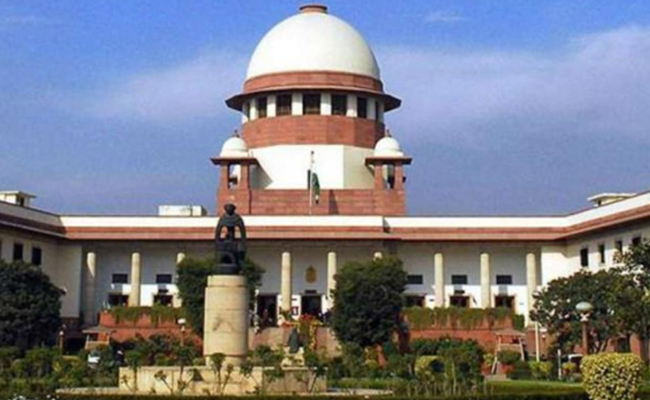
New Delhi (PTI): The government has promulgated an ordinance to increase the strength of the Supreme Court from the present 34 judges to 38, including the Chief Justice of India.
The law ministry notified the ordinance on Saturday, which amended the Supreme Court (Number of Judges) Act, 1956, to increase the sanctioned strength of the top court.
So far, the sanctioned strength of the top court was 34, including the Chief Justice of India (CJI). Now, the number of judges has been increased by four, taking the sanctioned strength to 38.
The top court will now have 37 judges, other than the CJI.
With the apex court having two vacancies at present, and the ordinance coming into force immediately, the Supreme Court Collegium will now have to recommend six names for appointment as judges in the top court.
A bill will be brought in the Monsoon Session of Parliament to convert the ordinance – an executive order – into a law passed by Parliament.
The Union Cabinet had cleared a draft bill on May 5 to increase the number of apex court judges.
The strength of the Supreme Court was last increased from 30 to 33 (excluding the CJI) in 2019.
The Supreme Court (Number of Judges) Act, as originally enacted in 1956, put the maximum number of judges (excluding the CJI) at 10.
This number was increased to 13 by the Supreme Court (Number of Judges), Amendment Act, 1960, and to 17 by another amendment to the law.
The Supreme Court (Number of Judges) Amendment Act, 1986, augmented the strength of judges from 17 to 25, excluding the CJI.
A fresh amendment in 2009 further increased the strength from 25 to 30.
Article 124(3) of the Constitution lists the qualifications required to become a Supreme Court judge.
An Indian citizen who has either served as a high court judge for at least five years, or as an advocate for 10 years, or is a distinguished jurist, can be appointed to the top court.
The strength of the Supreme Court is increased based on the recommendations of the CJI, who writes to the Union law minister. After consulting the finance ministry, the Department of Justice under the law ministry moves the Cabinet with a draft bill.