PM Modi should step in and "stop the poison from spreading": Naseeruddin Shah on Prophet row
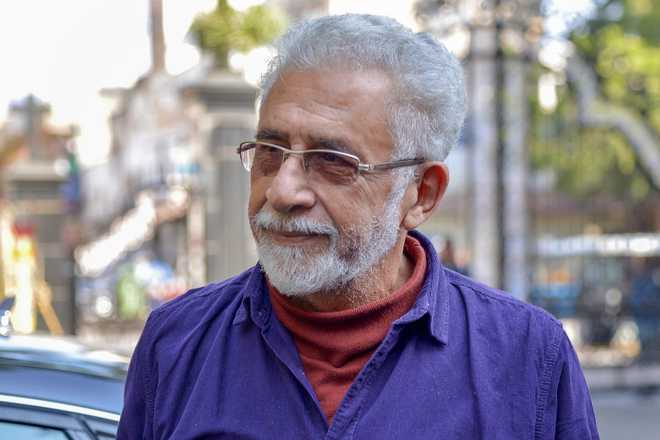
New Delhi, Jun 8: Amid global condemnation over BJP leaders comments on Prophet Mohammad, veteran actor Naseeruddin Shah on Wednesday said he hopes good sense prevails and the "hate wave" against Muslims dissipates even if that doesn't happen in his lifetime.
In an interview to a news channel, the multiple National Award winner also appealed to Prime Minister Narendra Modi to step in and "stop this poison from spreading".
"I would appeal to him (PM) to knock some good sense into these people. If he believes what was said at the 'Dharam Sansad' in Rishikesh, then he should say so. If he does not, then he should say so," he said.
The BJP on Sunday suspended its national spokesperson Nupur Sharma and expelled its Delhi media head Naveen Kumar Jindal after their controversial remarks against the Prophet.
Amid protests by Muslim groups over the remarks, the party also issued a statement aimed at assuaging the concerns of minorities and distancing itself from these members, asserting that it respects all religions and strongly denounces the insult of any religious personality.
The controversial remarks also sparked a Twitter trend in the Arab world calling for a boycott of Indian products.
"What the Indian government did was too little, too late. It was a week before they even opened their mouths and said anything condemning these kinds of statements.
"These kinds of statements in a country like Pakistan, Bangladesh or Afghanistan, which we hope to include in 'Akhand Bharat' some day, would result in a death sentence because it would be considered blasphemous. Here, there was not a sound from the top and absolutely no acknowledgement of the hurt caused to millions of believers," Shah told NDTV.
After her suspension from the ruling party, Sharma issued an "unconditional apology", something the senior actor dubbed "insincere".
"It's hardly meant to assuage hurt feelings. I wouldn't be surprised if such a hate speech occurs again. It's ironic you talk of peace and unity, you get locked up in jail for more than a year. You talk of genocide and you get a slap on the wrist. There are double standards working here. It's like the double-think of George Orwell's '1984'."
Shah said Sharma was not a "fringe element" as the BJP has claimed.
He also argued that it was "high time" that sensible Hindus spoke up against the hate towards the Muslim community.
Shah said he puts "complete responsibility" on TV news channels and social media for "propagating hate".
"It's a manufactured hate. It's a kind of venom that begins to spew when you are confronted with somebody with an opposite opinion... I wonder how long it is before the shivlings start to be searched under every church," Shah said in an apparent reference to the ongoing case of the Gyanvapi mosque complex in Varanasi.
He, however, condemned death threats against Sharma and her family, who are now under Delhi Police's protection.
"This route (threats) is wrong. That's why Pakistan and Afghanistan are in a mess. We do not want to emulate these countries but willy-nilly are we doing so. Not (for) just slaughtering a cow but on the suspicion of slaughtering a cow people are being lynched, untouchables who were skinning a dead cow are whipped in public. These are not the kinds of things that used to happen in India, but in barbaric Islamic countries."
Asked if the Khans - Shah Rukh, Salman and Saif - can open up about their thoughts today, Shah said he can't speak for these Bollywood stars.
"They would be risking too much but I don't know how they explain it to their conscience about it. I think they have too much to lose."
He also praised Shah Rukh, his co-star of many films such as "Chamatkar" and "Chaahat", for handling media scrutiny with grace last year when his son Aryan was arrested in connection with a drugs case.
He also noted that instead of being acknowledged for all the work done during the lockdown, Sonu Sood gets raided.
Asked to comment on how the film industry was cozying up to the government, Shah said they want to be on the winning side.
"It does look like the BJP is going to stay on the winning side for a while. It's nothing new..."
Calling "The Kashmir Files" an "almost fictionalised version of the suffering of the Kashmiri Hindus", the actor said the government is promoting it instead of ensuring the security and rehabilitation for the community.
"It is propaganda and people are willingly participating in it. I fear there will be more such pseudo-patriotic films (in future)."
Shah further said he doesn't feel marginalised as a Muslim in India as he comes from privilege as a senior actor with social capital.
"I'm certainly not disgruntled, or unhappy in the country. This has been the country I've been brought up in, taught to love, the country I've been told I belong to, and I feel I belong to. I'm luckily in a position where I can't be marginalised.
"I'm still getting work, it's not that my anti-establishment statements have resulted in me being blacklisted. I just wish that somehow good sense prevails but I'm not optimistic that will happen very soon. This hate wave will dissipate some day. it may not happen in my lifetime, but it will dissipate some day."
Let the Truth be known. If you read VB and like VB, please be a VB Supporter and Help us deliver the Truth to one and all.
Real Madrid fines Valverde and Tchouaméni half a million euros each for altercation
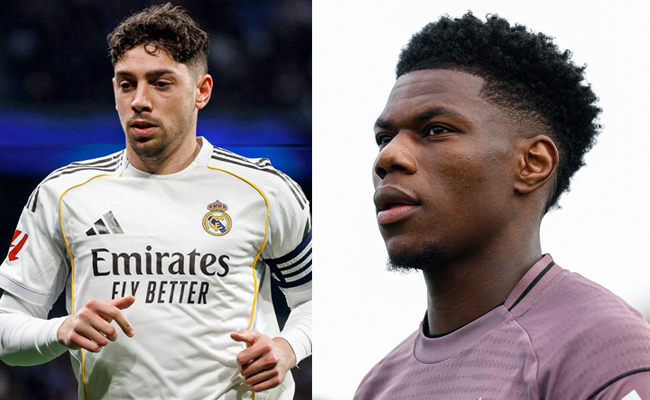
Barcelona (AP): Real Madrid slapped players Federico Valverde and Aurélien Tchouaméni with half-a-million-euro ($588,000) fines on Friday for their altercation during practice.
The massive fines came a day after the midfielders tussled when the team trained. Valverde said in a post on social media on Thursday that no punches were thrown. But Valverde knocked his head on a table and he suffered a small cut that required a brief hospital visit.
On social media, Valverde initially called it a “meaningless fight” with a teammate and said “everything has been blown out of proportion."
His employers, however, considered it a significant enough breach of team discipline to nail both Valverde and Tchouaméni with fines that bite even the bank account of a top soccer player. The half-a-million euro penalties reflect the reputational damage the club was enduring in a chaotic end to a disappointing season.
In a statement, the 15-time European champion said its disciplinary action was concluded after both players expressed to the club “their complete remorse for what happened and apologized to one another.”
Madrid added they also apologized to their teammates, the coaching staff and club supporters, as well as showing their willingness to accept whatever disciplinary action the club deemed “opportune.”
Tchouaméni was back training with Madrid on Friday, two days before they play at Barcelona in a clasico. Madrid has to win otherwise Barcelona will be crowned La Liga champion.
After being notified of the fine, he posted a public apology to the club and its fans on social media.
“What happened this week in training is unacceptable,” Tchouaméni wrote. "I say this while thinking about the example we are expected to set for young people, whether in football or at school.
“Above all, I am sorry for the image we projected of the club.”
Valverde was not at practice due to the head knock.
Both players are set to play in the World Cup next month, with Tchouaméni playing for France and Valverde for Uruguay.
Chaotic end to a poor season
===================
The run-in between the players, who for seasons have played side by side in Madrid's midfield, came after they argued this week in previous training sessions. But tempers boiled over on Thursday. Spanish media was rife with reports that the players previously disagreed over the club's decision to let coach Xabi Alonso go after just months on the job.
It was not the only altercation involving Madrid players during training this week. Álvaro Carreras confirmed he was in a “minor” incident with a teammate. Spanish media said he and fellow defender Antonio Rüdiger got into a scuffle.
Álvaro Arbeloa, the coach who was promoted from Madrid's reserve team when Alonso was fired in January, will face tough questions on what went wrong inside the changing room when he gives a press conference on Saturday ahead of the clasico at Camp Nou.
Madrid is facing a second consecutive campaign without a major trophy amid rumors in the Spanish media that club president Florentino Pérez is considering bringing back Jose Mourinho to straighten out his underperforming team.