Politics of quota is problem, not reservation: Bhagwat
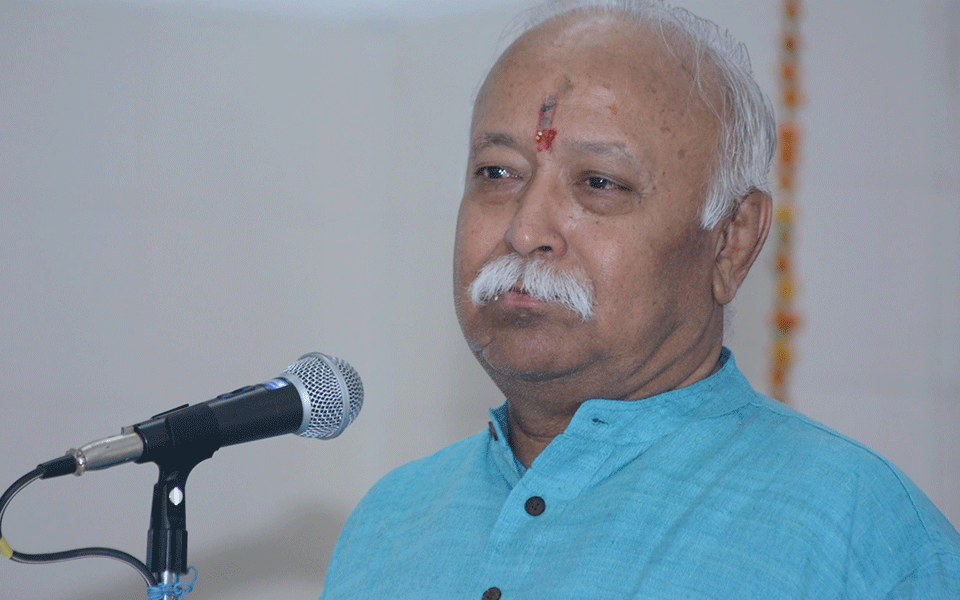
New Delhi, Sep 19: Asserting that the Rashtriya Swayamsevak Sangh (RSS) always supported reservation system, its chief Mohan Bhagwat on Wednesday said that reservation was not a problem, but the problem was the politics of reservation.
"RSS completely supports the reservation given by the Constitution to remove social stigmas. The decision as to how long reservation should continue, that has to be taken by those for whom reservation has been granted. Whenever they feel it is not necessary, they will decide.
"Till then it should continue, this has been the RSS' stand since the inception of the system and will continue to be so," Bhagwat said during interactive session on the concluding day of his three-day lecture series here.
"Reservation is not a problem, the problem is the politics of reservation. An organ of the society is lagging behind, it is a result of our doing. To cure this 1000-year-old malady, we have to bend for 100-150 years, I don't think that is an expensive deal," he said.
His latest assertion is in contrast with his 2015 public remarks calling for a review of reservation policies.
Refusing to comment on the Supreme Court's verdict "diluting" the SC/ST Prevention of Atrocities Act, Bhagwat stressed the need for effectively implementing the law.
"Atrocities (on Dalits) do happen. That is why this law was made. But the law should be properly implemented and should not be misused. It is a fact that the law has not been properly implemented and also it has been misused," said Bhagwat adding that law alone was not sufficient and social harmony was essential to prevent the atrocities.
Let the Truth be known. If you read VB and like VB, please be a VB Supporter and Help us deliver the Truth to one and all.
Bhojshala case: Disputed structure built from remains of pre-existing temples, claims ASI
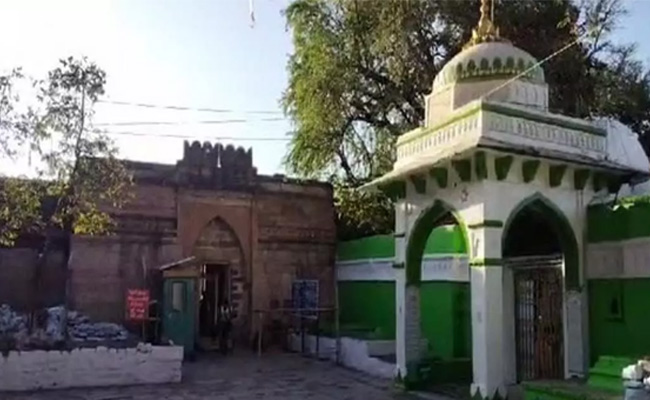
Indore (PTI): The ASI has told the Madhya Pradesh High Court that a massive structure dating back to the Paramara kings' rule existed at the disputed Bhojshala temple-Kamal Maula mosque complex, and the current structure was built from the remains of temples.
The Archaeological Survey of India (ASI) made the claim on Tuesday based on its 98-day scientific survey and over 2,000-page report.
The Hindu community considers Bhojshala a temple dedicated to Vagdevi (Goddess Saraswati), while the Muslim side claims the monument as the Kamal Maula Mosque. The disputed complex is protected by the ASI.
During the hearing before Justices Vijay Kumar Shukla and Alok Awasthi of the HC's Indore bench, Additional Solicitor General Sunil Kumar Jain, representing the ASI, presented a detailed account of the scientific survey conducted two years ago at the complex.
Referring to the ASI's survey report, he said, "Retrieved architectural remains, sculptural fragments, large slabs of inscriptions with literary texts, Nagakarnika inscriptions on pillars, etc, suggest that a large structure associated with literary and educational activities existed at the site. Based on scientific investigations and archaeological remains recovered during the investigations, this pre-existing structure can be dated to the Paramara period."
It can be said that the existing structure was made from the parts of earlier temples, based on scientific investigations, survey and archaeological excavations conducted, study and analysis of retrieved finds, study of architectural remains, sculptures, and inscriptions, art and sculptures, Jain said quoting the report.
Summarising the report, he also drew the court's attention to the fact that the archaeological study identifies that many architectural components, such as pillars and beams, were originally part of temple structures before being repurposed for a mosque.
"The evidence of this transition includes Sanskrit and Prakrit inscriptions that were damaged or hidden, alongside sculptures of deities and animals that were often mutilated or defaced," Jain contended.
The report also states that "all Sanskrit and Prakrit inscriptions are older than the Arabic and Persian inscriptions, indicating that users or engravers of the Sanskrit and Prakrit inscriptions occupied the place earlier".
In light of the Muslim side's earlier objections, the bench wanted to know why there were some discrepancies in the ASI's responses regarding the status of the disputed complex in the cases filed over the years.
The Additional Solicitor General argued that earlier studies of the complex involved only officials, while the current survey involved scientists and the use of advanced technologies such as Ground Penetrating Radar (GPR).
The hearing in the Bhojshala case will continue on Wednesday.
The high court has been regularly hearing four petitions and one writ appeal regarding the religious nature of the Bhojshala temple-Kamal Maula mosque complex since April 6.