28 injured in grenade attack in Jammu bus stand, three critical

Jammu: Suspected terrorists Thursday carried out a grenade attack in the crowded general bus stand area in the heart of the city, injuring 28 persons, three among them critically, officials said.
This is the third grenade attack by terrorists in Jammu bus stand since May last year, viewed by security agencies as an attempt to disturb communal harmony and peace in the city.
"So far 28 persons were brought with splinter injuries. Three are critical, of whom two are being operated," Principal, Government Medical College (GMC) hospital, Sunanda Raina told PTI.
Inspector General of Police, Jammu, M K Sinha said preliminary investigation suggested that someone lobbed the grenade in the bus stand area around noon, causing the explosion.
The scene of the blast along B C Road was sealed off by police and a massive hunt has been launched to nab the grenade thrower, Sinha, who immediately rushed to the scene to take stock of the situation, told reporters.
A parked bus of the state road transport corporation (SRTC) suffered extensive damage in the blast which caused panic among the people.
"Whenever there is heightened state of alert, we strengthen checking and frisking but there is always a possibility of someone slipping through and this one seems to be a case like that," the IGP said.
"Obviously the intention is always to disturb the communal harmony and peace," he said and requested the people to maintain calm.
The IGP said the police is collecting the evidence and "we are sure to hunt him down (the attacker)."
Immediately after the explosion, people ran to safety and later as the situation returned to normal evacuated the injured to the hospital.
Police parties along with sniffer dogs and forensic experts rushed to the spot and launched a search operation to nab the attacker, officials said, adding the operation was still going on when last reports were received.
However, no one was arrested in connection with the blast so far, they said.
Earlier on December 28-29 last year, suspected terrorists carried out a grenade attack on the bus stand with the intention to target the local police station building, an attack which took place seven months after another grenade attack along the B C Road left two policemen and a civilian injured on May 24, 2018.
"The blast occurred on the roadside when there was huge rush of people. I had come to drop my wife who was going to board a bus to Punjab," one of the injured, Kuldeep Singh of the Pragwal area of the city, said.
Singh, who is undergoing treatment at Government Medical College hospital for splinter injuries in lower parts of his body, said he felt that somebody hurled something which caused the powerful explosion.
Let the Truth be known. If you read VB and like VB, please be a VB Supporter and Help us deliver the Truth to one and all.
Air India's A350 aircraft enroute to London faces tech issue; returns to Delhi
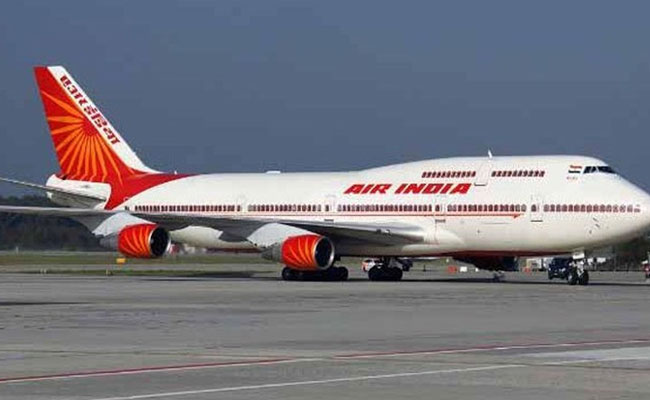
New Delhi (PTI): Air India's A350 aircraft enroute to London Heathrow returned to the national capital due to a technical issue on Thursday afternoon after being airborne for nearly seven hours.
The same A350-900 aircraft VT-JRF had faced a technical issue on March 15, following which the plane operating the flight from New York to Delhi was diverted to the Irish town of Shannon, sources said.
An Air India spokesperson said its flight AI111, operating from Delhi to London on Thursday, made a precautionary air-return to the national capital following a suspected technical issue.
"The aircraft landed safely and consistent with Air India's high safety standards, it is currently subject to extensive technical evaluations, which will require additional time to complete," the spokesperson said in a statement.
According to the sources, noises were heard in the aircraft following which it was diverted.
The spokesperson also regretted the inconvenience caused to the passengers due to the unforeseen situation and said the airline was making every effort to ensure passengers are able to continue their journey to London at the earliest.
Details about the number of passengers onboard could not be ascertained.
The aircraft operating the flight AI111 was airborne for around four hours before the decision was taken to divert the plane when it was in the Saudi Arabia airspace. In total, the plane was airborne for nearly seven hours before landing back in the national capital, as per information available on flight tracking website Flightradar24.com.
The flight had taken off from Delhi around 6 am on Thursday and landed back at about 12.30 pm.
Air India started operating A350-900 planes from January 2024.