Pranab Mukherjee's son and daughter lock horns on Twitter over publication of his memoir
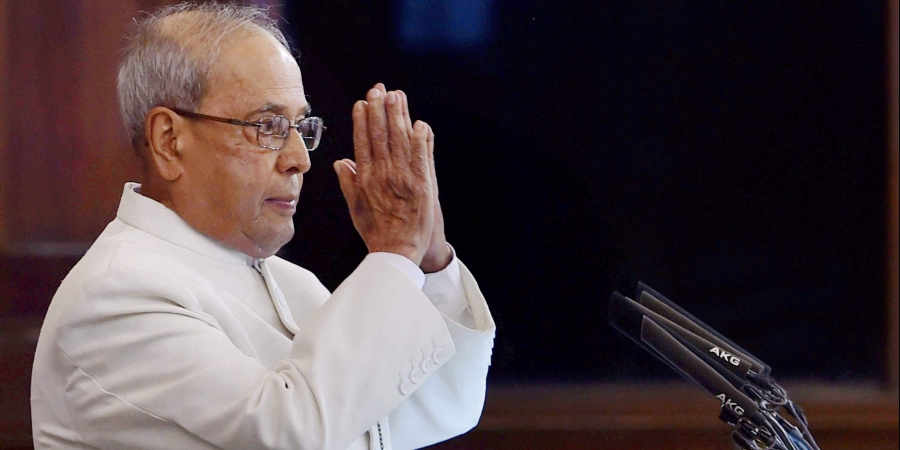
New Delhi, Dec 15: The late Pranab Mukherjee's son and daughter are at loggerheads with each other over his memoir The Presidential Years , one saying it should not be published without his consent and the other "requesting" her brother to not create unnecessary hurdles in the publication of his last book.
The book, which was in the news recently for Pranab Mukherjee's critical comments on the Congress, including his observation that the party lost political focus after his elevation as president, is set to be launched next month by Rupa, which published the two earlier volumes of his memoirs.
The late president's son Abhijit Mukherjee, a former Congress MP, said on Twitter that he has written to the publishers asking them not to publish the book until he gives his nod. His sister Sharmistha Mukherjee, national spokesperson of the party, shot back saying no one should try and stop it for cheap publicity and doing so would be great disservice to the late leader.
"I, the Son of the author of the Memoir The Presidential Memoirs' request you to kindly stop the publication of the memoir as well as motivated excerpts which is already floating in certain media platforms without my written consent," Abhijit Mukherjee said on Twitter.
"Since my father is no more, I being his son want to go through the contents of the final copy of the book before it's publication as I believe, had my father been alive today, he too would have done the same."
Being the son, he said he requested the publishers to immediately stop the publication.
I have already sent you a detailed letter in this regard which will reach You soon. Regards - Abhijit Mukherjee," the tweet read.
His sister responded, also on Twitter.
"I, daughter of the author of the memoir 'The Presidential Years', request my brother Abhijit Mukherjee not to create any unnecessary hurdles in publication of the last book written by our father. He completed the manuscript before he fell sick."
The final draft, she said, contains her father's handwritten notes and comments that have been strictly adhered to.
Stating that views expressed by him are his own and no one should try to stop it from being published for any cheap publicity, she said, That would be the greatest disservice to our departed father.
"Btw bro, the title of the book is 'The Presidential Years', not 'The Presidential Memoirs'," she said.
Abhijit Mukherjee corrected the title of the book in another tweet after his sister pointed out the mistake.
The former president and long-time Congress leader died on August 31 at the age of 84, following COVID-19 complications. His comments on the Congress come at a time of intense internal turmoil in the party.
The Congress' chief troubleshooter through the decades wrote that the party lost political focus after his elevation as the president and some party members believed the 2014 Lok Sabha poll debacle could have been averted had he become prime minister in 2004.
Though I don't subscribe to this view, I do believe that the party's leadership lost political focus after my elevation as president. While Sonia Gandhi was unable to handle the affairs of the party, Dr (Manmohan) Singh's prolonged absence from the House put an end to any personal contact with other MPs," Pranab Mukherjee is quoted as saying in his book.
According to the excerpts released by Rupa, the late leader also said he believes that the moral authority to govern vests with the PM and the overall state of the nation is reflective of the functioning of the PM and his administration.
While Dr Singh was preoccupied with saving the coalition, which took a toll on governance, (Narendra) Modi seemed to have employed a rather autocratic style of governance during his first term, as seen by the bitter relationship among the government, the legislature and the judiciary, he said.
"Only time will tell if there is a better understanding on such matters in the second term of this government," Mukherjee said in the excerpts.
Mukherjee was the 13th president of India after having spent five decades in politics.
The Presidential Years , which follows The Turbulent Years and The Coalition Years , gives a rare glimpse of Pranab Mukherjee's fascinating journey from a remote village in Bengal to the Rashtrapati Bhavan.
@kapish_mehra @Rupa_Books
— Abhijit Mukherjee (@ABHIJIT_LS) December 15, 2020
I , the Son of the author of the Memoir " The Presidential Memoirs " request you to kindly stop the publication of the memoir as well as motivated excerpts which is already floating in certain media platforms without my written consent .1/3
2/3
— Abhijit Mukherjee (@ABHIJIT_LS) December 15, 2020
Since my father is no more , I being his son want to go through the contents of the final copy of the book before it's publication as I believe , had my father been alive today , he too would have done the same.
3/3 , Therefore , I being his son request You to immediately stop it's publication without my written consent till I go through its contents ! I have already sent you a detailed letter in this regard which will reach You soon !
— Abhijit Mukherjee (@ABHIJIT_LS) December 15, 2020
Regards - Abhijit Mukherjee.#pranabmukherjee
I, daughter of the author of the memoir ‘The Presidential Years’, request my brother @ABHIJIT_LS not to create any unnecessary hurdles in publication of the last book written by our father. He completed the manuscript before he fell sick 1/3
— Sharmistha Mukherjee (@Sharmistha_GK) December 15, 2020
The final draft contains my dads’ hand written notes & comments that have been strictly adhered to. The views expressed by him are his own & no one should try to stop it from being published for any cheap publicity. That would be the greatest disservice to our departed father 2/2
— Sharmistha Mukherjee (@Sharmistha_GK) December 15, 2020
Btw bro, the title of the book is ‘The Presidential Years’, not ‘The Presidential Memoirs’. 3/3
— Sharmistha Mukherjee (@Sharmistha_GK) December 15, 2020
Let the Truth be known. If you read VB and like VB, please be a VB Supporter and Help us deliver the Truth to one and all.
Ordinance issued to increase number of Supreme Court judges from 34 to 38
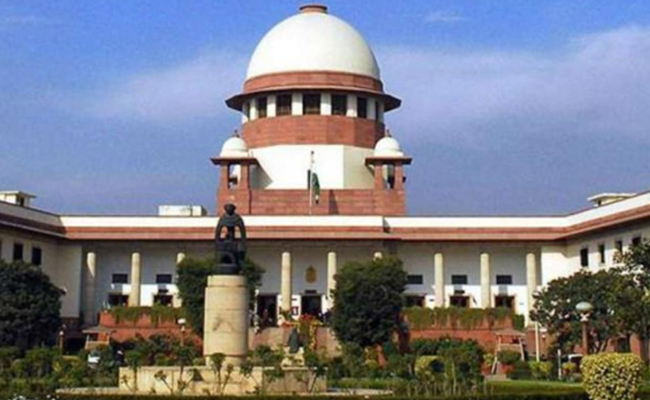
New Delhi (PTI): The government has promulgated an ordinance to increase the strength of the Supreme Court from the present 34 judges to 38, including the Chief Justice of India.
The law ministry notified the ordinance on Saturday, which amended the Supreme Court (Number of Judges) Act, 1956, to increase the sanctioned strength of the top court.
So far, the sanctioned strength of the top court was 34, including the Chief Justice of India (CJI). Now, the number of judges has been increased by four, taking the sanctioned strength to 38.
The top court will now have 37 judges, other than the CJI.
With the apex court having two vacancies at present, and the ordinance coming into force immediately, the Supreme Court Collegium will now have to recommend six names for appointment as judges in the top court.
A bill will be brought in the Monsoon Session of Parliament to convert the ordinance – an executive order – into a law passed by Parliament.
The Union Cabinet had cleared a draft bill on May 5 to increase the number of apex court judges.
The strength of the Supreme Court was last increased from 30 to 33 (excluding the CJI) in 2019.
The Supreme Court (Number of Judges) Act, as originally enacted in 1956, put the maximum number of judges (excluding the CJI) at 10.
This number was increased to 13 by the Supreme Court (Number of Judges), Amendment Act, 1960, and to 17 by another amendment to the law.
The Supreme Court (Number of Judges) Amendment Act, 1986, augmented the strength of judges from 17 to 25, excluding the CJI.
A fresh amendment in 2009 further increased the strength from 25 to 30.
Article 124(3) of the Constitution lists the qualifications required to become a Supreme Court judge.
An Indian citizen who has either served as a high court judge for at least five years, or as an advocate for 10 years, or is a distinguished jurist, can be appointed to the top court.
The strength of the Supreme Court is increased based on the recommendations of the CJI, who writes to the Union law minister. After consulting the finance ministry, the Department of Justice under the law ministry moves the Cabinet with a draft bill.