Priyanka Gandhi: Cong's talismanic campaigner enters Parliament after 'long, long time'
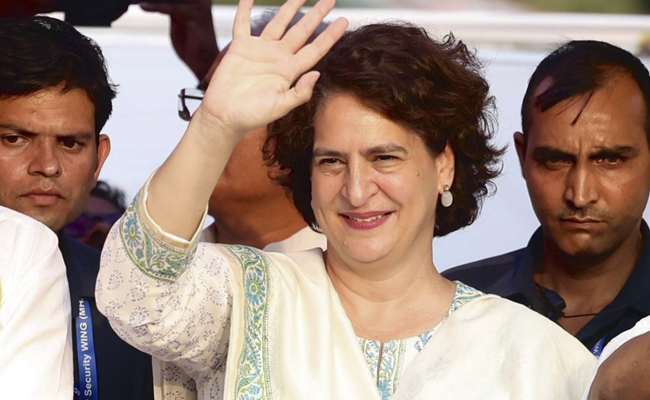
New Delhi (PTI): Will she? Will she not? And on Saturday, she did. After years of frenzied speculation, Congress leader Priyanka Gandhi Vadra is finally entering the Lok Sabha after a resounding win from Wayanad with many a hope that she will re-energise her party and its dwindling electoral fortunes.
The 52-year-old, who joins her mother Sonia and brother Rahul as an MP in what is a rare instance of three members of a family together in Parliament, would visit Parliament as a teenager to listen to her father Rajiv Gandhi speak as prime minister. Four decades later, she joins as member herself -- her detractors crying nepo politics and her party supporters laying out the proverbial red carpet for a promise finally met.
She should have been a politician to the manner born given the Gandhi legacy. But Priyanka Gandhi took the long and winding way into mainstream politics. First were the questions of whether the mother of two would join active politics, and then whether and when she would contest elections.
In September 1999, she told a journalist her entry into politics may take a "long, long time". And it actually did. She took the plunge 20 years later in 2019 and was later appointed Congress general secretary.
Five years after that, Priyanka Gandhi begins her journey as an elected representative of the people.
With a winning margin of more than 4.1 lakh votes, she has surpassed the tally of her brother Rahul Gandhi from Wayanad in Kerala.
Priyanka Gandhi's entry into Parliament comes at a difficult time for the party, which has been jolted by electoral defeats in Haryana and Maharashtra. It would be interesting to see if she is able give a much-needed fillip to the grand old party and help put it back on electoral track.
Often drawing comparisons with her grandmother Indira Gandhi for their similarity in looks and way of speaking, Priyanka Gandhi has been the go-to campaigner for the party since her entry into active politics and even before that when she campaigned for her mother Sonia and brother Rahul.
And more than both, she is the one who many say has the easiest touch when it comes to communicating with people, individuals and crowds, and also in articulating the party's viewpoint on a range of issues. That she is often seen with her brother, sometimes teasing, sometimes chiding and always affectionate, has added to the image of the convivial politician.
Frequently referring to her childhood, the pain of her father Rajiv Gandhi's assassination and her mother's grief, she steered the Congress' campaign during the general election, adroitly walking the tightrope between striking a familial chord and discussing national-level issues. She proved to be a strategist, orator and mass mobiliser -- all rolled into one.
Most of her speeches are akin to a conversation with the crowd, establishing a connect and giving people the impression that here was a person who was known to them, someone sharing her feelings and thoughts with them.
As star campaigner and strategiser, Priyanka Gandhi helped the Congress make impressive gains in some states as well as in the Lok Sabha polls held earlier in the year. Her campaign helped the Congress get 99 seats in the general election, up from 52 in 2019.
As the curtains came down on the 2024 general election, analysts totted up the numbers to highlight that she has proven to be the party's talisman. Priyanka Gandhi took part in 108 public meetings and roadshows. She campaigned in 16 states and a Union territory, and also addressed two party workers' conferences in Amethi and Rae Bareli in Uttar Pradesh.
Priyanka Gandhi has often been projected as a possible challenger to Prime Minister Narendra Modi from Varanasi and also as a successor to Congress veteran Sonia Gandhi in the family pocket borough of Rae Bareli.
Soon after the Election Commission announced the Wayanad bypoll, the Congress declared that Priyanka Gandhi would be its candidate from the seat in Kerala. Rahul Gandhi, it decided, would retain the Rae Bareli parliamentary constituency in Uttar Pradesh and vacate the Wayanad seat he won for the second consecutive time.
After her name was announced for the Wayanad bypoll in June, Priyanka Gandhi said, "I am not nervous at all.... I am very happy to be able to represent Wayanad. All I will say is that I will not let them feel his (Rahul Gandhi's) absence. I will work hard and try my best to make everybody happy and be a good representative."
"I have a good relationship with Rae Bareli as I worked there for 20 years and that relationship will never break," she said, adding that both she and her brother will work together in both the constituencies.
Priyanka Gandhi was made Congress general secretary in-charge of the crucial eastern Uttar Pradesh region in January 2019 and then general secretary in-charge of the entire state.
In December 2023, Priyanka Gandhi was made Congress general secretary "without a portfolio". She helped strengthen the organisation and led the party's campaign in Himachal Pradesh, where the grand old party wrested power from the BJP.
Born on January 12, 1972, Priyanka attended New Delhi's Modern School and the Convent of Jesus and Mary. She holds a bachelor's degree in Psychology from Jesus and Mary College, University of Delhi, and also has a master's degree in Buddhist studies.
Priyanka Gandhi is married to businessman Robert Vadra. The couple has two children -- Raihan and Miraya.
Her entry into Parliament has been long awaited by party's workers and supporters and they are hoping she will provide the booster shot the party needs in its difficult phase at the hustings going forward.
Let the Truth be known. If you read VB and like VB, please be a VB Supporter and Help us deliver the Truth to one and all.
Karnataka to approach SC seeking permission to continue MGNREGA
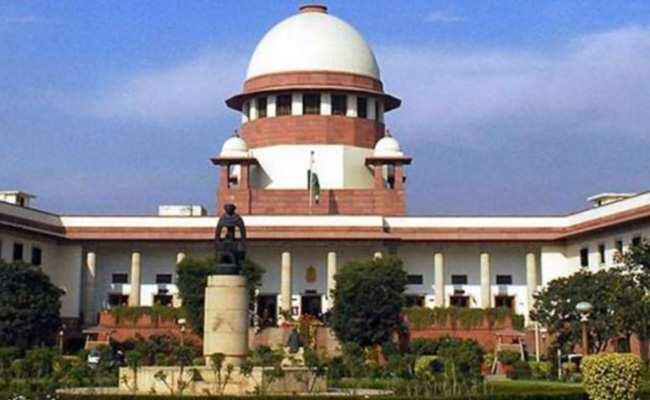
Bengaluru (PTI): The Karnataka Cabinet on Thursday decided to approach the Supreme Court seeking permission to continue implementation of MGNREGA in the state, contending that the Centre had repealed the rural employment guarantee law without consultation and failed to put in place any alternative mechanism under the VB-G RAM G Act.
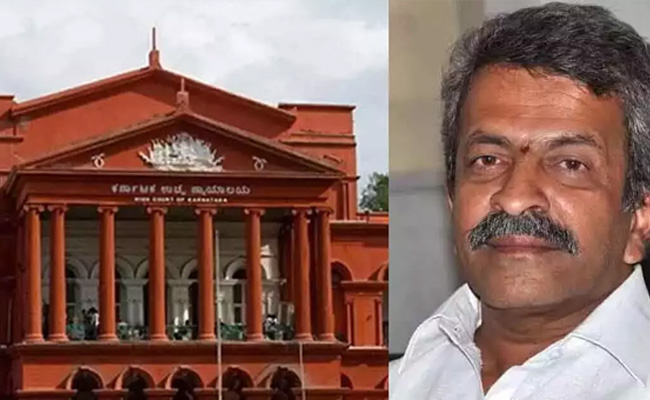
Briefing reporters after the Cabinet meeting, Karnataka Law and Parliamentary Affairs Minister H K Patil said the state would immediately move the apex court seeking permission to prepare and implement the annual action plan for rural employment works, while also challenging what it described as an infringement on the constitutional rights of states.
The parliament passed VB-G RAM G in December that replaces MGNREGA.
Patil explained that the Cabinet decided to approach the court seeking permission for the State Government to prepare an action plan in this regard. Since the Centre’s stand interferes with the constitutional rights of state governments, the Cabinet has also decided to challenge this issue before the appropriate court
“There are two points here. One is that they have come in the way of our constitutional right of providing the right to work. That has been halted, and, therefore, the State Government has decided to approach the Supreme Court. The second point is that the Government of India has not provided any alternative,” the Minister said.
The Central Government has not yet issued a notification to implement the VB-G RAM G Act, nor has it made any alternative arrangements and hence continuing Mahatma Gandhi National Rural Employment Guarantee Act (MGNREGA) is unavoidable in the public interest, the Minister said.
“Therefore, in the interest of the public, farmers and agricultural labourers, we must continue MGNREGA. For that purpose, the Cabinet has decided to approach the court seeking permission for the State Government to prepare the action plan for this year,” he added.
The Minister also said the Centre had only permitted continuation of pending and spillover MGNREGA works without releasing grants or announcing a fresh action plan.
“The Centre itself has said that pending, spillover and half-done MGNREGA works can continue. That means MGNREGA is actually still functioning in practice. But there is no new action plan,” he said.
Patil said the state had already passed a resolution on the issue, while Chief Minister Siddaramaiah had written to the Prime Minister and the Rural Development Minister had held discussions with Union Ministers.
Replying to questions, the minister said the state would move court “as immediately as possible.”
He clarified that the state was seeking permission to formulate and implement this year’s action plan under the existing framework.
“What we are asking the Supreme Court is to allow us to have the action plan for this year and implement it,” he said.
The Cabinet also held detailed discussions on the final report submitted by the State Education Policy Commission headed by former UGC chairman Professor Sukhadeo Thorat.
Patil said a Cabinet sub-committee would be constituted to examine the report and recommend measures for implementation.
“No decision has been taken yet. The Cabinet sub-committee will recommend what should be accepted and what should be modified,” he said.
He said the report comprised around eight volumes and covered issues relating to financial implications, human resources, curriculum reforms, deemed universities, unitary universities and newly established universities. The Chief Minister has been authorised to constitute the sub-committee.
The Cabinet also approved the Karnataka Motor Transport and Other Related Workers’ Social Security and Welfare Amendment Bill, 2026, transferring welfare administration of transport-related workers from the Labour Department to the Transport Department.
The Cabinet further approved establishment of three new industrial estates in Kalaburagi, Yadgir and Surpur under the Karnataka State Small Industries Development Corporation and Kalyana Karnataka Region Development Board schemes at an estimated cost of Rs 200 crore.
The Cabinet also approved amendments to Karnataka Civil Services (General Recruitment) Rules, 2026, providing two per cent reservation in state civil services appointments for sportspersons.