Project Veda’s development trials may commence soon
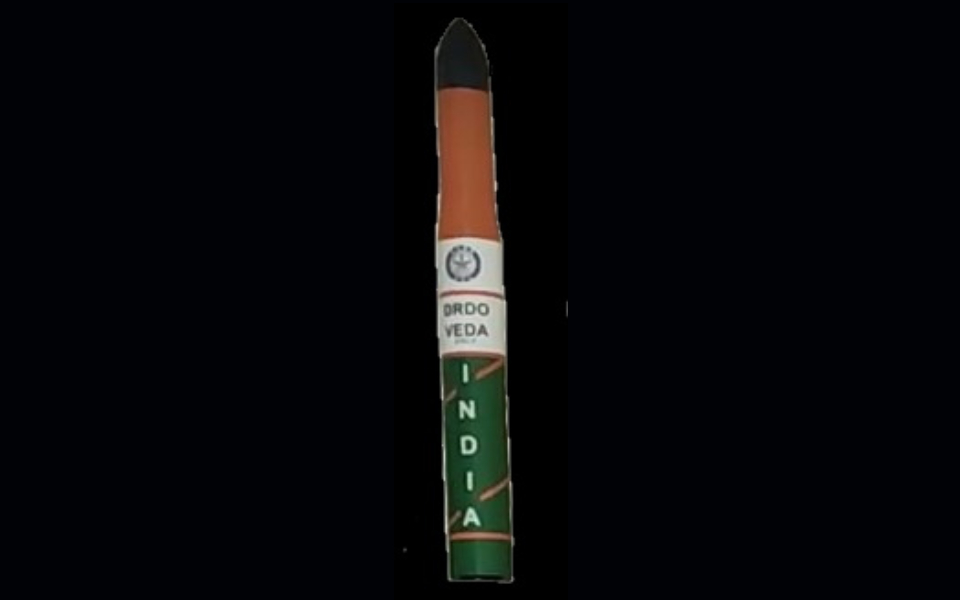
The Veda SLV is a three-stage, solid-propellant rocket that will be capable of lifting a payload of up to 2,000 kilograms into orbit. It is expected to have a maximum altitude of 200 kilometres.
Project Veda—or Vehicle for Defence Application—is a Defence Research and Development Organisation (DRDO) project to develop a new satellite launch vehicle (SLV) for the Indian armed forces trials for which are likely to begin soon. The SLV, codenamed Veda, will be used to put defence satellites into lower orbit for a variety of purposes—including surveillance, communication and navigation.
The Veda SLV is a three-stage, solid-propellant rocket that will be capable of lifting a payload of up to 2,000 kilograms into orbit. It is expected to have a maximum altitude of 200 kilometres.
Three Stages of the Rocket
The first stage of the rocket will be based on the K-4 submarine-launched ballistic missile (SLBM). This will allow DRDO to leverage the existing technology and expertise that has been developed for the K-4 SLBM. The use of the K-4 SLBM technology for the first stage of the Veda SLV will help reduce the development time and cost of the SLV. It will also help ensure that the SLV is reliable and capable of meeting the requirements of the Indian armed forces.
The first stage of the Veda SLV will be a solid-propellant rocket motor that will provide the initial thrust to lift the SLV off the launch pad.
The second and third stages will be based on existing DRDO solid-propellant rocket motors.
The Veda SLV will be a road-mobile launch vehicle, which will allow it to be launched from a variety of locations. This will give the Indian armed forces greater flexibility in terms of when and where they can launch their defence satellites.
Project Veda is a major undertaking for the DRDO and is expected to take several years to complete. However, the project is seen as an important step in the development of India’s indigenous defence capabilities.
The Veda SLV will be a significant addition to the Indian armed forces’ arsenal. It will provide the military with the ability to launch its own defence satellites, which will give it greater independence and flexibility in terms of its operations. The Veda SLV is a project that is essential for the future of India’s defence and space programmes. The programme will also be a boost to India’s space programme and will help further India’s position as a leading space-faring nation.
Key Benefits at A Glance
-
Increased independence: The Veda SLV will allow the Indian armed forces to launch their own defence satellites, which will make them less dependent on other countries
-
Enhanced flexibility: The Veda SLV will be a road-mobile launch vehicle, which will allow it to be launched from a variety of locations. This will give the Indian armed forces greater flexibility in terms of when and where they can launch their defence satellites
-
Boost to space program: Project Veda will be a boost to India’s space programme and will help further India’s position as a leading space-faring nation
Challenges the DRDO Faces in Developing the Veda SLV
-
The Veda SLV is a complex and challenging project. It will require the DRDO to develop new technologies and systems and will be a major test of the organization’s capabilities
-
The Veda SLV is a costly project. The DRDO will need to secure funding from the Indian government in order to complete the project
-
The Veda SLV is a time-consuming project. It is expected to take several years for the DRDO to develop and test the SLV.
Despite these challenges, the DRDO is committed to developing the Veda SLV. The SLV is a vital project for the Indian armed forces and the Indian space programme and the DRDO is confident that it will be able to overcome the challenges and complete the project successfully.
(The author of this article is a Defence, Aerospace & Political analyst)
Let the Truth be known. If you read VB and like VB, please be a VB Supporter and Help us deliver the Truth to one and all.
Karnataka: Woman delivers baby on train after emergency halt in Dakshina Kannada
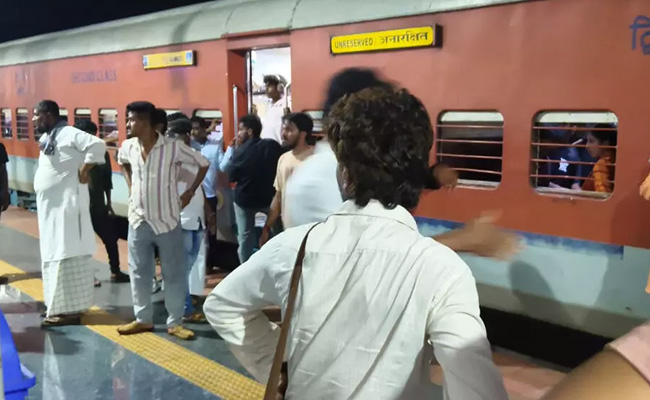
Mangaluru (Karnataka) (PTI): A woman travelling from Mangaluru to Mysuru delivered a baby on board a train after it was halted at a station in Dakshina Kannada district, officials said on Monday.
According to railway sources, the passenger began experiencing labour pain during the journey on Sunday. The train was stopped at B C Road station in Bantwal taluk of this district to facilitate medical assistance. However, no doctor reached the spot for over 30 minutes after the halt.
In the absence of immediate medical support, two co-passengers stepped in to assist the woman. The delivery was conducted in the train's toilet compartment. Both the mother and the newborn were reported to be safe following the delivery, they said.
Railway police officials had arranged for the woman to be shifted to a medical facility. She was admitted to the Government Lady Goschen Hospital in Mangaluru for postnatal care.
According to the OBG (Obstetrics and Gynecology) department officials at the hospital, the child and mother will be discharged after the initial observation period is over.
They told PTI that the delivery was done in trying conditions. The two ladies who carried out the operation had done a good job. The child and mother arrived at the facility 22 kilometers from the spot. Also, the mother experienced no blood loss or any other complications.
The neonate has been incubated and the mother is undergoing normal observational procedure at the hospital, the hospital officials said.
Officials said the woman is a resident of Mysuru and had been travelling home at the time of the incident.