Prominent temples in UP closed during lunar eclipse
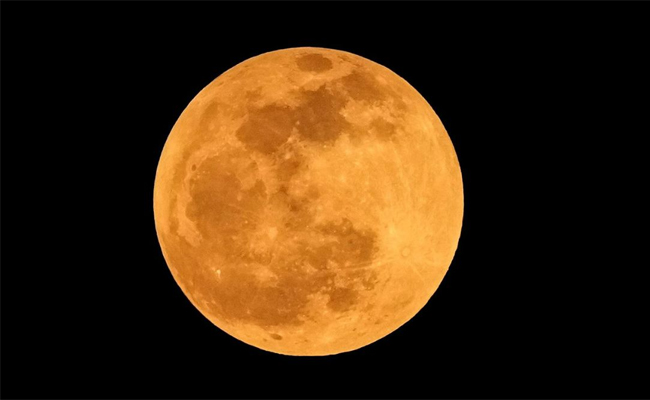
Lucknow (PTI): Prominent temples across Uttar Pradesh, including the Ram temple in Ayodhya, Kashi Vishwanath temple in Varanasi, Shri Krishna Janmabhoomi temple and the Vindhyavasini temple in Mirzapur, were closed on Tuesday in view of the lunar eclipse and will reopen in the evening after rituals.
According to Kashi Vishwanath temple authorities, the lunar eclipse will be visible in India and observed between 3.27 pm and 6.47 pm.
In keeping with religious scriptures, temples will observe ‘Sutak Kaal’, the inauspicious period preceding and during the eclipse, during which regular rituals and darshan are restricted.
The Shri Kashi Vishwanath Temple Trust in Varanasi said that as per tradition, the temple gates are closed before the commencement of the eclipse. Following this custom, the temple doors were shut at 4.30 am.
After the conclusion of the eclipse, rituals related to ‘moksha’ (conclusion of the eclipse) would be performed in accordance with scriptures, followed by purification ceremonies.
The temple was scheduled to reopen for devotees after 7.15 pm.
In Ayodhya, the Ram Temple was closed from 9 am onwards due to the Sutak Kaal hours prior to the eclipse.
Temple sources said the Mangala Aarti at 4.30 am and the Shringar Aarti at 6.30 am were conducted as per schedule.
‘Bal Bhog’ was offered to Ram Lalla at 8.15 am. After the Shringar Aarti, darshan was allowed from 6.30 am to 9 am. The temple doors were then closed and were to reopen after evening aarti, with darshan available from 8.30 pm to 11 pm, Ram temple trust officials said.
In Mathura and Vrindavan, most temples closed early for morning darshan and were scheduled to reopen after the eclipse ended around 7 pm.
However, the historic Dwarkadhish Temple followed its regular schedule and remained open during the eclipse.
Rakesh Tiwari, media in-charge of the temple, said that in the Pushtimarg tradition, Lord Krishna is worshipped in his child form and devotees believe they must remain with the deity during difficult times.
The Banke Bihari Temple in Vrindavan opened early at 5.15 am and closed at 8.30 am.
According to a press release issued by the temple’s high-powered committee, it was scheduled to reopen for evening darshan at 7 pm and close at 10 pm.
At the Shri Krishna Janmasthan in Mathura, the temple opened at 5 am for Mangala Aarti and closed at 6 am for darshan.
Kapil Sharma, secretary of the Shri Krishna Janmasthan Seva Sansthan, said the temple would reopen for evening darshan at 8 pm and close at 9 pm.
The Radha Rani Temple in Barsana was also scheduled to reopen at 7 pm for evening darshan and close at 9 pm, Madhav Krishna Goswami, sewayat of the temple, said.
In Mirzapur, the Vindhyavasini Temple remained closed in the morning in view of the eclipse.
Bhanu Pathak of the Vindhya Panda Samaj, said the temple doors were shut from 3.15 pm to 8 pm during the Sutak and eclipse period.
After completion of rituals and aarti, devotees will be allowed to offer prayers.
Temple authorities across the state appealed to devotees to adhere to the revised schedules and cooperate with the arrangements made in view of the eclipse.
VIDEO | Uttar Pradesh: Temples in Varanasi closed as the Sutak period began ahead of the lunar eclipse. The doors of temples will reopen after the lunar eclipse ends at 7 pm. Visuals from a temple.
— Press Trust of India (@PTI_News) March 3, 2026
(Full video available on https://t.co/n147TvrpG7) pic.twitter.com/pqN7QAPKJZ
Let the Truth be known. If you read VB and like VB, please be a VB Supporter and Help us deliver the Truth to one and all.
What is Iran’s 10-point plan? Key demands ahead of US talks in Islamabad
Tehran/Islamabad: Iran has outlined a 10-point plan as the basis for upcoming talks with the United States, expected to begin in Islamabad on April 11, according to a statement from the Iranian Supreme National Security Council.
The plan lays out Tehran’s key political, military and economic demands, and is being seen as a framework for negotiations following the recent escalation in the region.
Strait of Hormuz at the centre
A major focus of the plan is the Strait of Hormuz, a critical global shipping route. Iran has proposed “controlled passage through the Strait of Hormuz in coordination with the Iranian armed forces,” which it says would give the country a unique economic and geopolitical position.
The plan also calls for the “establishment of a safe transit protocol” in the Strait that would guarantee Iran’s dominance under an agreed mechanism.
Call to end conflict
Iran has demanded “the necessity of ending the war against all elements of the axis of resistance,” signalling its expectation that hostilities should stop not only in Iran but also involving allied groups in the region.
US troop withdrawal
Another key demand is the “withdrawal of US combat forces from all bases and deployment points in the region,” indicating Tehran’s long-standing position against American military presence in West Asia.
Sanctions relief and compensation
The plan places strong emphasis on economic measures. It calls for “full payment of Iran’s damages according to estimates,” along with “the lifting of all primary and secondary sanctions and resolutions of the Board of Governors and the Security Council.”
It also seeks “the release of all Iranian assets and properties frozen abroad,” which have been a major point of contention for years.
Binding global guarantee
Finally, Iran has demanded that all these terms be formally recognised through “a binding Security Council resolution,” suggesting it wants international legal backing to ensure enforcement.
What this means
The 10-point plan reflects Iran’s broader push for security guarantees, economic relief and regional influence. The upcoming talks in Islamabad are expected to test how far both sides are willing to negotiate on these demands.