Protests in several parts of India over killing of Iran's supreme leader Ali Khamenei
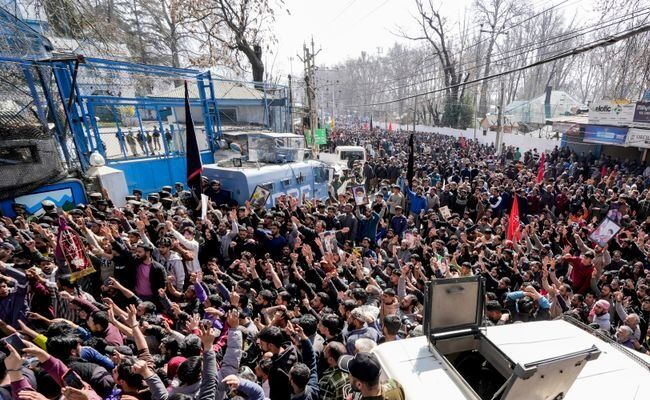
Srinagar/Lucknow (PTI): From Kashmir to Karnataka, Shia mourners took to the streets in various parts of India to express outrage and grief over the death of Iranian supreme leader Ayatollah Ali Khamenei in a US-Israel strike.
Khamenei was killed in an airstrike in Tehran on Saturday during a joint Israel-US attack on Iran. Iranian state media confirmed the same on Sunday, triggering a wave of protests and mourning across the world, including India.
Kashmir — which has about 15 lakh Shias — witnessed major protests at Lal Chowk, Saida Kadal, Budgam, Bandipora, Anantnag and Pulwama, an official said.
The protesters were seen beating their chests as they shouted anti-US and anti-Israel slogans.
J&K Chief Minister Omar Abdullah expressed deep concern over the developments in Iran and appealed for calm amid widespread protests.
"Chief Minister has expressed deep concern over the unfolding developments in Iran, including reports of the killing of Iran's Supreme Leader, Ayatollah Ali Khamenei. He has appealed to all communities to remain calm, uphold peace, and avoid any actions that could lead to tension or unrest," the Office of Chief Minister said in a post on X.
Abdullah also said that his government is in close coordination with the Union Ministry of External Affairs to ensure the safety and well-being of J-K residents, including students, currently in Iran.
Expressing "profound anguish" over the assassination of Khamenei, National Conference chief Farooq Abdullah urged the administration to handle the situation with sensitivity and discretion, ensuring that those who wish to mourn are able to do so respectfully.
Mirwaiz Umar Farooq, the chief priest of Kashmir, said he was deeply saddened and outraged at Khamenei's killing.
"Deeply saddened and outraged at the brutal killing of Iran's Supreme Leader, Ayatollah Syed Ali Khamenei by the US and Israel that has shaken the Muslim world. The people of JK collectively condemn this brutality and the ongoing aggression against Iran, as well as the massacre of innocent girl students in Minab," the Mirwaiz said in a post on X.
Many Muslim bodies and organisations across the country announced a multiple-day mourning period and scheduled their protests on Monday as well in memory of the Iranian leader.
In Uttar Pradesh's capital, Lucknow, scores of people gathered near the Bara Imambara mosque and shouted slogans during the protest, with women mourners clinging to the Iranian leader's photo and weeping.
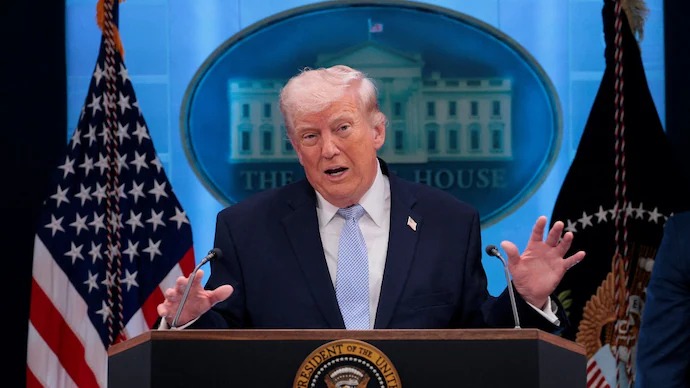
Maulana Yasoob Abbas, general secretary of All India Shia Personal Law Board, announced that effigies of US President Donald Trump and Israel's Prime Minister Benjamin Netanyahu will be burnt during the protest on Monday.
The Shia community has declared a three-day mourning, during which people will wear black, hoist black flags at their homes and organise special prayers, Abbas added.
Punjab, which has a minuscule Muslim population, saw protests and effigies being burnt in Ludhiana.
Shahi Imam Maulana Mohammad Usman Rahmani Ludhianvi, who led the protest, demanded that the central government declare a week-long national mourning.
Rehmani urged Muslims worldwide to unite against such challenges, terming Khamenei a great martyr and condemning his killing in the strongest terms.
The Shia community in Ajmer also announced a three-day mourning over the killing of Khamenei.
The announcement was made by Syed Asif Ali, a community leader, who appealed to members of the Shia community to observe mourning and refrain from celebrations during the period.
Condolence meetings were also organised at Dargah in Dorai and Taragarh in Ajmer, where members of the community offered prayers and expressed grief over the incident.
Meanwhile, several devotees from Jodhpur are stranded in Dubai after their return flights were cancelled following attacks near Dubai and Abu Dhabi.
Scenes of extreme distraught and slogannering were also witnessed in New Delhi, Bihar, Jharkhand, and Telangana, where protesters, holding Khamenei's posters, voiced their anger against the US and Israeli military actions.
However, in Karnataka’s Chikkaballapur district, where Khamenei once visited, observed silence, and shops and commercial establishments voluntarily closed.
Villagers announced a three-day mourning period as a mark of tribute to the Shia supreme leader.
All celebrations and public events have been suspended to maintain a peaceful environment in this village.
According to villagers, Ali Khamenei visited Alipura in 1986.
Let the Truth be known. If you read VB and like VB, please be a VB Supporter and Help us deliver the Truth to one and all.
What is Iran’s 10-point plan? Key demands ahead of US talks in Islamabad
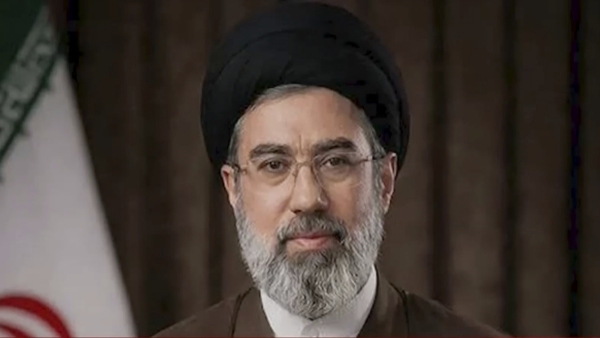
Tehran/Islamabad: Iran has outlined a 10-point plan as the basis for upcoming talks with the United States, expected to begin in Islamabad on April 11, according to a statement from the Iranian Supreme National Security Council.
The plan lays out Tehran’s key political, military and economic demands, and is being seen as a framework for negotiations following the recent escalation in the region.
Strait of Hormuz at the centre
A major focus of the plan is the Strait of Hormuz, a critical global shipping route. Iran has proposed “controlled passage through the Strait of Hormuz in coordination with the Iranian armed forces,” which it says would give the country a unique economic and geopolitical position.
The plan also calls for the “establishment of a safe transit protocol” in the Strait that would guarantee Iran’s dominance under an agreed mechanism.
Call to end conflict
Iran has demanded “the necessity of ending the war against all elements of the axis of resistance,” signalling its expectation that hostilities should stop not only in Iran but also involving allied groups in the region.
US troop withdrawal
Another key demand is the “withdrawal of US combat forces from all bases and deployment points in the region,” indicating Tehran’s long-standing position against American military presence in West Asia.
Sanctions relief and compensation
The plan places strong emphasis on economic measures. It calls for “full payment of Iran’s damages according to estimates,” along with “the lifting of all primary and secondary sanctions and resolutions of the Board of Governors and the Security Council.”
It also seeks “the release of all Iranian assets and properties frozen abroad,” which have been a major point of contention for years.
Binding global guarantee
Finally, Iran has demanded that all these terms be formally recognised through “a binding Security Council resolution,” suggesting it wants international legal backing to ensure enforcement.
What this means
The 10-point plan reflects Iran’s broader push for security guarantees, economic relief and regional influence. The upcoming talks in Islamabad are expected to test how far both sides are willing to negotiate on these demands.