Rahul Gandhi accuses PM Modi of silence as Trump repeats India-Pakistan ceasefire claim
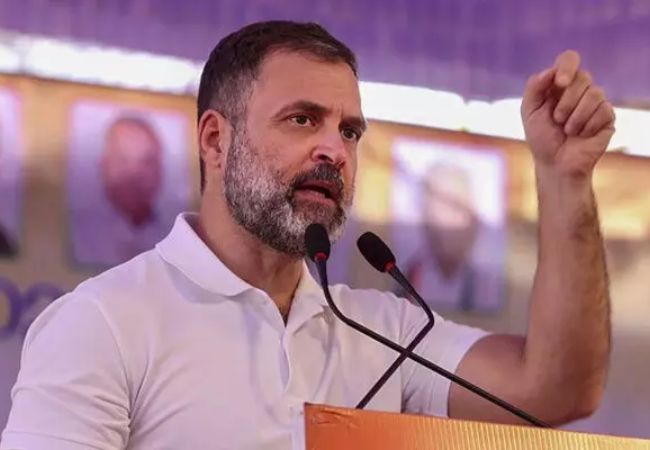
New Delhi: Congress leader and Leader of Opposition Rahul Gandhi on Wednesday launched a sharp attack on Prime Minister Narendra Modi, accusing him of being “scared” of US President Donald Trump and failing to refute his repeated claims of mediating peace between India and Pakistan during Operation Sindoor.
Addressing a joint rally in Bihar’s Darbhanga constituency, Gandhi said, “Next time when Modi comes to Bihar, he must tell the people that the US President is lying about stopping the India-Pakistan conflict.” He alleged that Trump had “insulted” Modi by making the same claim repeatedly in various countries, most recently at the APEC summit in South Korea.
“Trump is insulting Modi in country after country. Latest is South Korea. Don’t be scared, Modi ji — find the courage to respond,” Gandhi said, highlighting Trump’s remarks that he had “used trade to frighten Modi into stopping Operation Sindoor.”
Trump, during his speech in Seoul, reiterated that he had threatened both India and Pakistan with trade restrictions and “200% tariffs” to halt their hostilities, claiming credit for preventing a potential “nuclear war.” He even remarked that seven planes had been shot down during the four-day conflict before the ceasefire.
Operation Sindoor was launched by India on May 7 against terror infrastructure in Pakistan and Pakistan-occupied Kashmir following a terror attack in Jammu and Kashmir’s Pahalgam on April 22, which killed 26 people. The ceasefire understanding was reached on May 10 after Pakistan’s Director General of Military Operations contacted his Indian counterpart.
India has consistently maintained that no third-party mediation was involved in the ceasefire process. The Ministry of External Affairs has clarified that the understanding was entirely bilateral, with no external interference.
This is not the first time Gandhi has challenged Modi to respond directly to Trump’s statements. During a parliamentary debate in July, he had demanded that the Prime Minister publicly state that “Donald Trump is lying.”
Despite Trump’s repeated assertions, Prime Minister Modi has avoided direct comments on the matter. India’s official stance remains firm that the truce with Pakistan was initiated through direct military communication, independent of any foreign mediation.
Let the Truth be known. If you read VB and like VB, please be a VB Supporter and Help us deliver the Truth to one and all.
Madhu Kishwar booked over alleged misleading content on social media
Chandigarh (PTI): Academician Madhu Kishwar has been booked on charges of criminal defamation, promoting enmity and other offences by Chandigarh police following a complaint by a resident alleging circulation of forged and misleading content on social media.
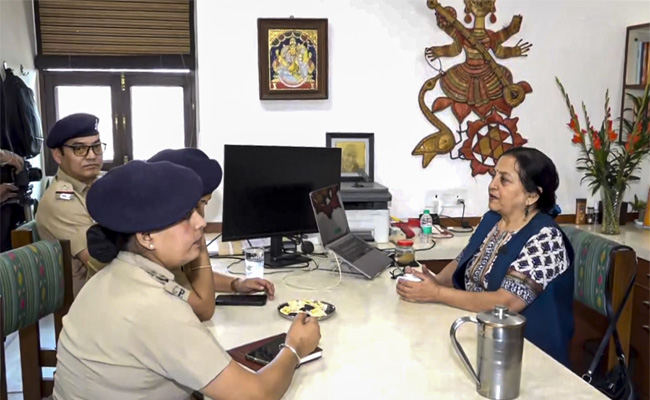
A Chandigarh police team on Tuesday served notice to Kishwar in Delhi, asking her to join the investigation in the case.
Sarita Roy, the Station House Officer of Sector-19 police station in Chandigarh, where the FIR was filed, told reporters in the national capital that the notice was issued under Section 35(3) of the BNSS and that Kishwar has been asked to appear and present her side.
Kishwar and some other social media users have been booked under various sections of Bharatiya Nyaya Sanhita, including 196 (criminalises acts that promote enmity, hatred, or ill-will between groups based on religion, race, language), 336 (1) (forgery) and 356 (criminal defamation), and the IT Act, according to the FIR.
ALSO READ: 21 hours raid fetch nothing for ED, claims Karnataka Cong MLA’s son
They have also been charged under Section 353 (penalises making, publishing, or circulating false information that cause public mischief...) and those related to cheating and forgery under the BNS.
According to a statement by the Chandigarh police, a city-based complainant on April 19 alleged that some forged and misleading social media posts and video clips with obscene text and content were being circulated by various social media users, misidentifying the person in the video.
The complainant alleged that it is a deliberate act of creating a false electronic record using obscene words and phrases, having knowledge and sufficient reason to believe that the posts are misleading and false, with the intent to cause damage or injury.
The video, which circulated with the intent to cause harm to the reputation of a constitutional authority and to disturb public peace and tranquillity, should be investigated, and appropriate action should be taken, the complainant said.
The complainant said the person seen in the video is a travel vlogger whose wife regularly posts updates about their activities on social media. The original video was shared from her social media account.
"As per the statement of the woman, she disclosed that the person in the video shared from her account is her husband. Statements of her husband and another lady in the video have also been recorded during preliminary investigation," said the police statement, adding that further probe is underway.
Meanwhile, Kishwar, in a social media post, said that a Chandigarh police team had visited her late Monday night to serve her notice regarding the FIR registered against her.
"Since the law forbids the police to visit or arrest women after dark and before sunrise, I spoke on phone to the leader of the delegation. She told me that their team has come to serve notice regarding an FIR registered against me in Chandigarh. I insisted that they go by the law and come in the morning," she wrote on X.