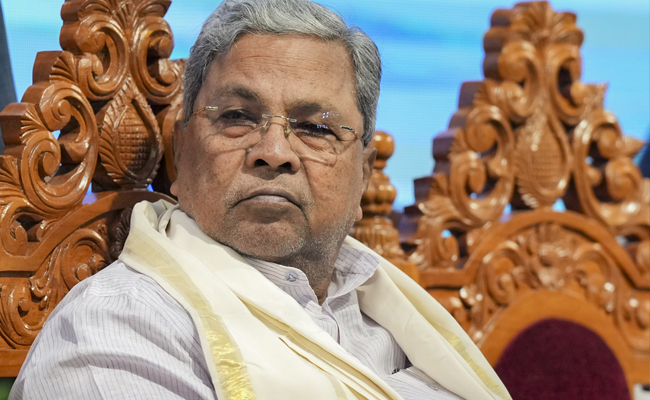
Rahul Gandhi pledges to remove 50% reservation cap, calls for nationwide caste census
_vb_11.jpeg)
Ahmedabad: Congress leader and Leader of Opposition in the Lok Sabha, Rahul Gandhi, on Wednesday said that the Congress party is committed to removing the 50% ceiling on reservations for Scheduled Castes (SC), Scheduled Tribes (ST), and Other Backward Classes (OBC) in education and government jobs.
Speaking at a Congress session in Ahmedabad, Gandhi said the party would implement across India what the Telangana government has recently done. Telangana had recently passed a bill raising the reservation for Backward Classes (BCs) to 42%, taking the overall reservation above the 50% limit set by the Supreme Court in a landmark 1992 judgment.
“Telangana has taken a revolutionary step and shown the way to the country. I want to assure you that this 50 per cent wall will be broken. What happened in Telangana, we will do in Delhi and for the entire country,” Gandhi said.
He argued that the population composition in Telangana—where around 90% of residents belong to OBCs, extremely backward classes, Dalits, minorities, and Adivasis—is similar to the rest of the country. Given this, he said, the existing limit on reservations does not reflect social realities and should be dismantled.
Gandhi reiterated the Congress party’s demand for a nationwide caste census, stating that without accurate data on caste composition, it is not possible to ensure fair distribution of government benefits, educational opportunities, and jobs.
He also referred to the Supreme Court’s 1992 ruling in the Indra Sawhney (Mandal Commission) case, which capped reservations at 50%. The Congress has consistently argued that the cap restricts justice for marginalised groups and needs to be re-evaluated.
Earlier this week, during a 'Samvidhan Suraksha Sammelan' in Patna, Gandhi had said, “I told Narendra Modi in the Lok Sabha, right in front of him: if you don't dismantle this artificial 50 per cent barrier on reservations, we will break it, destroy it, and throw it away.”
In Ahmedabad, Gandhi also accused the BJP of having an “anti-Dalit mindset,” referring to a recent incident in Rajasthan, where a former BJP MLA reportedly used Ganga water to "purify" a temple after a Congress leader from a Dalit background took part in a consecration ceremony.
Let the Truth be known. If you read VB and like VB, please be a VB Supporter and Help us deliver the Truth to one and all.
Bhojshala case: Disputed structure built from remains of pre-existing temples, claims ASI
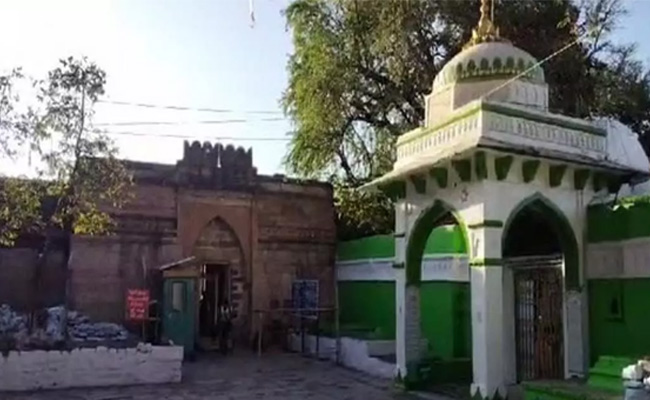
Indore (PTI): The ASI has told the Madhya Pradesh High Court that a massive structure dating back to the Paramara kings' rule existed at the disputed Bhojshala temple-Kamal Maula mosque complex, and the current structure was built from the remains of temples.
The Archaeological Survey of India (ASI) made the claim on Tuesday based on its 98-day scientific survey and over 2,000-page report.
The Hindu community considers Bhojshala a temple dedicated to Vagdevi (Goddess Saraswati), while the Muslim side claims the monument as the Kamal Maula Mosque. The disputed complex is protected by the ASI.
During the hearing before Justices Vijay Kumar Shukla and Alok Awasthi of the HC's Indore bench, Additional Solicitor General Sunil Kumar Jain, representing the ASI, presented a detailed account of the scientific survey conducted two years ago at the complex.
Referring to the ASI's survey report, he said, "Retrieved architectural remains, sculptural fragments, large slabs of inscriptions with literary texts, Nagakarnika inscriptions on pillars, etc, suggest that a large structure associated with literary and educational activities existed at the site. Based on scientific investigations and archaeological remains recovered during the investigations, this pre-existing structure can be dated to the Paramara period."
It can be said that the existing structure was made from the parts of earlier temples, based on scientific investigations, survey and archaeological excavations conducted, study and analysis of retrieved finds, study of architectural remains, sculptures, and inscriptions, art and sculptures, Jain said quoting the report.
Summarising the report, he also drew the court's attention to the fact that the archaeological study identifies that many architectural components, such as pillars and beams, were originally part of temple structures before being repurposed for a mosque.
"The evidence of this transition includes Sanskrit and Prakrit inscriptions that were damaged or hidden, alongside sculptures of deities and animals that were often mutilated or defaced," Jain contended.
The report also states that "all Sanskrit and Prakrit inscriptions are older than the Arabic and Persian inscriptions, indicating that users or engravers of the Sanskrit and Prakrit inscriptions occupied the place earlier".
In light of the Muslim side's earlier objections, the bench wanted to know why there were some discrepancies in the ASI's responses regarding the status of the disputed complex in the cases filed over the years.
The Additional Solicitor General argued that earlier studies of the complex involved only officials, while the current survey involved scientists and the use of advanced technologies such as Ground Penetrating Radar (GPR).
The hearing in the Bhojshala case will continue on Wednesday.
The high court has been regularly hearing four petitions and one writ appeal regarding the religious nature of the Bhojshala temple-Kamal Maula mosque complex since April 6.