Rahul Gandhi to launch 'Vote Adhikar Yatra' in Bihar on Aug 17
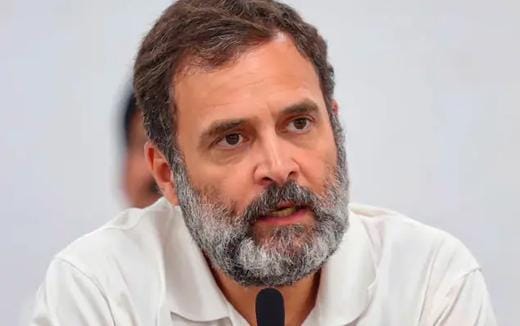
Patna (PTI): Congress leader Rahul Gandhi will on Sunday launch a yatra to highlight the alleged assault on the people’s right to vote through the special intensive revision of electoral rolls in Bihar, a senior party leader said on Saturday.
Addressing a press conference here, former state Congress president Akhilesh Prasad Singh said Gandhi, the Leader of Opposition in the Lok Sabha, is likely to be in the state for over a fortnight till the ‘Vote Adhikar Yatra’ concludes with a rally in Patna on September 1.
“Tomorrow, Gandhi will launch the yatra from Sasaram. All the necessary permission has been obtained from the authorities concerned. The yatra will build a tempo in favour of the INDIA bloc ahead of the assembly polls,” the Rajya Sabha MP said.
Replying to a query, he said Gandhi was likely to “stay in Bihar for nearly 15 days” to lead the yatra, which will cover “25 districts of the state” with three “break days” on August 20, 25 and 31.
“At Sasaram, Rahul Gandhi is likely to be joined by Tejashwi Yadav, the Leader of the Opposition in Bihar, besides our other alliance partners, including three Left parties. For the final rally in Patna on September 1, we will try to bring leaders of as many like-minded parties as possible,” Singh said.
“We have been left with no option, but to hit the streets. Our pleas for a discussion on the sensitive issue in Parliament have fallen on deaf ears. The behaviour of the Election Commission reminds us of Babasaheb Ambedkar’s warning that the Constitution faced the greatest threat from those who were either stupid or cunning,” he said.
All parties, including NDA partners like Andhra Pradesh Chief Minister Chandrababu Naidu, have voiced concerns over the special intensive revision, as part of which names of “lakhs of people have been deleted from the electoral rolls”, Singh asserted.
“Only two parties, the BJP and Bihar Chief Minister Nitish Kumar’s JD(U), have not spoken a word on the issue. In any case, the government headed by Kumar, who has an alliance with the BJP, is all set to be voted out in the upcoming elections. The people of the state are fed up with the current regime,” he claimed.
Asked about Union minister Giriraj Singh’s fulminations against the proposed yatra of Gandhi, the Congress leader replied with a chuckle: “Yesterday, he and I came here from Delhi by the same plane. He was very much sharing our concerns about special intensive revision. But, in public, he has to toe the party line.”
Meanwhile, the RJD launched a two-and-a-half-minute song, with lyrics in a mix of Hindi and Bhojpuri, in a bid to project the key role Tejashwi Yadav is expected to play in the yatra.
In the video of the song, Yadav is seen sharing the space with Gandhi, and hailed as a leader who was vigilant and willing to rouse the people, and ensure “nobody’s right to vote is snatched and the spirit of freedom is never lost”.
Let the Truth be known. If you read VB and like VB, please be a VB Supporter and Help us deliver the Truth to one and all.
Rickelton's ton in vain as SRH beat MI by 6 wickets
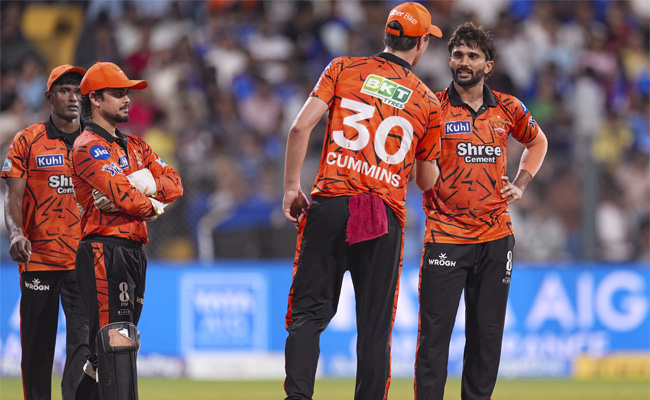
Mumbai (PTI): Ryan Rickelton's whirlwind unbeaten ton was overshadowed by Heinrich Klaasen's unbeaten 65 as Sunrisers Hyderabad defeated Mumbai Indians by six wickets in an IPL match here on Wednesday.
Chasing an imposing 244-run target, Travis Head (76 off 30) and Abhishek Sharma (45 off 24) shared 129 runs for the opening wicket to set the platform for SRH.
Klaasen (65 not out off 30 balls) then displayed his all-round hitting abilities to guide SRH home with the help of Nitish Kumar Reddy (21) and Salil Arora (30 not out off 10) in 18.4 overs.
Earlier, Rickelton's knock powered MI to 243 for five.
MI rode on a 93-run stand between Rickelton (123 not out off 55 balls) and Will Jacks (46 off 22) in 7.1 overs for the opening stand to power the side.
MI skipper Hardik Pandya scored a valuable 31 off 15 balls before being dismissed.
Praful Hinge (2/54), Eshan Malinga (1/29), Sakib Hasan (1/39) and Nitish Kumar Reddy (1/31) were the wicket-takers for SRH.
Brief Scores:
Mumbai Indian: 243 for 5 in 20 overs (Ryan Rickelton 123 not out; Praful Hinge 2/54).
Sunrisers Hyderabad: 249 for 4 in 18.4 overs (Travis Head 76, Heinrich Klaasen 65 not out; AM Ghazanfar 2/51).