Rahul jumps into muddy pond, interacts with fishermen in poll-bound Bihar
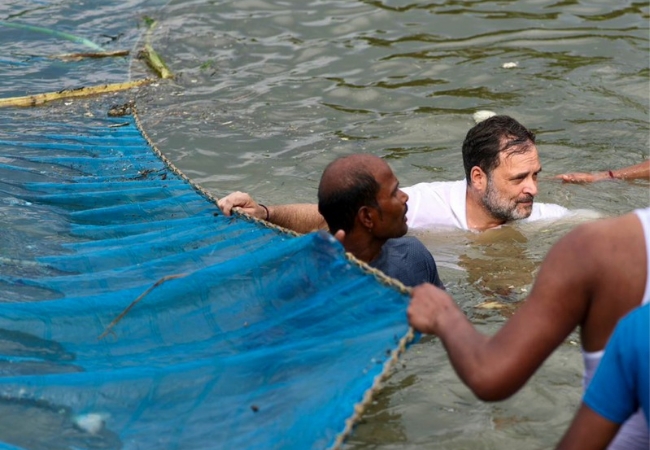
Begusarai (PTI): Congress leader Rahul Gandhi on Sunday jumped into a muddy pond in Bihar and interacted with fishermen present at the spot, whom he told that they always had his back.
The leader of the opposition in Lok Sabha, who addressed a rally in Begusarai district, went to a nearby pond along with former state minister Mukesh Sahni, whose Vikassheel Insan Party is a junior partner in the INDIA bloc.
The leaders took a boat to reach the middle of a pond, where Sahni, who had stripped down to his vest and underpants, cast a net, impressing Gandhi with his prowess.
The former minister, who likes to be called 'son of Mallah', a nickname highlighting that the former Bollywood set designer was back home to champion the cause of the fisherman's community to which he belongs, appeared excited with his catch and jumped into the chest-deep waters.
The Congress leader, who kept donning his trademark white T-shirt and cargo pants, followed Sahni, evoking roars of 'Rahul Gandhi zindabad'.
A large number of fishermen were also present at the spot, some of whom dived to join the leaders in chest-deep waters. Congress leader Kanhaiya Kumar was also among those present.
A video clip of the incident was shared by the Congress on its X handle, stating Gandhi also discussed with the fishermen "challenges and struggles they face in their work".
The social media post also highlighted the INDIA bloc's promises like an insurance scheme for pisciculture and financial aid of Rs 5,000 to every family of fishermen for the "three-month-long lean period" during which fishing remains prohibited.
The party's state unit also shared the video clip, with the tongue-in-cheek remark, "This is a real pond".
The allusion was to Prime Minister Narendra Modi's plans for a dip in River Yamuna at Delhi on the occasion of Chhath Puja, which, according to Gandhi, was given up when it came to light that the chosen spot was "a puddle created with the help of clean, piped water".
An indignant BJP has been reacting to Gandhi's jibe, accusing him of "insulting" the most popular festival of Bihar. Meanwhile, Gandhi seemed to have won over many villagers in Begusarai.
Local news channels reported villagers expressing their delight over the former Congress president "shaking hands with us".
One channel reported that Gandhi later went to a nearby house for a change of clothes, where the occupants, all women, gushed, "He washed himself under the hand pump out there and used the decrepit washroom nearby, all without making any fuss."
The Congress leader also made a mention of the incident at the subsequent rally that he addressed in Khagaria.
"A little while ago, I went to catch fish with Sahni ji. Why? Because I want all farmers, fishermen, labourers and other such people who earn their living by the sweat of their brow, to feel that Rahul Gandhi is with them," the Congress leader said.
Let the Truth be known. If you read VB and like VB, please be a VB Supporter and Help us deliver the Truth to one and all.
ED searches: Karnataka CM Siddaramaiah accuses Centre of targeting Cong leaders
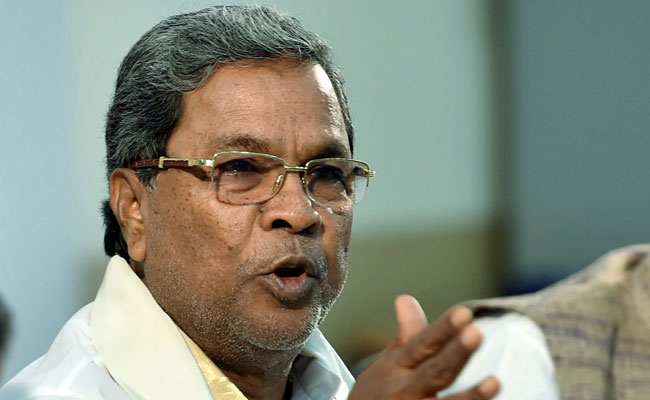
Chamarajanagara (Karnataka) (PTI): Karnataka Chief Minister Siddaramaiah on Tuesday accused the central government and its agencies of consistently targeting Congress members by using searches on their properties, and questioned why similar action is not taken against BJP leaders.
He was reacting to searches conducted by the Enforcement Directorate on Monday on several individuals, among them the sons of Karnataka Congress MLA N A Haris and the grandson of former Union Cabinet minister K Rahman Khan, in connection with a cryptocurrency-linked money laundering case.
"The central government always targets Congress leaders. Will they raid the houses of BJP leaders?" Siddaramaiah said in response to a question. More than a dozen premises in the city were searched as part of the operation carried out by the ED under the provisions of the Prevention of Money Laundering Act (PMLA).
The premises searched comprised those of Mohammed Haris Nalapad and Omar Farook Nalapad, the sons of the MLA; Aqeeb Khan, the grandson of veteran Congress leader K Rahman Khan; and an alleged crypto hacker, Srikrishna Ramesh, alias Sriki, officials said.
The money laundering case stems from Karnataka Police FIRs and charge sheets filed in a 2017 case involving the hacking of national and international websites, theft of bitcoins, and the sale of these stolen virtual digital assets (VDAs) through crypto platforms by the alleged hacker Sriki and his associates.
Mohammed Haris Nalapad, Omar Farook Nalapad, and Aqeeb Khan are alleged to be beneficiaries of the proceeds of crime generated through this crypto-linked activity, officials added.