Ramdev's ‘sharbat jihad’ remark sparks controversy, claims funds used to build mosques, madrasas
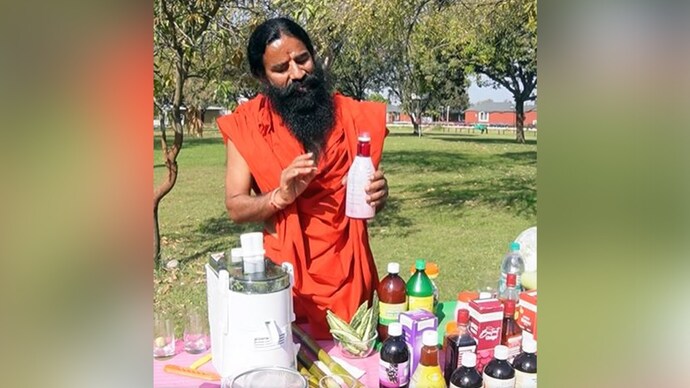
Haridwar: Yoga guru Ramdev has landed himself in a controversy by using the term “sharbat jihad” in a viral video, where he claimed that a company selling sharbat is using its earnings to build mosques and madrasas, while promoting Patanjali’s rose sharbat.
In the video, which was posted on the official Facebook page of Patanjali Products and has garnered over 37 million views, Ramdev is seen promoting Patanjali’s rose-flavored beverage. He contrasts it with an unnamed competitor’s product, saying: "If you drink that sharbat, there will be masjids and madrasas made. But, if you drink Patanjali's gulaab sharbat, then gurukuls, Acharyakulam, Patanjali University, and the Bharatiya Shiksha Board will be made.”
While he did not mention any specific brand, media reports have speculated that the comments may be directed at Hamdard’s Rooh Afza.
The caption accompanying the video took the messaging further, warning viewers about what it described as “toilet cleaners being sold as soft drinks.” Referring to this as “sharbat jihad,” Ramdev likened it to “love jihad” and “vote jihad,” and said people must protect themselves from it.
The remarks have sparked backlash on social media, with some users accusing Ramdev of communalising consumer choices. One comment read: “Looks like he’s eyeing a political role now, suddenly remembering mosques and madrasas.”
Meanwhile, many users asked Patanjali to reveal the total number of gurukuls and universities they have opened so far.
Let the Truth be known. If you read VB and like VB, please be a VB Supporter and Help us deliver the Truth to one and all.
Bhojshala case: Disputed structure built from remains of pre-existing temples, claims ASI
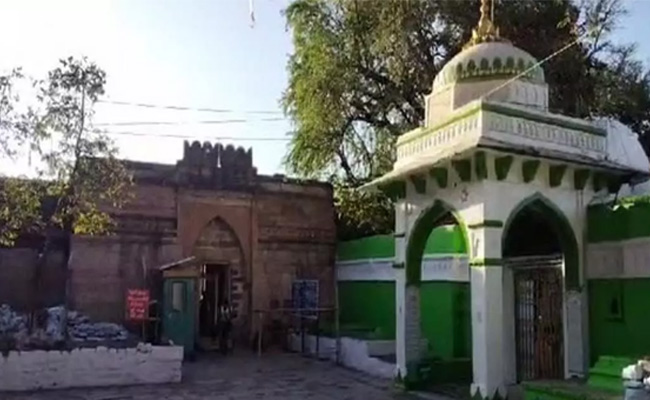
Indore (PTI): The ASI has told the Madhya Pradesh High Court that a massive structure dating back to the Paramara kings' rule existed at the disputed Bhojshala temple-Kamal Maula mosque complex, and the current structure was built from the remains of temples.
The Archaeological Survey of India (ASI) made the claim on Tuesday based on its 98-day scientific survey and over 2,000-page report.
The Hindu community considers Bhojshala a temple dedicated to Vagdevi (Goddess Saraswati), while the Muslim side claims the monument as the Kamal Maula Mosque. The disputed complex is protected by the ASI.
During the hearing before Justices Vijay Kumar Shukla and Alok Awasthi of the HC's Indore bench, Additional Solicitor General Sunil Kumar Jain, representing the ASI, presented a detailed account of the scientific survey conducted two years ago at the complex.
Referring to the ASI's survey report, he said, "Retrieved architectural remains, sculptural fragments, large slabs of inscriptions with literary texts, Nagakarnika inscriptions on pillars, etc, suggest that a large structure associated with literary and educational activities existed at the site. Based on scientific investigations and archaeological remains recovered during the investigations, this pre-existing structure can be dated to the Paramara period."
It can be said that the existing structure was made from the parts of earlier temples, based on scientific investigations, survey and archaeological excavations conducted, study and analysis of retrieved finds, study of architectural remains, sculptures, and inscriptions, art and sculptures, Jain said quoting the report.
Summarising the report, he also drew the court's attention to the fact that the archaeological study identifies that many architectural components, such as pillars and beams, were originally part of temple structures before being repurposed for a mosque.
"The evidence of this transition includes Sanskrit and Prakrit inscriptions that were damaged or hidden, alongside sculptures of deities and animals that were often mutilated or defaced," Jain contended.
The report also states that "all Sanskrit and Prakrit inscriptions are older than the Arabic and Persian inscriptions, indicating that users or engravers of the Sanskrit and Prakrit inscriptions occupied the place earlier".
In light of the Muslim side's earlier objections, the bench wanted to know why there were some discrepancies in the ASI's responses regarding the status of the disputed complex in the cases filed over the years.
The Additional Solicitor General argued that earlier studies of the complex involved only officials, while the current survey involved scientists and the use of advanced technologies such as Ground Penetrating Radar (GPR).
The hearing in the Bhojshala case will continue on Wednesday.
The high court has been regularly hearing four petitions and one writ appeal regarding the religious nature of the Bhojshala temple-Kamal Maula mosque complex since April 6.