Rare dinosaur 'egg-in-egg' found by DU researchers in Madhya Pradesh

New Delhi(PTI): A team of researchers from Delhi University has discovered an 'egg-in-egg' dinosaur egg from Madhya Pradesh, which is probably the first time in the fossil history, a statement issued by it said.
According to the researchers, the discovery is a "rare and important find" as no ovum-in-ovo' egg was found in reptiles until now. The findings have been published in the latest issue of the journal Scientific Reports.
The abnormal titanosaurid dinosaur egg was discovered from Bagh area in MP's Dhar district, and could provide important insights into whether dinosaurs had a reproductive biology similar to that of turtles and lizards, or crocodiles and birds, their immediate cousins, they said.
The Upper Cretaceous Lameta Formation of central India has been long known for discovery of dinosaur fossils (both skeletal and egg remains). The authors documented a large number of titanosaurid sauropod nests near Padlya village close to Bagh town. While studying these nests, the researchers came across one 'abnormal egg'.
The research team found a sauropod dinosaur nest consisting of 10 eggs including the abnormal egg which had two continuous and circular eggshell layers separated by a wide gap reminiscent of ovum-in-ovo (one egg inside another egg) pathology of birds, read the statement.
The microstructure of the pathological egg as well as that of an adjacent egg in the same nest identified it with that of titanosaurid sauropod dinosaurs.
Until this find, no egg-in-egg abnormal fossil egg was found in dinosaurs and for that matter in other reptiles like turtles, lizards, and crocodiles, it said.
In the past, it was suggested that dinosaurs had a reproductive function similar to that of turtles and other reptiles, in contrast to the segmented reproductive tract of crocodiles and birds with separate regions of membrane and shell deposition, the statement said.
Although crocodiles have separate regions of shell membrane and mineralised shell deposition, they ovulate and release all the eggs simultaneously like turtles and other reptiles, as opposed to sequential ovulation of birds, which lay one egg at a time, it added.
The finding of ovum-in-ovo egg from a titanosaurid nest opens up the possibility that sauropod dinosaurs had an oviduct morphology similar to those of crocodiles or birds and they may have adapted to a mode of egg-laying characteristic of birds, said DU researcher Dr Harsha Dhiman, lead author of the paper.
Professor Guntupalli V R Prasad, who is the corresponding author of the published article, concurred with his colleague.
The new pathological egg is a rare and important find as no ovum-in-ovo egg was found in reptiles until now and as it brings out significant information on whether dinosaurs had a reproductive biology similar to that of turtles and lizards or their immediate cousins crocodiles and birds, he added.
The new find highlights the fact that central and western India hold great potential for dinosaur fossils which may offer important information on dinosaur oospecies diversity, nesting behaviour, and reproductive biology, the statement said.
Let the Truth be known. If you read VB and like VB, please be a VB Supporter and Help us deliver the Truth to one and all.
Real Madrid fines Valverde and Tchouaméni half a million euros each for altercation
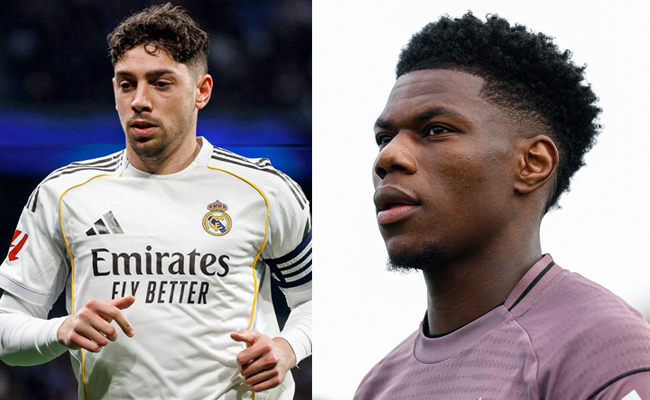
Barcelona (AP): Real Madrid slapped players Federico Valverde and Aurélien Tchouaméni with half-a-million-euro ($588,000) fines on Friday for their altercation during practice.
The massive fines came a day after the midfielders tussled when the team trained. Valverde said in a post on social media on Thursday that no punches were thrown. But Valverde knocked his head on a table and he suffered a small cut that required a brief hospital visit.
On social media, Valverde initially called it a “meaningless fight” with a teammate and said “everything has been blown out of proportion."
His employers, however, considered it a significant enough breach of team discipline to nail both Valverde and Tchouaméni with fines that bite even the bank account of a top soccer player. The half-a-million euro penalties reflect the reputational damage the club was enduring in a chaotic end to a disappointing season.
In a statement, the 15-time European champion said its disciplinary action was concluded after both players expressed to the club “their complete remorse for what happened and apologized to one another.”
Madrid added they also apologized to their teammates, the coaching staff and club supporters, as well as showing their willingness to accept whatever disciplinary action the club deemed “opportune.”
Tchouaméni was back training with Madrid on Friday, two days before they play at Barcelona in a clasico. Madrid has to win otherwise Barcelona will be crowned La Liga champion.
After being notified of the fine, he posted a public apology to the club and its fans on social media.
“What happened this week in training is unacceptable,” Tchouaméni wrote. "I say this while thinking about the example we are expected to set for young people, whether in football or at school.
“Above all, I am sorry for the image we projected of the club.”
Valverde was not at practice due to the head knock.
Both players are set to play in the World Cup next month, with Tchouaméni playing for France and Valverde for Uruguay.
Chaotic end to a poor season
===================
The run-in between the players, who for seasons have played side by side in Madrid's midfield, came after they argued this week in previous training sessions. But tempers boiled over on Thursday. Spanish media was rife with reports that the players previously disagreed over the club's decision to let coach Xabi Alonso go after just months on the job.
It was not the only altercation involving Madrid players during training this week. Álvaro Carreras confirmed he was in a “minor” incident with a teammate. Spanish media said he and fellow defender Antonio Rüdiger got into a scuffle.
Álvaro Arbeloa, the coach who was promoted from Madrid's reserve team when Alonso was fired in January, will face tough questions on what went wrong inside the changing room when he gives a press conference on Saturday ahead of the clasico at Camp Nou.
Madrid is facing a second consecutive campaign without a major trophy amid rumors in the Spanish media that club president Florentino Pérez is considering bringing back Jose Mourinho to straighten out his underperforming team.