Regret participating in 'movement' that vilified ex-PM Manmohan Singh: Prashant Bhushan
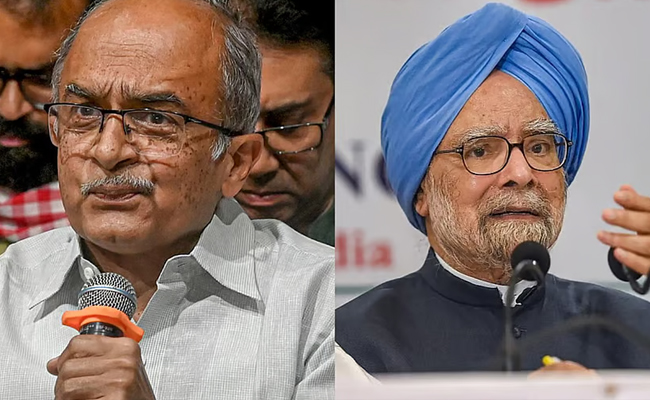
New Delhi: Senior advocate and activist Prashant Bhushan has expressed regret over his past role in political movements that, he said, contributed to the vilification of former Prime Minister Manmohan Singh. Bhushan made the remarks in a post on social media on the first death anniversary of Manmohan Singh.
In his post, Bhushan described Manmohan Singh as “a humble, decent, well educated and well meaning man,” adding that the former prime minister’s humility and decency were “seen as a weakness.” He said he regretted having participated in a movement that helped discredit Singh and, in his words, “helped a rogue regime come to power.”
Bhushan’s statement is widely seen as a reference to the anti-corruption movement that gained momentum during the second United Progressive Alliance (UPA) government, when Manmohan Singh was prime minister. The movement, led by civil society activists, had targeted corruption allegations against the government and eventually reshaped India’s political landscape. Critics have since argued that the campaign contributed to undermining Singh’s leadership and paved the way for a change in government at the Centre.
Manmohan Singh, who served as prime minister from 2004 to 2014, was known for his low-profile style, technocratic approach and role in shaping India’s economic reforms.
He was a humble, decent, well educated & well meaning man. His humility & decency was seen as a weakness.
— Prashant Bhushan (@pbhushan1) December 26, 2025
I regret having participated in a movement that vilified him & helped a rogue regime come to power pic.twitter.com/6JWOrdCZdE
Let the Truth be known. If you read VB and like VB, please be a VB Supporter and Help us deliver the Truth to one and all.
Karnataka gram panchayats achieve record 89 pc tax collection in 2025-26: Minister
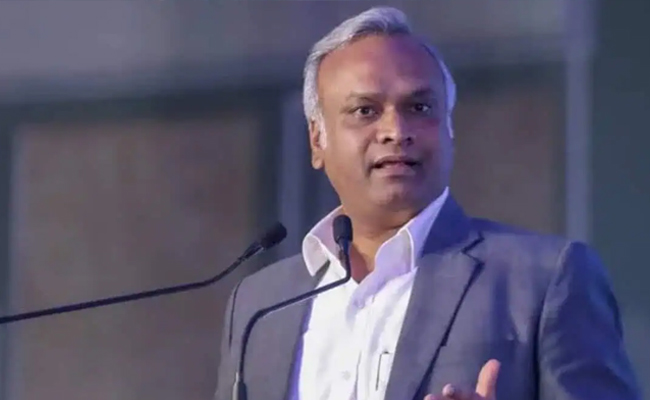
Bengaluru (PTI): Karnataka has achieved a significant milestone in grassroots governance, with 5,943 gram panchayats across the state recording higher tax collection and revenue realisation in 2025-26 compared to the previous financial year, Minister Priyank Kharge said on Thursday.
The Department of Rural Development and Panchayat Raj reported total tax collections of Rs 1,382.57 crore in 2025-26, marking an increase of Rs 110.04 crore over Rs 1,272.54 crore collected in 2024-25, the minister’s office said in a statement.
This represents a record 89 per cent realisation of the current demand, the highest in recent years, it added.
The Minister for Rural Development & Panchayat Raj said, “Our focus over the past few years has been on improving systems, ensuring accountability, and empowering local bodies to enhance their own revenue capabilities.”
“It is encouraging to see that every rupee collected is being reinvested into village infrastructure, public services, and local development. This is laying a strong foundation for inclusive and sustainable rural growth,” he added.
Karnataka had previously secured the top position at the national level in tax collection and revenue mobilisation, and the continued upward trend highlights the impact of efficient administration, strict enforcement of regulations, and strengthened tax collection mechanisms.
In 2024-25, gram panchayats had, for the first time in the department’s history, collected Rs 1,272.54 crore, achieving 80 per cent of the current demand.
Building on this momentum, the state further improved performance in 2025–26, reaching a record 89 per cent collection efficiency, the statement said.
This achievement has been driven by extensive awareness campaigns, targeted tax collection drives, and the sustained efforts of officials at all levels—from gram panchayat bill collectors to senior administrators, the minister said, congratulating all staff and officers for their contribution.
Highlighting district-level performance, Priyank noted that Raichur district recorded an exceptional 129 per cent tax collection, while 11 districts across the state achieved over 100 per cent collection, demonstrating strong local-level execution and compliance.
Over the past three years, Karnataka has witnessed a steady upward trend in tax collection. The increased revenue is being channelled into public works, improved civic services, and local development initiatives, contributing to the overall progress of rural communities, he added.