Researchers identify 73 novel variants of COVID-19 strain in Odisha
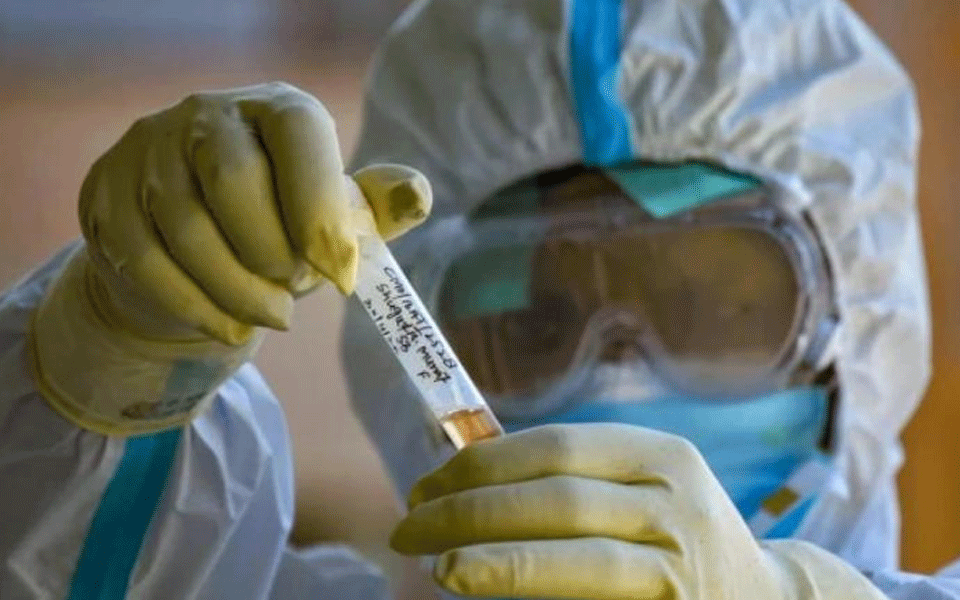
Bhubaneswar: A team of genomic researchers from two institutes has identified 73 novel variants of the COVID-19 strain in Odisha, its head has said.
The researchers are from CSIR-Institute of Genomics and Integrative Biology (IGIB), New Delhi and Institute of Medical Sciences and SUM Hospital, Bhubaneswar, he said.
"The research team, which carried out sequencing of 1,536 samples including 752 clinical samples, reported two lineages -- B.1.112 and B.1.99 -- for the first time in India," Dr Jayashankar Das, lead investigator and director (research) of the IMS and SUM Hospital, said on Friday.
If one gets to know the detailed character of the novel coronavirus, it will be very easy to treat patients and cure them, he said.
The research team, supported by the Council of Scientific and Industrial Research (CSIR), validated the most-advanced COVID-19 sequencing technology. This could be a potential high-sensitivity assay for the detection of SARS- CoV-2 with the additional advantage of enabling genetic epidemiology of SARS-CoV-2, Das said.
With this study, India has beaten 12 organisations in 10 countries to complete the first field validation and release the data online, he said, quoting a report by sequencing tech giant Illumina.
The IMS and SUM Hospital researchers are also undertaking the sequencing and analysis of 500 viral genomes to understand the mild, moderate and critical coronavirus infection along with its transmission capabilities, he said.
Besides, the study will help understand the vulnerability of the strains, new therapeutic target and new mutation in eastern India, especially in Odisha, Das said.
The rapid emergence of COVID-19 as a pandemic, which has affected millions of people across the world, has necessitated sensitive and high-throughput approaches for the diagnosis, surveillance and determining the genetic epidemiology of SARS-CoV-2, which will help in tracking strain information as well, he said.
Asked about the difference between RT-PCR test and COVID-19 sequencing tests, Das said, "The COVID-19 sequencing reports give the entire history of the coronavirus, while the RT-PCR tests only determine whether a patient is positive or negative for the infection."
Let the Truth be known. If you read VB and like VB, please be a VB Supporter and Help us deliver the Truth to one and all.
Three private doctors arrested in illegal scanning case involving 31 minor pregnant girls in KR Pet
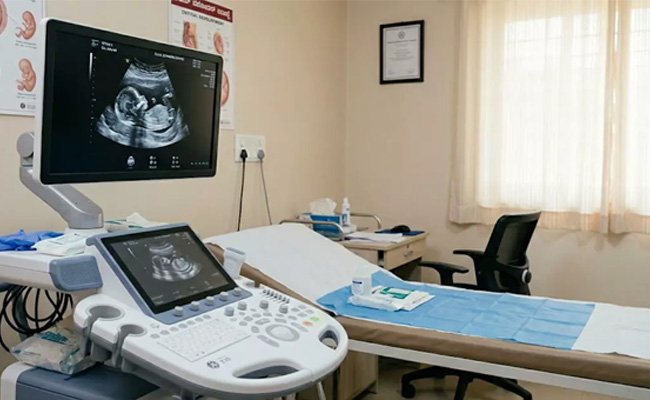
Mandya: Police on Tuesday arrested three private doctors in connection with a case involving alleged illegal scanning of 31 minor pregnant girls at a private diagnostic centre in KR Pet. The accused were later remanded to judicial custody.
The arrested doctors have been identified as Dr. Divyachetan of Chetana Maternity Centre, Dr. Harshit of Navi Diagnostic Centre, and Dr. Harish of Kushal Diagnostic Centre.
Police said Priyanka, a gynaecologist attached to a government hospital, is absconding and efforts are under way to trace her.
The case came to light after Karnataka Lokayukta Police recently conducted raids, during which illegal sex determination tests on minor pregnant girls were allegedly detected at two diagnostic centres in KR Pet town.
Following the raids, District Health and Family Welfare Officer Dr. Mohan, Deputy Director of the Women and Child Development Department P.S. Asha, and District Child Protection Officer Rashmi inspected several diagnostic centres and filed cases at KR Pet Town and Rural police stations.
According to the allegations, Navi Diagnostic Centre conducted scans on 24 minor pregnant girls, including 19 cases in 2024 and five in 2025. Kushal Diagnostic Centre is accused of conducting scans on seven minor pregnant girls.
Meanwhile, Deputy Commissioner Dr. Kumar has directed taluk vigilance committees to inspect all 63 ultrasound scanning centres in the district and submit reports within 10 days.
Officials said the Tahsildar of each taluk has been appointed chairperson of the respective committee.