Restrictions reimposed in parts of Srinagar after incidents of violence
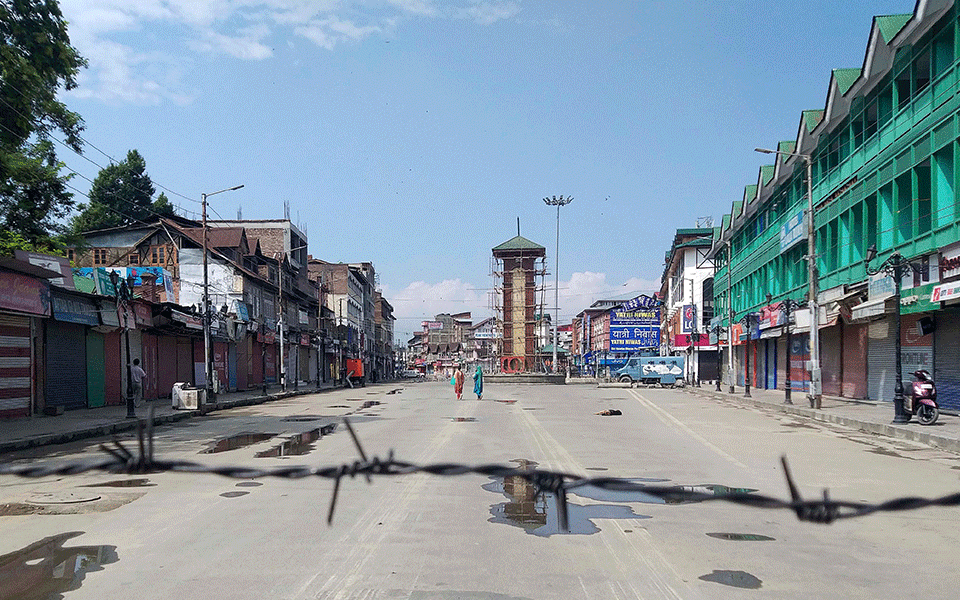
Srinagar: Restrictions were tightened in some parts of the city on Sunday following incidents of violence a day earlier, even as the first batch of Haj pilgrims returned to Kashmir from Saudi Arabia, officials said.
They added restrictions continued in many parts of the Valley for the 14th day on Sunday.
Restrictions were reimposed in certain areas which witnessed trouble on Saturday after the curbs were eased in several areas of the city and elsewhere in the valley, the officials said.
They said protests took place at around a dozen places in which several protesters were injured. However, the exact number of injuries was not available, they added. The officials said the flights carrying around 300 pilgrims landed at the Srinagar airport in the morning.
Elaborate arrangements have been made for the smooth movement of pilgrims to their respective destinations, they said.
"Only one family member is allowed at the airport to receive the Hajis. A fleet of the State Road Transport Corporation (SRTC) buses has been deployed to facilitate the movement of Hajis and their relatives with the coordination of all district administrations," the officials said.
The security forces, they said, have been directed to allow passage of pilgrims and their relatives, who have already been issued passes, through the areas where restrictions are in place.
Government spokesman Rohit Kansal had on Saturday said the restrictions were eased in 35 police station areas of the valley. However, several places witnessed clashes between groups of youth and security forces, leading to reimposition of the curbs.
On Saturday evening, Kansal said protests took place at six places in the valley in which eight persons suffered injuries. Landline telephone services have been restored in several areas of the city as the process to bring more areas on the telecom map was going on, the officials said.
Some private vehicles were seen plying in the civil lines areas of the city and the other district headquarters of the valley, they said. Some shops were also open in those areas, they added.
Let the Truth be known. If you read VB and like VB, please be a VB Supporter and Help us deliver the Truth to one and all.
11k litres of milk poured into Narmada river after religious event; environmentalists see red
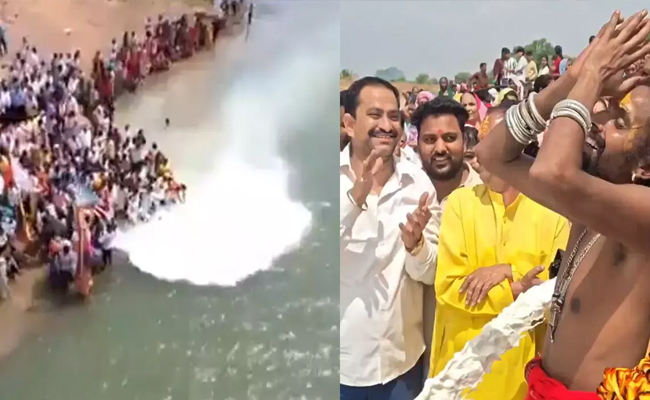
Sehore (PTI): Around 11,000 litres of milk were poured into Narmada river, often called the lifeline of Madhya Pradesh, in Sehore district on the culmination of a 21-day religious event as part of a sanctification ritual, prompting environmentalists to flag its negative impact on the ecosystem.
The event concluded at Satdev village in Bherunda area, located about 90 km from the district headquarters, with a 'mahayagna' on Wednesday.
The milk was offered to the river as part of rituals and prayers for the purity of the waters, the well-being of pilgrims and prosperity, organisers said.
The milk was brought in tankers to the riverbank and later poured into the flowing water amid chanting of mantras in the presence of a crowd of devotees.
However, environmentalists raised concerns over the practice, warning of its potential ecological impact.
"Such large quantities of organic matter can deplete dissolved oxygen in water, adversely affecting the river ecosystem. These impact local communities dependent on the river for drinking water and threaten aquatic life as well as domestic animals," noted environmentalist and wildlife activist Ajay Dube said.
Religious offerings should be symbolic and mindful, he asserted.
Renowned environmentalist Subhash Pandey said 11,000 litres of milk acts as a significant organic pollutant.
"It is highly oxygen-demanding and can lead to oxygen depletion, aquatic mortality, eutrophication (process of plants growing on river surface) and loss of potability. These effects are predictable from dairy-effluent chemistry and have been documented in similar incidents worldwide," Pandey pointed out.
Narmada originates at Amarkantak in the state and traverses 1,312 km westward to Maharashtra and Gujarat, emptying into the Arabian Sea via the Gulf of Cambay.
It is the largest west-flowing river in the peninsula, passing through a rift valley, and acts as a crucial water source for irrigation in MP, Gujarat and Maharashtra.