RG Kar case: Can't pass 'blanket orders' protecting doctors involved in protests, says SC
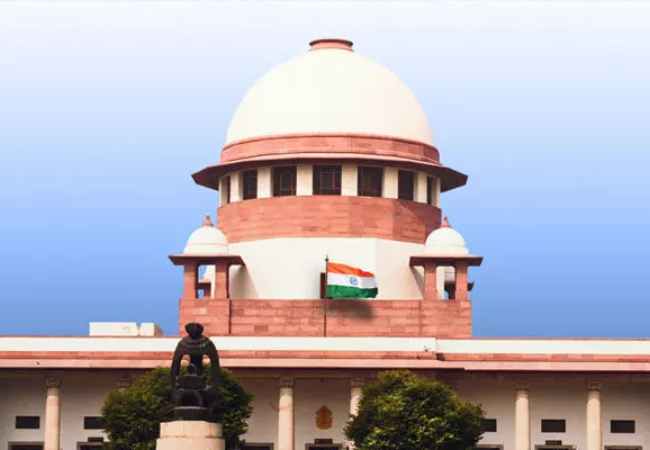
New Delhi (PTI): The Supreme Court on Wednesday said it cannot pass "blanket orders" protecting doctors involved in protests in the aftermath of the rape and murder of a trainee doctor at the RG Kar Medical College and Hospital in Kolkata.
A bench of Justices MM Sundresh and Satish Chandra Sharma said any order passed would amount to interference with the authority of the police.
Observing that the matter cannot be heard "piecemeal", the apex court said it was inclined to transfer the matter to the Calcutta High Court.
"We are grappling with so many things and there is no end to this. It is easier for the Calcutta High Court to monitor protests. Is it possible for us to monitor the protests in Kolkata sitting in Delhi?
"How can we pass blanket orders protecting doctors. The police has a right to call you," the bench observed orally.
The top court directed senior advocate Karuna Nundy, representing the Association of junior and senior doctors, to submit a table of matters pending before the Calcutta High Court.
During the hearing, Nundy submitted that protesting doctors were being harassed by the police and were called for interrogation repeatedly.
She sought directions from the apex court that protection be given to the doctors.
The matter will now be heard after winter vacations.
The body of the postgraduate trainee doctor was found in the hospital's seminar room on August 9 last year. Kolkata police arrested Sanjay Roy, a civic volunteer, the next day.
On January 20, a Kolkata trial court awarded convict Roy "life term imprisonment till death" in the case. The heinous crime triggered nationwide outrage and prolonged protests in West Bengal.
The apex court, even after the primary conviction, is monitoring multiple ancillary issues, including regularising the unauthorised absence of doctors.
While taking suo motu notice of the case, the bench constituted a National Task Force (NTF) on August 20 last year to formulate a protocol to ensure safety and security of medical professionals in the wake of the crime.
In November last year, the NTF in its report -- part of the Central government's affidavit -- said a separate central law to deal with offences against healthcare professionals was not required.
The panel said state laws had adequate provisions to address minor offences besides serious ones under the Bharatiya Nyaya Sanhita, 2023.
In a slew of recommendations, the NTF said 24 states had enacted laws to address violence against health care professionals while defining the terms "health care institutions" and "medical professionals".
Initially investigated by the Kolkata police, the case was transferred to the CBI on August 13 after the Calcutta High Court expressed dissatisfaction over the former's investigation.
The top court subsequently assumed oversight of the matter on August 19, 2024.
Let the Truth be known. If you read VB and like VB, please be a VB Supporter and Help us deliver the Truth to one and all.
Women's quota bill would have ensured defeat of democracy, Constitution: Aaditya Thackeray

Mumbai (PTI): Shiv Sena (UBT) leader Aaditya Thackeray on Saturday said that the passage of the women's quota bill would have ensured a "total defeat of democracy", alleging that the legislation, linked with a delimitation exercise, was a political tool designed to reduce the voice of states.
Thackeray, in a post on X, claimed that the Bill would have amended the Constitution for the political means of the ruling regime to increase seats, reduce the voice of many states and enable the gerrymandering of constituencies to ensure unfair victories.
"The very amendment that would have ensured the total defeat of democracy and the Constitution in India stands rejected by the unity of the Opposition MPs," he wrote.
The legislation should have been called "Delimitation to ensure unfair victory Bill", the former minister said, adding that there was a genuine need to enable 33 per cent reservation for women in the current number of seats.
"Now, it is up to the government to ensure that it is implemented in the 543 seats of the Lok Sabha for the 2029 elections and all elections across India, if that is the real intent of the government," he wrote.
A Constitution Amendment Bill to implement reservation for women in legislatures in 2029 and increase the number of Lok Sabha seats was defeated on Friday in the Lower House.
While 298 members voted in support of the Bill, 230 MPs voted against it. Out of 528 members who voted, the Bill required 352 votes for a two-thirds majority.
According to the Constitution Amendment Bill, Lok Sabha seats were to be increased to a maximum of 850 from the current 543 to "operationalise" the women's reservation law before the 2029 parliamentary polls, following a delimitation exercise based on the 2011 Census.