Right to Education example of affirmative action that transformed lives: Ex-CJI U U Lalit
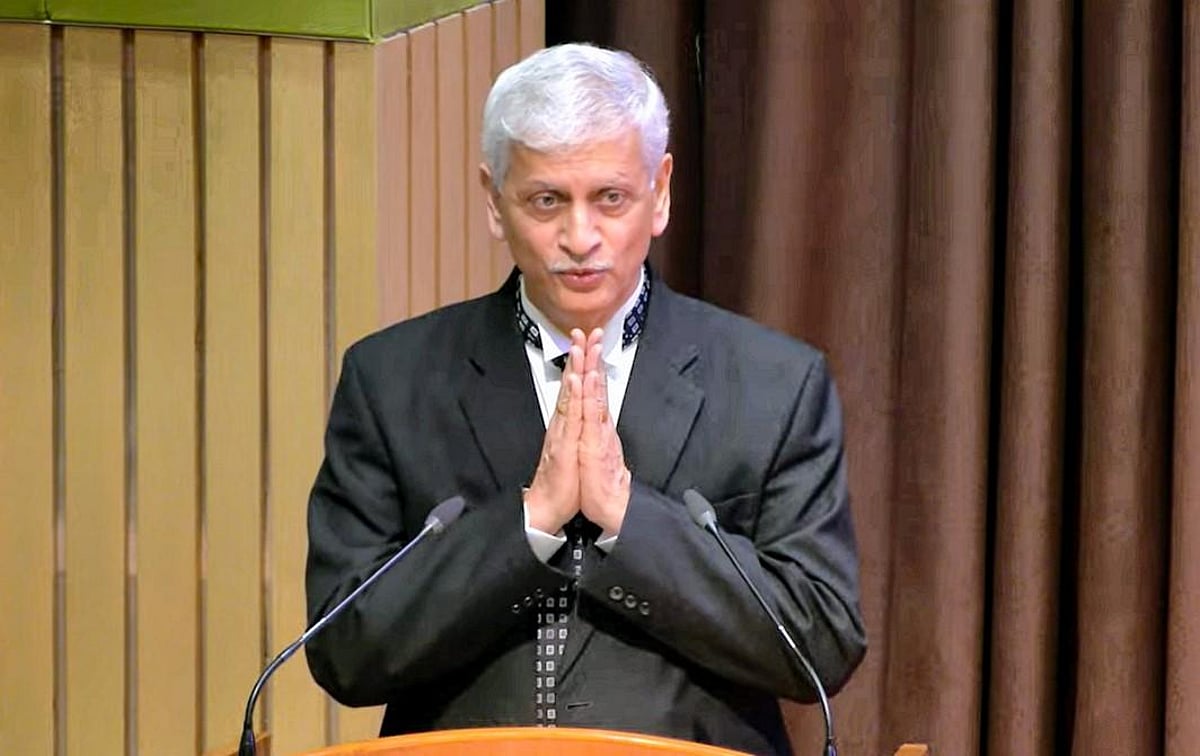
New Delhi (PTI): Former Chief Justice of India U U Lalit said the Right to Education, which has become a fundamental right, is an example of affirmative action that transformed the lives of citizens.
Speaking at an event on Saturday marking the release of the 100th episode of Rajya Sabha MP and senior advocate Kapil Sibal's online show 'Dil Se With Kapil Sibal', the former CJI commended Right to Education for its inclusive character.
"When we gained Independence, less than 18 per cent of the people of the country were literate. So the rate of literacy, which was just about 18 per cent, today stands ... at least 80 per cent; and this began with the Constitution," he said.
Lalit said the framers of the Constitution had two ideas: the first being the State, to the best of its ability within its economic capacity, was to extend to every citizen opportunities for improving education, and another was that the State shall endeavour to extend free and compulsory education to children below the age of 14 years.
In the Mohini Jain versus State of Karnataka case of 1992, that dealt with high capitation fees of a private medical institute, the top court held that right to education was an essential aspect of fundamental rights, he said.
Following this, the government introduced a bill in 1997 to make education a fundamental right of citizens till they attained the age of 14, the former CJI said.
"This, to my mind, is the solitary example where the judicature and the legislature played their role together. Otherwise, right from the First Amendment of the Constitution, there has always been a tussle between them," he added.
Lalit said the new government that assumed office in 1999 inserted Article 21A in the Constitution in 2002, making Right to Education a fundamental right for children in the age group of six to 14 years.
The Article said that every child in the age group of 6-14 would have the right to have complete and compulsory education in the manner determined by Parliament, he said. "Now that determination by Parliament comes only in 2009 by way of what is called the Right of Children to Free and Compulsory Education Act."
He said the Act was significant, having far-reaching consequences as it now included within its ambit private institutions and envisaged "an inclusive definition of education."
The former CJI said that after the Supreme Court's verdict of 1992, which was upheld by a larger bench in 1993, people benefited from the "affirmative action". "And that is why, according to me... it is singularly the most impactful decision by the Supreme Court."
"We keep hearing criticism that judges indulge in activism. Then this activism is at the highest level, where by interpretative process, you are now saying that hundreds of crores of the population are entitled to affirmative action, and yet there is not a single demur from any establishment," the former CJI said.
Sibal, in his address, underlined that information was at the heart of civilisational progress and that access to relevant data was a problem around the world.
"A society without information will be parched. Indeed, there will be no fertile ground for the grass to grow. And what ultimately, if you look at the march of civilisation, you realise it is all based on information.
"In the absence of information, there is no dialogue. In the absence of information, there is no progress. So information is at the heart of the progress of civilisation. Unfortunately, all those who block information are doing great injustice," Sibal said.
He said that unfortunately, solutions are scarce in the absence of access to data.
"So it is time for us to think about these issues. Because in the ultimate analysis, it is not about us, it is about our future; not even our future but the future of humanity," Sibal said.
Lalit released the 100th episode of the series, which was followed by a panel discussion between Sibal, former Supreme Court judge Justice Abhay S Oka, and film director-producer Mahesh Bhatt.
Let the Truth be known. If you read VB and like VB, please be a VB Supporter and Help us deliver the Truth to one and all.
Women’s Reservation Bill: K'taka CM accuses PM Modi of adopting 'double standard'
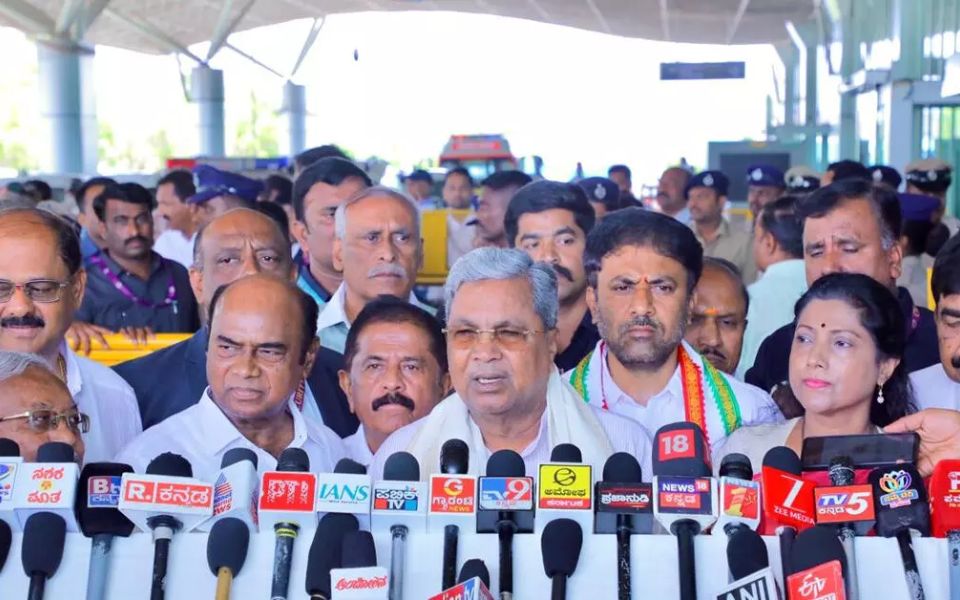
Mysuru (Karnataka) (PTI): Karnataka Chief Minister Siddaramaiah on Monday accused Prime Minister Narendra Modi of adopting a “double standard” on women’s reservation, alleging that the Centre had delayed implementation despite having the opportunity to act earlier.
Addressing reporters here, Siddaramaiah said the BJP and Modi had earlier opposed welfare guarantees and were now replicating them, while also questioning the timing and intent behind the women’s reservation move.
“That’s what I call double standards. Narendra Modi is not for social justice. If he was, this would have been done long ago. How many years has he been in power? It’s been 12 years. Why hasn’t it been done so far?” he asked.
The Chief Minister reiterated that the Congress had consistently supported women’s reservation and accused the Centre of "politicising" the issue.
“We spoke about women’s reservation. The Prime Minister asked me what our stand was. I said we are in favour of women’s reservation,” he said, referring to recent discussions with the PM.
He maintained that delimitation should only be carried out after a fresh Census to ensure equitable representation among states.
“In my view, delimitation should be done after a new census. That is why we opposed it. We have not opposed women’s reservation. We have always supported it,” he said.
Highlighting Congress’ past role, he said, “Who brought the 73rd and 74th amendments? Rajiv Gandhi and the Congress party. Those amendments ensured 50 per cent reservation for women in local bodies. Why would we oppose it?”
Siddaramaiah further questioned the union government’s delay in implementation. “Narendra Modi indulged in politics and got it passed in 2023. Why didn’t he implement it immediately? Then why did he wait so long? He could have implemented it immediately. If he is committed to women’s reservation, he should have implemented it,” he said.
On the linkage between delimitation and reservation, he asked, “Why did the Centre link it with delimitation? Why did it go for a constitutional amendment?” adding that such a move could disadvantage southern states that have successfully controlled population growth.
“Southern states have controlled population well, but northern states haven’t. Naturally, it benefits them and disadvantages us,” he said.
Responding to BJP’s criticism that women would “teach Congress a lesson,” Siddaramaiah said, “They are doing politics. If Modi had brought this earlier, who would have opposed women’s reservation?”
On electoral prospects elsewhere, he said he had no direct information on Tamil Nadu but was optimistic about ruling DMK's victory.
"According to the information I have, DMK and its alliance are likely to win,” while asserting that Kerala would also be won by the opposition.
In a major setback to the BJP-led Central government, a Constitution Amendment Bill to implement 33 per cent reservation for women in legislatures in 2029 and increase the number of Lok Sabha seats to 816 was defeated on Friday, with the ruling dispensation asserting that the struggle to give the rights to women will continue.
While 298 members voted in support of the bill in Lok Sabha, 230 MPs voted against it. Out of 528 members who voted, the bill required 352 votes for a two-third majority.
According to the Constitution (131st Amendment) Bill, Lok Sabha seats were to be increased to 816 from the current 543 to "operationalise" the women's reservation law before the 2029 parliamentary polls, following a delimitation exercise based on the 2011 Census.
Seats were also to be increased in state and Union territory assemblies to accommodate 33 per cent reservation for women.