Rights activists slam delay in releasing bodies of slain Maoists, call it ‘Dehumanising’
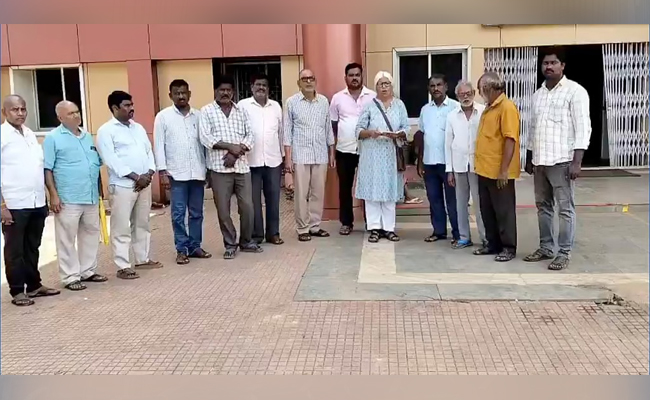
Hyderabad/Raipur: The Coordination Committee for Peace on Monday expressed grave concern over the continued withholding of the bodies of individuals killed in the May 21 anti-Maoist operation in Chhattisgarh's Abujhmarh region. Families of the deceased, hailing from Andhra Pradesh and Telangana, have reportedly been waiting for days to claim the remains of their loved ones, but without success.
In a strongly worded statement, the committee alleged that the delay constitutes a gross violation of constitutional, legal, and humanitarian obligations. Citing the assurance given by the Advocate General of Chhattisgarh before the Andhra Pradesh High Court on May 24 that post-mortems would be conducted and the bodies released, the committee accused the authorities of failing to honour their commitment.
The group also raised serious concerns about reports that the bodies have not been preserved in cold storage, leading to decomposition. It described the situation as a violation of medico-legal protocols and the right to dignity in death, adding that such treatment is “dehumanising and traumatic” for the grieving families.
Further controversy erupted when the Deputy Solicitor General, appearing for the Union of India in court, opposed handing over at least two bodies, citing possible "law and order" issues during funeral processions. The committee described this stance as "callous and constitutionally untenable," noting that the families had already assured the court of their willingness to comply with any conditions to ensure peaceful last rites.
"We find this obstruction to be not just an administrative lapse, but a deliberate affront to grief and human dignity," said the committee in its statement.
Reports have also surfaced of intimidation and harassment of family members, ambulance drivers, and volunteers who are helping in the process. The committee called such actions an “unconscionable abuse of state power.”
Quoting Article 21 of the Indian Constitution, the committee emphasized that the right to dignity extends even after death. The group referred to the landmark Supreme Court judgment in Pt. Parmanand Katara v. Union of India, which held that the right to life includes the right to a dignified treatment of the deceased.
The statement also highlighted India’s obligations under international humanitarian law, including:
- Article 130 of the Fourth Geneva Convention, which mandates honourable burial of the dead according to their religious rites;
Article 16 of the First Geneva Convention, which requires protection of the deceased from mistreatment;
and the 2005 UN Human Rights Commission resolution, which affirms the need for dignified handling of mortal remains.
Domestically, the National Human Rights Commission’s 2020 advisory on the dignity of the dead was also cited, which sets clear standards for timely and respectful handling of bodies.
The Coordination Committee for Peace issued the following demands:
- Immediate release of all bodies to the respective families.
- Cessation of harassment of families, ambulance drivers, and support personnel.
- Full implementation of constitutional and international obligations regarding the dignity of the dead.
- Adherence to legal protocols for handling bodies in counterinsurgency operations.
“Every human being deserves dignity in death,” the statement read. “The continued detention of these bodies is not only legally questionable but morally reprehensible.”
The statement was endorsed by several prominent figures, including Prof. G. Haragopal, Prof. G. Laxman, Dr. M.F. Gopinath, Kavita Srivastava, Kranti Chaitanya, and Meena Kandasamy.
Let the Truth be known. If you read VB and like VB, please be a VB Supporter and Help us deliver the Truth to one and all.
Two injuries, one DNF, a DQ as India end messy World Relays campaign
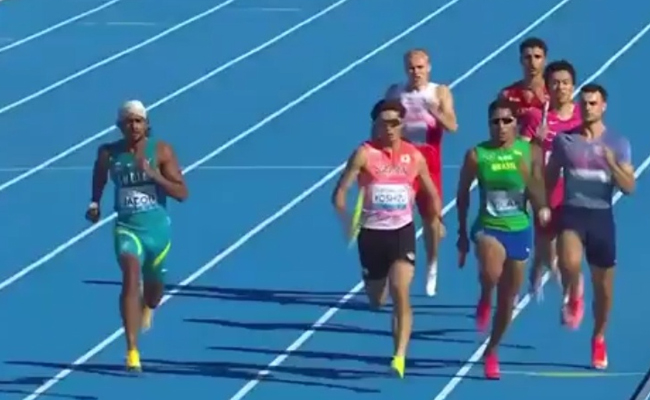
Gaborone (Botswana) (PTI): Amoj Jacob and Ragul Kumar got injured during the men's 4x400m and 4x100 races respectively as India ended their World Athletics Relays campaign in disappointment on the second day of competitions here on Sunday.
The Indian camp had high hopes of making the 2027 World Championships in the men's 4x400m relay but the team did not finish (DNF) the race as Jacob suffered cramps and pulled out of the race after taking the baton from the first leg runner Dharamveer Choudhary. Rajesh Ramesh and Vishal TK were to run in the third and fourth legs.
Those teams which could not qualify for the 2027 Beijing World Championships by reaching the final round of each of the six relay events on Saturday were given another chance in the second qualification round on Sunday.
The top two teams in each of the two heats (in all six relay events) booked the Beijing ticket on Sunday.
India will now have to try and qualify for the World Championships through the Top Lists of the World Athletics, which is a long and tedious process.
In the men's 4x100m race, third leg runner Ragul Kumar fell down the track after failing to hand over the baton inside the exchange zone to fourth leg runner Gurindervir Singh, which clearly showed the lack of coordination among the runners.
Harsh Santosh Raut and Animesh Kujur ran the first two legs.
The Indian quartet was disqualified and Kumar was seen being taken away from the Field of Play with the help of the volunteers.
It was a comedy of errors in the case of the women's 4x100m race, which saw the baton being dropped during an exchange between first leg runner Tamanna and second runner Nithya Gandhe, though the Indians finished the race in 53.09 seconds.
Gandhe started running quite a distance, but after realising that the baton was not in her hand, she turned and ran back to pick it up.
The only silver-lining for the Indian contingent was the national record time in the mixed 4x100m relay race, though the quartet of Ragul Kumar, Nithya Gandhe, Animesh Kujur and Sneha SS finished sixth in heat number two with a time of 41.35 seconds, bettering the previous national mark of 42.30 seconds set in March in Chandigarh.
The mixed 4x400m relay quartet of Theerthesh P Shetty, Kumari Saloni, Nihal William and Rashdeep Kaur ended at fifth in heat number one with a time of 3 minutes and 19.40 seconds.
On Saturday, all the five Indian relay teams had failed to make it to the respective final rounds and thus missed out on the 2027 World Championships berths.