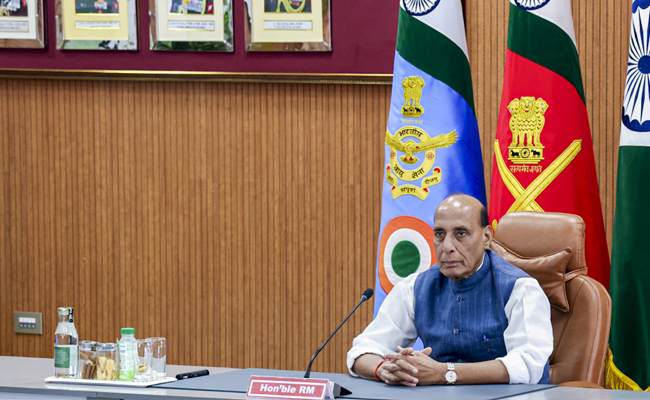
RSS Chief Mohan Bhagwat’s temple-mosque remarks face backlash from seers
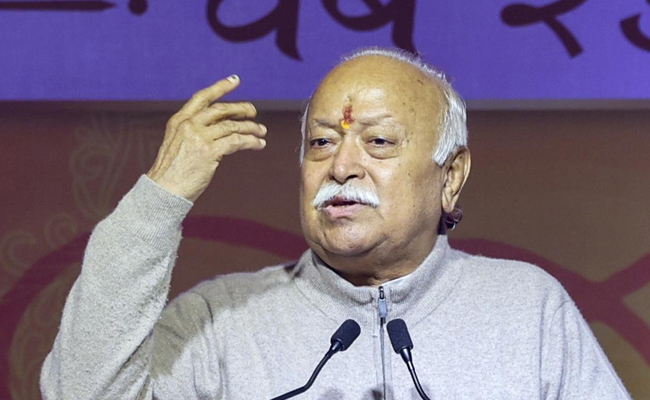
Lucknow: The Akhil Bharatiya Sant Samiti (AKSS), an organisation representing seers, has criticised Rashtriya Swayamsevak Sangh (RSS) chief Mohan Bhagwat for his recent statement cautioning against the rising trend of individuals seeking to become Hindu leaders by stirring temple-mosque disputes.
Swami Jitendranand Saraswati, general secretary of AKSS, asserted that such religious matters should be decided by dharmacharyas (religious leaders) rather than the RSS, which he described as a cultural organisation. "When it comes to religion, decisions must rest with religious gurus. Whatever they decide will be accepted by the Sangh and VHP," he said.
Saraswati noted that despite similar remarks by Bhagwat in the past, disputes surrounding temple structures at 56 sites have surfaced, indicating persistent interest in such issues. He added that religious organisations typically respond to public sentiments rather than political agendas.
This dissent marks a rare challenge to Bhagwat from within the saffron ecosystem. Religious leaders like Jagadguru Rambhadracharya have also voiced their disapproval, suggesting that the RSS should defer to spiritual figures on matters of faith. Analysts believe this reflects an ongoing struggle within the Hindu religious community over the RSS's influence in religious affairs.
Bhagwat’s comments came in response to legal petitions filed by Hindu groups seeking the demolition of mosques allegedly built on temple sites, including the Shahi Jama Masjid in Sambhal, Uttar Pradesh. He warned that exploiting such disputes to gain leadership within the Hindu community only fosters communal division.
Rambhadracharya, however, challenged Bhagwat’s authority, stating, "Mohan Bhagwat is not our disciplinarian; we are." He cited the recent unrest in Sambhal, where a temple-mosque dispute led to violence and five deaths, as evidence of the need for judicial and democratic processes to address these conflicts.
"The truth is coming to light in favour of Hindus. We will secure our interests through courts, the ballot, and public support,” Rambhadracharya further stated.
Let the Truth be known. If you read VB and like VB, please be a VB Supporter and Help us deliver the Truth to one and all.
Bengaluru jail introduces biometric tracking system for prisoners
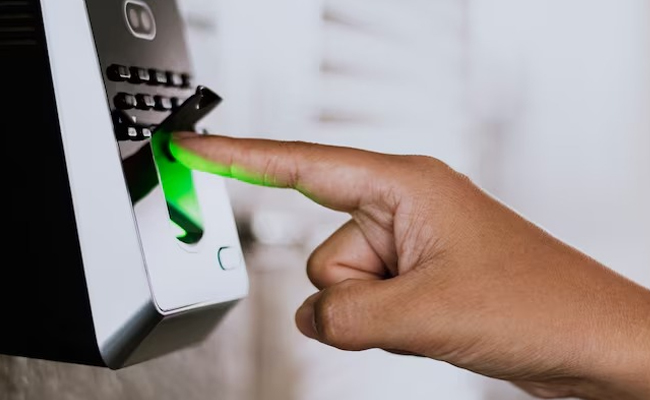
Bengaluru: In a bid to curb misconduct and illegal activities inside Parappana Agrahara Central Prison, prison authorities have introduced a new ‘Prisoners Tracking Movement System’ under which inmates will have to undergo biometric verification while entering every barrack.
According to jail officials, biometric systems have been installed across all major sections of the prison, including barracks, visitor rooms, hospital, canteen, kitchen, library, playground, handicraft units and bakery sections. Staff members have also been deployed at these locations.
Officials said inmates visiting the visitors’ room must now obtain a digital token after biometric verification. Details such as the prisoner’s name, identification number and entry time will be updated in the prison software system. This will help authorities maintain a complete digital record of inmates visiting and returning from meeting rooms.
Similar systems have also been introduced at entry points of the hospital, library and other barracks accessed for work-related purposes. Officials said the system will help identify prisoners involved in suspicious or illegal activities with other inmates and enable authorities to track how much time a prisoner spends at different locations inside the prison.
Authorities stated that AI-powered cameras were already being used inside the prison to monitor inmates as well as prison staff. Along with this, digital tracking of prisoner phone calls and a digital token system for visitor meetings have now been added to strengthen surveillance over inmate movement. Officials said the project has been implemented at a cost of around Rs 2.25 crore.
The prison department has also introduced a canteen usage tracking system to monitor prisoners’ spending patterns. Instead of direct cash payments, inmates can purchase bakery items and snacks using wallets or coupons issued within the prison system.
Officials said the digital system will record details including the buyer’s name, items purchased, quantity, date, time and remaining wallet balance. This will allow prison authorities to maintain complete expenditure records of inmates.