RSS has discarded chunks of Golwalkar’s thoughts: Mohan Bhagwat
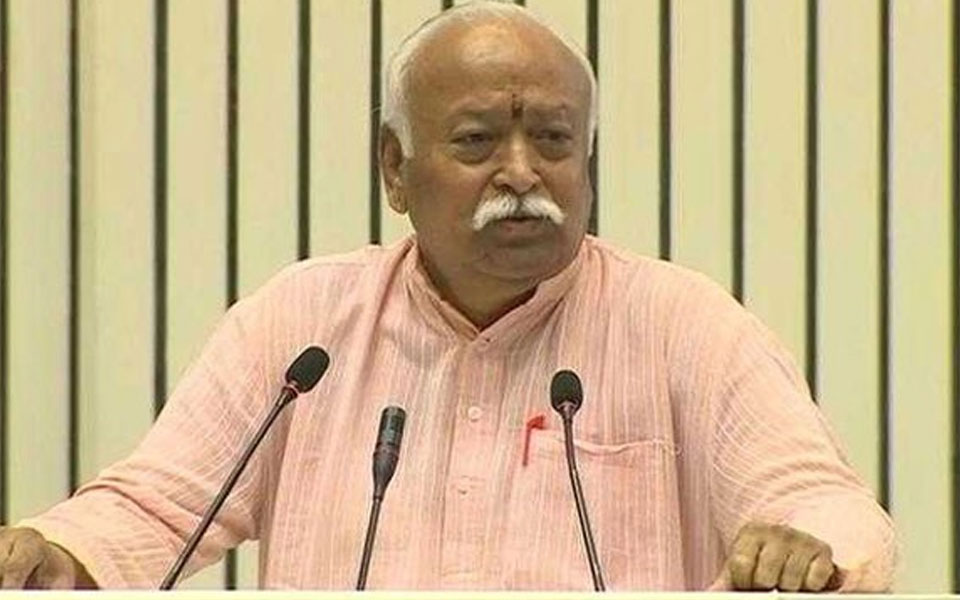
NEW DELHI: RSS chief Mohan Bhagwat + on Wednesday said that the saffron fountain-head has discarded chunks of “Bunch of Thoughts” — a compilation of speeches of its former head Guru M S Golwalkar — which was for long the lodestar for the organisation.
“Bunch of Thoughts joh paristithi vash boli gai, woh shashwat nahi rahti... Sangh band sangathan nahi hai, samay badalta hai, hamari soch badalti hai, badalne ki permission Dr Hedgewar se milti hai (Bunch of Thoughts is a collection of speeches made in a particular context and cannot be eternally valid. Sangh is not dogmatic. Times change and accordingly, our thoughts transform. Dr Hedgewar, RSS founder, said we were free to adapt to times as they change),” said Bhagwat.
He was replying to a question about the conflict between his statement that RSS doesn’t see Muslims as “unwanted” and Golwalkar’s views in “Bunch of Thoughts”, categorising the community along with Christians and Communists as “internal enemies”.
Bhagwat said the Sangh acknowledges as valid only those parts of “Bunch of Thoughts” which remain relevant to the current circumstances and have been put together in an in-house publication, “Guruji: Vision and Mission”.
Bhagwat’s statement on Golwarkar marks a big public shift in RSS’ stand. Though the Sangh would privately emphasise that “Bunch of Thoughts” was a compilation of speeches made by Golwalkar at different points in time and that the one about “internal enemies” was made in the immediate aftermath of Partition when a communist insurgency raged in Andhra Pradesh, they fought shy, given the continuing reverence for “Guruji”, of repudiating it. “This marks the beginning of a new discourse,” RSS-aligned academic Rakesh Sinha told TOI.
“Bhagwat ji has spelt out the new direction for the organisation to follow,” added Sinha, who was recently nominated to Rajya Sabha. In his concluding remarks at the three-day outreach, “Future of India: RSS perspective”, the RSS chief called upon all communities to come close to the Sangh to understand its working. “You need not believe all that I have said during the last three days but I believe firmly that once you understand the Sangh, you will want to be part of it.”
“We support reservation as the Constitution provides for it. Reservation should stay till those communities which get the benefits of reservation themselves decide they no longer need it. Reservation is meant to correct the inequalities that crept into our society over the last few centuries. It will take time to correct the situation and we must patiently wait for the right time-Reservation is not the problem, it is the politics of reservation that creates problems,” Bhagwat said answering questions on caste-based reservations.
courtesy : timesofindia.indiatimes.com
Let the Truth be known. If you read VB and like VB, please be a VB Supporter and Help us deliver the Truth to one and all.
Bhojshala case: Disputed structure built from remains of pre-existing temples, claims ASI
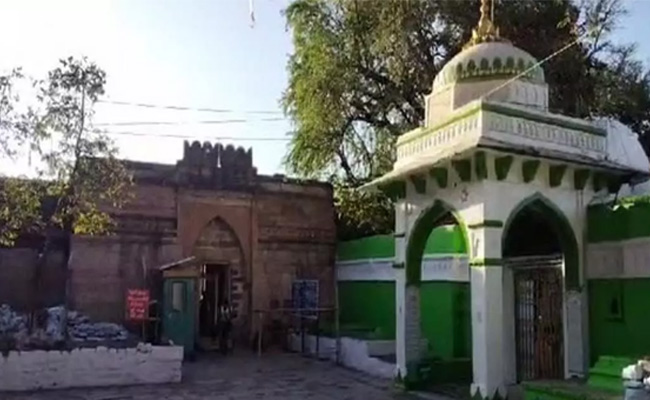
Indore (PTI): The ASI has told the Madhya Pradesh High Court that a massive structure dating back to the Paramara kings' rule existed at the disputed Bhojshala temple-Kamal Maula mosque complex, and the current structure was built from the remains of temples.
The Archaeological Survey of India (ASI) made the claim on Tuesday based on its 98-day scientific survey and over 2,000-page report.
The Hindu community considers Bhojshala a temple dedicated to Vagdevi (Goddess Saraswati), while the Muslim side claims the monument as the Kamal Maula Mosque. The disputed complex is protected by the ASI.
During the hearing before Justices Vijay Kumar Shukla and Alok Awasthi of the HC's Indore bench, Additional Solicitor General Sunil Kumar Jain, representing the ASI, presented a detailed account of the scientific survey conducted two years ago at the complex.
Referring to the ASI's survey report, he said, "Retrieved architectural remains, sculptural fragments, large slabs of inscriptions with literary texts, Nagakarnika inscriptions on pillars, etc, suggest that a large structure associated with literary and educational activities existed at the site. Based on scientific investigations and archaeological remains recovered during the investigations, this pre-existing structure can be dated to the Paramara period."
It can be said that the existing structure was made from the parts of earlier temples, based on scientific investigations, survey and archaeological excavations conducted, study and analysis of retrieved finds, study of architectural remains, sculptures, and inscriptions, art and sculptures, Jain said quoting the report.
Summarising the report, he also drew the court's attention to the fact that the archaeological study identifies that many architectural components, such as pillars and beams, were originally part of temple structures before being repurposed for a mosque.
"The evidence of this transition includes Sanskrit and Prakrit inscriptions that were damaged or hidden, alongside sculptures of deities and animals that were often mutilated or defaced," Jain contended.
The report also states that "all Sanskrit and Prakrit inscriptions are older than the Arabic and Persian inscriptions, indicating that users or engravers of the Sanskrit and Prakrit inscriptions occupied the place earlier".
In light of the Muslim side's earlier objections, the bench wanted to know why there were some discrepancies in the ASI's responses regarding the status of the disputed complex in the cases filed over the years.
The Additional Solicitor General argued that earlier studies of the complex involved only officials, while the current survey involved scientists and the use of advanced technologies such as Ground Penetrating Radar (GPR).
The hearing in the Bhojshala case will continue on Wednesday.
The high court has been regularly hearing four petitions and one writ appeal regarding the religious nature of the Bhojshala temple-Kamal Maula mosque complex since April 6.