Sachin Tendulkar, Virat Kohli, Amitabh Bachchan among 7,000 invited for Ram temple consecration
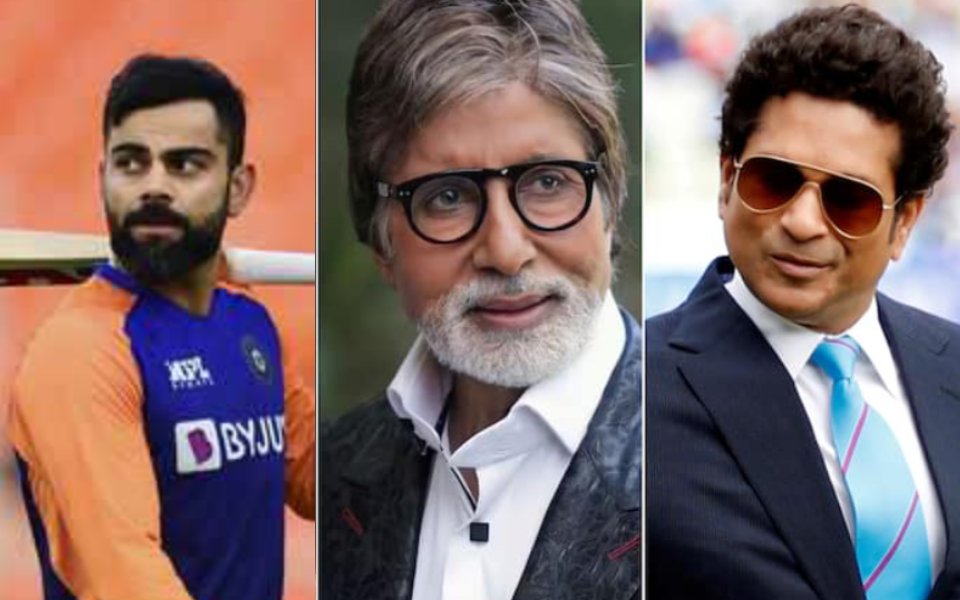
Ayodhya, Dec 6: The Ram temple trust has invited 7,000 people including cricket legends Sachin Tendulkar and Virat Kohli, Bollywood superstar Amitabh Bachchan, and billionaire industrialists Mukesh Ambani and Gautam Adani to the consecration ceremony at the Ram temple, sources said on Wednesday.
Actors Arun Govil and Dipika Chikhlia, who played the roles of Lord Ram in the famous TV serial "Ramayan", have also been invited to the ceremony that will be held on January 22, 2024.
Prime Minister Narendra Modi has already been invited.
The Shri Ram Janmabhoomi Teerth Kshetra Trust has sent invitations to 7,000 people, including 3,000 VVIPs, for the consecration. The families of kar sevaks killed in the police firing in Ayodhya will also be invited to the ceremony, the sources said.
Among the VVIPs are RSS chief Mohan Bhagwat, Yoga guru Ramdev, industrialists Mukesh Ambai, Ratan Tata and Gautam Adani, they said.
The trust has also invited 4,000 seers from across the country.
Shri Ram Janmabhoomi Teerth Kshetra Trust general secretary Champat Rai said, "Efforts are also being made to invite one representative each from 50 countries for the consecration ceremony."
"Family members of the 50 kar sevaks who lost their lives during the Ram temple movement have also been invited. Invitations have also been sent to judges, scientists, writers and poets," he said.
Besides, saints, priests, shankaracharyas, religious leaders, former civil servants, retired Army officers, lawyers, musicians and Padma Shri and Padma Bhushan awardees have been invited.
VHP spokesperson Sharad Sharma said, "We have also invited journalists who supported the Ram temple movement through their newspapers, writings and reporting. Without them, this struggle for the Ram temple would have been incomplete."
VVIPs will get entry through bar code passes.
"Out of the 7,000 invitees, about 4,000 will be religious leaders from across the country and the remaining 3,000 will be VVIPs from different areas. A registration link will be shared with the invitees ahead of the ceremony. Once they register, a bar code will be generated and it will serve as the entry pass," Sharma said.
Champat Rai, secretary of Shri Ram Janmabhoomi Teerth Kshetra Trust, said, "Ramlala will be seated in the Ram temple as a 5-year-old boy. For this, three idols are being carved from two rocks -- one each from Karnataka and Rajasthan."
"The idols are 90 per cent ready and are being given the final touches. The most attractive idol will be selected for the consecration," said Champat Rai.
Let the Truth be known. If you read VB and like VB, please be a VB Supporter and Help us deliver the Truth to one and all.
4 held for sexually assaulting woman, girl on moving bus after social media alert in UP's Agra

Agra (UP) (PTI): Four people were arrested, after a prompt response by police following a social media alert, for allegedly sexually assaulting a woman and a girl inside a moving bus here, officials said on Tuesday.
According to an official police statement, at 12:27 am on April 27, information was received on the social media platform X about an incident of sexual assault on a bus travelling from Kanpur to Ahmedabad, which was approaching Namner crossing in Agra.
Acting under the direction of Police Commissioner Deepak Kumar, the Agra Police social media team immediately alerted the Rakabganj police station within minutes and coordinated with the victims to confirm the incident and obtain the exact location, it stated.
Police teams launched intensive checking at Namner crossing and intercepted the bus as it reached the spot. The four accused involved in the incident were apprehended on the spot, and legal action was initiated against them, the statement said.
The police said the swift response and coordination between the social media team and field units ensured timely action, bringing relief to the victims and other passengers, who expressed gratitude towards the police, it added.