Savarkar was first proponent of two-nation theory: Bhupesh Baghel
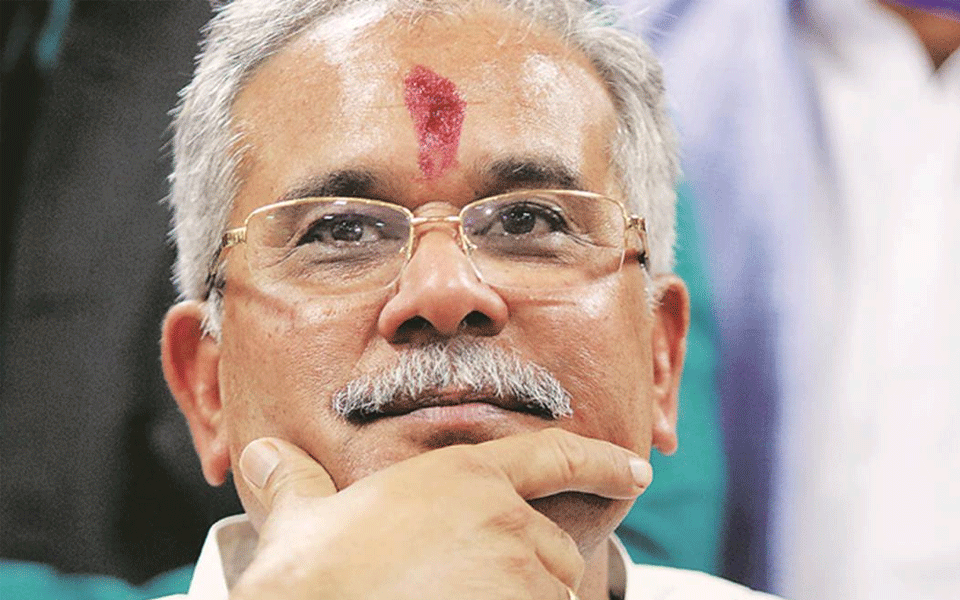
Raipur, May 27: Chhattisgarh Chief Minister Bhupesh Baghel Monday claimed Hindu Mahasabha leader Vinayak Damodar Savarkar had first sown the seed of the two-nation theory which was later taken forward by Muhammad Ali Jinnah, the late founder of Pakistan.
The Congress leader claimed efforts are being made to change Jawaharlal Nehru's idea of India and said the first Prime Minister started nuclear and space programmes and oversaw building of world-class institutions.
Addressing Congress leaders and workers at a function on Nehru's 55th death anniversary organised at the party's state headquarters 'Rajiv Bhawan' here, Baghel paid rich tribute to the first prime minister of the country and gave an account of works done by him.
"Savarkar, who was a leader of the Hindu Mahasabha, had sown the seed of division of the country which was later implemented by Muhammad Ali Jinnah," he said.
Later, talking to reporters on the sidelines of the programme, Baghel said, "It is a historical fact that in Hindu Mahasabha, Vinayak Damodar Savarkar had proposed that Hindustan should be independent as two nations.
"He had put forth the demand of two nations on religious ground and Muhammad Ali Jinnah implemented it. It is a fact and no one can prove it wrong."
Speaking at the function, Baghel said, "As soon as Nehru ji got the responsibility (of PM), he started AIIMS, nuclear programme, space programme to build the nation.
"Bhilai Steel Plant set up in our state is an example of his farsightedness to eliminate hunger and unemployment."
Baghel, who is also state Congress president, said Nehru was a true democrat.
"In a democratic system, the people's biggest strength is to ask questions. Nehru ji was its supporter but today you can't question the Prime Minister," the CM said in an apparent reference to Prime Minister Narendra Modi.
"Today, efforts are being made to change Nehru's India. Today, where we stand, the biggest credit for it goes to Nehru," Baghel added.
"When we read his 'Discovery of India', we get astonished because his book provides wealth of information on history, geography, arts and culture.
"Nehru ji had written that the bigotry in any manner is harmful for the country," Baghel said.
He said the legendary leader was against obscurantism and narrow nationalism.
"Nehru ji never projected hollow and irrelevant things. He believed in nationalism but not in narrow nationalism," the Chief Minister said.
Reacting to his remarks, former Chief Minister and BJP vice-president Raman Singh said Baghel should re-read history to gain a better understanding of the subject.
"He (Baghel) should read history once again. He should have better understanding of history. Debate on division and background of division of the country is not required today.
"He should not speak more with limited knowledge, Singh told reporters when asked about his successor's remarks.
Singh said, "The comments came as a result of shock over his party's debacle in the Lok Sabha polls."
Of the 11 Lok Sabha seats in the state, the BJP has won nine, while the Congress got just two.
The Congress came to power in Chhattisgarh in December last after a massive victory in the assembly polls, ending the 15-year-old rule of the BJP.
Let the Truth be known. If you read VB and like VB, please be a VB Supporter and Help us deliver the Truth to one and all.
Bihar: Over 150 children fall ill after consuming 'mid-day meal' in Saharsa
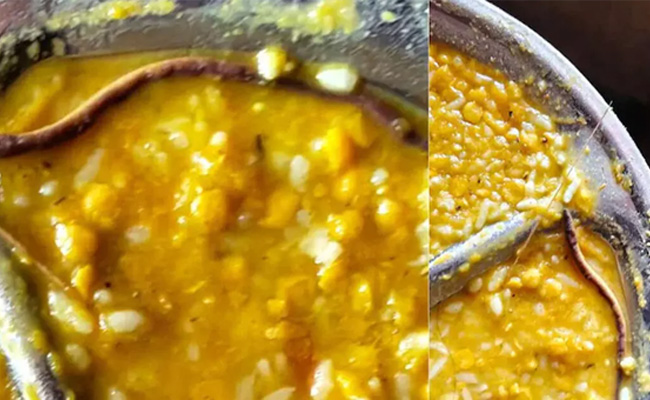
Saharsa (PTI): More than 150 children were taken ill after allegedly consuming food that was part of the mid-day meal in a school in Bihar’s Saharsa district, a senior official said on Thursday.
The incident occurred at a middle school in Baluaha village of the district.
The official said that 115 children were undergoing treatment at the Sadar Hospital, while around 50 students were admitted to Mahishi Public Health Centre.
“We received information that several children fell ill after consuming the mid-day meal in Baluaha. The children were initially treated at the primary health centre, but later, many were referred to the Sadar Hospital,” Saharsa District Magistrate Deepesh Kumar told reporters.
“According to doctors, the health condition of the children has improved, but they will be kept under observation for some time. There is no need to panic. Some kids are having mild fever. They are being treated accordingly,” Kumar said.
Meanwhile, family members of some children claimed that a snake was found in the container in which cooked pulses was stored at the school.
Of the 545 students present in the school, 200 had already eaten their meals by the time the snake was spotted, and later complained of stomach ache and vomiting, they said.
Regarding the claims, the DM said food samples have been collected from the school.
“We will be able to comment on this only after the results of the tested samples arrive,” he said.