SC asks Karur stampede victim's family to approach CBI with allegation of political pressure
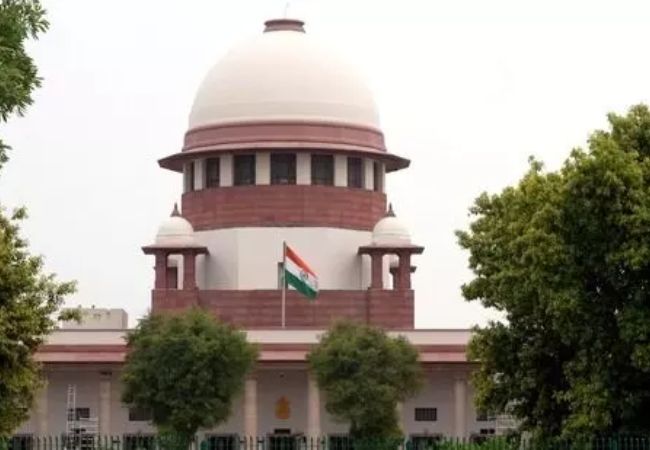
New Delhi (PTI): The Supreme Court asked a Karur stampede victim's family on Thursday to approach the CBI with its allegation that it was threatened by officials.
A bench of Justices J K Maheshwari and Vijay Bishnoi took note of the submissions made by the lawyer appearing in the court on behalf of the family.
"It is contended that the petitioner has been threatened and cajoled by the officials of the State. However, in this regard, it suffices to say that the petitioner may apply to the Central Bureau of Investigation.
"Except to say the same, at present, no further orders are required to be passed on the interlocutory applications," the bench said.
The court on October 13 ordered a CBI probe into the Karur stampede, in which 41 people were killed, saying the incident has shaken the national conscience and deserves a fair and impartial investigation.
In its order on a plea moved by actor-politician Vijay's Tamilaga Vettri Kazhagam (TVK) for an independent probe, the Supreme Court also set up a three-member supervisory committee headed by former apex court judge Ajay Rastogi to monitor the CBI investigation.
Suspending the directions for the appointment of a Special Investigation Team (SIT) and a one-man enquiry commission, the court asked the Tamil Nadu government to fully cooperate with the officers of the central agency. It also criticised Justice N Senthilkumar of the Madras High Court for entertaining petitions on the incident, ordering an SIT probe and making observations against the TVK and its members, without making them a party to the case.
The top court had said the Karur stampede, which occurred during a TVK rally on September 27, has left an imprint in the minds of people throughout the country.
It said the incident has wide ramifications with respect to the lives of the citizens and enforcing the fundamental rights of the families who lost their kith and kin is of utmost importance.
The court took note of the political undertone of the case and said "without having regard to the gravity of the incident", comments have been made before the media by top police officers, which may create a doubt in the minds of the citizenry on impartiality and a fair investigation.
Earlier, police said the rally saw a turnout of 27,000, nearly three times the expected number of 10,000 participants, and blamed a seven-hour delay on Vijay's part in reaching the venue for the tragedy.
Let the Truth be known. If you read VB and like VB, please be a VB Supporter and Help us deliver the Truth to one and all.
Annpurna Devi expresses anguish over girl's rape in TN, urges NCW to act
New Delhi (PTI): Union Minister for Women and Child Development Annpurna Devi on Tuesday expressed her anguish over the alleged gang rape of a girl in Tamil Nadu and urged the National Commission for Women to take immediate cognisance of the matter.
In a post on X, Devi said, "Deeply anguished by this horrific incident. I urge the NCW to take immediate cognisance and act swiftly in coordination with the concerned authorities to ensure the strictest action against all culprits."
Devi said, "Justice must be swift and unsparing — the accused must be brought to book without delay," adding, "the safety, dignity, and justice of every daughter of India remain our highest priority."
"We stand firmly with the survivor and her family in this difficult hour," she said.
Reacting to a post by former Tamil Nadu BJP president K Annamalai, who flagged concerns over the law and order situation in the state, Devi said such incidents "expose grave concerns" under the Dravida Munnetra Kazhagam government.
Annamalai, in his post, alleged that a 15-year-old girl from Kanchipuram, who had come to participate in a temple festival near Seyyaru in Tiruvannamalai district, was gangraped.
He said the incident was "deeply shocking and enraging" to him and alleged that such crimes point to a "complete failure" of law and order in Tamil Nadu.
Annamalai demanded immediate arrest of all those involved and the "harshest punishments" for the accused.
He also called for full protection and mental health counselling for the survivor and her family.