SC bans NCERT book over chapter on judiciary corruption, orders copies' seizure, digital takedown
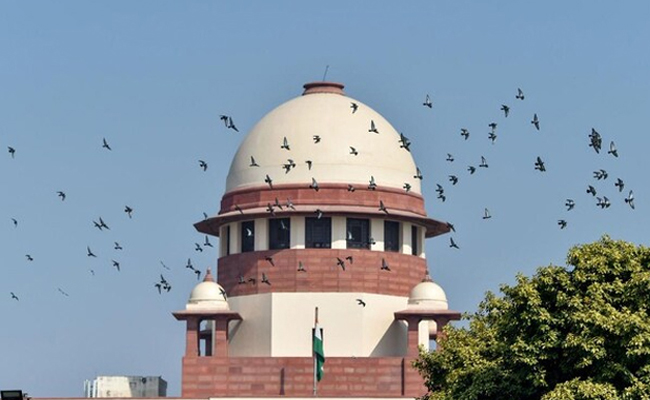
New Delhi (PTI): The Supreme Court on Thursday imposed a blanket ban on class 8 NCERT book carrying a chapter on corruption in the judiciary, and ordered a seizure of all physical copies, along with takedown of its digital forms.
The apex court ordered that the Centre and state authorities comply with its directions immediately, and warned of "serious action" if directions are defied in any form.
The top court issued show cause notices to NCERT director, school education secretary to explain why action should be not taken against those responsible.
ALSO READ: Chapter on 'judicial corruption': NCERT apologises, Class 8 textbook to be rewritten
A bench headed by Chief Justice Surya Kant said there seemed to be a calculated move to undermine institution and demean dignity of judiciary.
The bench said such misconduct, having everlasting impact on judiciary, would fall within definition of criminal contempt.
"We would like to have a deeper probe," the bench said.
The court said that if allowed to go unchecked, this will erode people's faith in judiciary. "No one will be allowed to go scot-free."
The CJI said, "It is my duty as the head of the institution to find out who is responsible; heads must roll."
CJI Surya Kant said there appears to be a deep-rooted, well planned conspiracy to defame the judiciary.
Taking exception to the NCERT's Wednesday communication, the SC said there was not a single word of apology in it, and instead, they have tried to justified it.
At the outset, Solicitor General Tushar Mehta tendered an unconditional and unqualified apology on behalf of Ministry of education.
The bench posted the mater for further hearing on march 11.
Let the Truth be known. If you read VB and like VB, please be a VB Supporter and Help us deliver the Truth to one and all.
‘Self-styled Vishwaguru stands exposed’: Cong's dig at PM over Pak role in US-Iran ceasefire
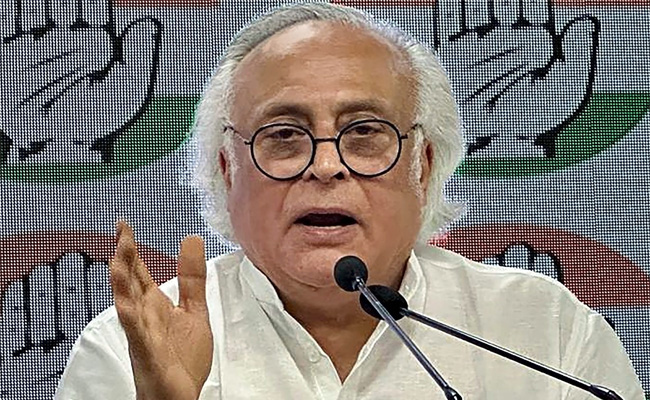
New Delhi (PTI): Taking a swipe at the government, the Congress on Wednesday said the role played by Pakistan in bringing about the ceasefire between the US and Iran is a “severe setback” to Prime Minister Narendra Modi's “highly personalised diplomacy” and “the self-styled Vishwaguru stands thoroughly exposed”.
The opposition party also said Prime Minister Modi's “cowardice is demonstrated by his silence not only on Israel’s belligerence, but on the completely unacceptable and disgraceful language being used by his good friend in the White House”.
Congress general secretary in-charge communications Jairam Ramesh said the entire world will cautiously welcome the two-week ceasefire in the West Asia conflict between the US and Israel on the one side and Iran on the other.
“The conflict had begun on February 28th with the targeted assassinations of the topmost echelons of the regime in Iran. These had started just two days after Prime Minister Modi had completed his much-trumpeted visit to Israel, a visit that diminished India’s global stature and standing,” Ramesh claimed.
PM Modi had said nothing about Israel’s "genocide" in Gaza and its aggressively expansionist policies in the occupied West Bank, Ramesh said.
“The role played by Pakistan in bringing about the ceasefire is a severe setback to both the substance and style of Mr Modi’s highly personalised diplomacy,” he said.
The policy to isolate Pakistan for its continuing support to terrorism in Jammu and Kashmir and to convince the world that it is a failed state has clearly not succeeded – unlike what Manmohan Singh had accomplished after the Mumbai terror attacks, Ramesh claimed.
That a bankrupt economy dependent entirely on the largesse of external donors and a broken country in so many ways was able to play such a role calls into question Modi’s strategy of engagement and narrative management, he said.
“He (Modi) or his team has also never explained why Op Sindoor was suddenly and abruptly halted on May 10th 2025 - the first announcement of which came from the US Secretary of State and for which the US President has claimed credit almost a hundred times since then,” the Congress leader said.
“There is a palpable sigh of relief everywhere. The External Affairs Minister (S Jaishankar) dismissed Pakistan as a dalal. But now the self-styled Vishwaguru stands thoroughly exposed, his self-declared 56-inch chest shrunk and shrivelled,” Ramesh said.
“His cowardice is demonstrated by his silence not only on Israel’s belligerence, but on the completely unacceptable and disgraceful language being used by his good friend in the White House,” the Congress leader added.
US President Donald Trump pulled back on his threats to launch devastating strikes on Iran late Tuesday, as the US and Iran agreed to a two-week ceasefire that includes the reopening of the Strait of Hormuz.
Trump swerved to de-escalate the war less than two hours before the deadline he set for Tehran to capitulate to a deal or face attacks on its bridges and power plants meant to destroy the Iranian civilisation.
Trump made the dramatic announcement on Truth Social on Tuesday evening (US time) even as Democrats called for his removal over unhinged threats to wipe out the Iranian civilisation.
"Based on conversations with Prime Minister Shehbaz Sharif and Field Marshal Asim Munir, of Pakistan, and wherein they requested that I hold off the destructive force being sent tonight to Iran, subject to the Islamic Republic of Iran agreeing to the COMPLETE, IMMEDIATE, and SAFE OPENING of the Strait of Hormuz," the US President said in a social media post.
Iran's Supreme National Security Council said it has accepted the ceasefire and that it would negotiate with the United States in Pakistan beginning Friday. Neither Iran nor the United States said when the ceasefire would begin, and attacks took place in Israel, Iran and across the Gulf region early Wednesday.
Israel backed the US ceasefire with Iran but the deal doesn't cover fighting against Hezbollah in Lebanon, Prime Minister Benjamin Netanyahu said early Wednesday.