SC concerned over misuse of POCSO cases, says awareness needed
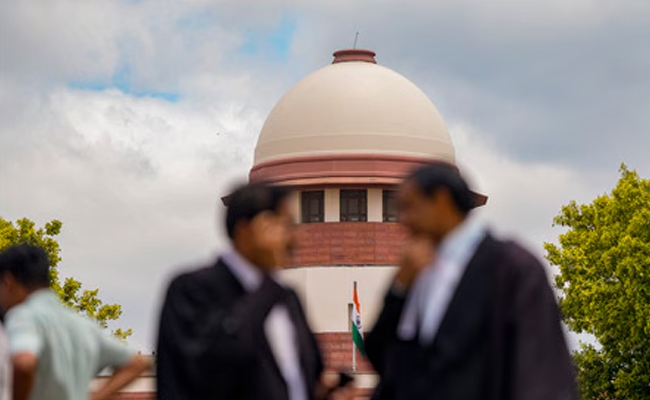
New Delhi (PTI): The POCSO act is being being misused in cases of marital discord and consensual relationships between adolescents, the Supreme Court said on Tuesday while stressing the need to spread awareness in boys and men about its legal provisions.
A bench of Justices B V Nagarathna and R Mahadevan was hearing a PIL seeking directions to sensitise people about the penal provisions for rape and the Protection of Children from Sexual Offences (POCSO) Act to make the country a better place for girls and women.
"One thing, we would like to remark. POCSO Act is being misused in cases of marital discords and matters pertaining to consensual relationships between adolescents. We should spread awareness in boys and men about the legal provisions," the bench remarked orally.
The apex court adjourned the PIL to December 2 and noted that some states and union territories had not filed a response in the matter.
The apex court had earlier issued notices to the Centre, the Union ministries of Education and Information and Broadcasting and the Central Board of Film Certification (CBFC) on the plea filed by senior advocate Aabad Harshad Ponda.
Ponda said there is need to inform people about the laws regarding rape and the change in such laws after the Nirbhaya case.
The plea seeks several measures, including directing the education ministry to ask all educational institutions providing free and compulsory education to children aged up to 14 years to incorporate the penal provisions regarding offences against women and children.
The subject of moral training also has to be included to ensure awareness about sexual equality, the rights of women and girls and their freedom to live with dignity, it says.
"Particularly, endeavours are required to be made to change the mindset of the boys in this country, an exercise that must start at the level of school," it states.
According to it, there should be similar directions to the Information and Broadcasting ministry, CBFC and other broadcasting authorities to highlight the awareness of the folly of committing rape and its punishments and educating the public about the POCSO Act.
Let the Truth be known. If you read VB and like VB, please be a VB Supporter and Help us deliver the Truth to one and all.
Madhu Kishwar booked over misleading content on social media

Chandigarh (PTI): Madhu Kishwar has been booked following a complaint by a Chandigarh resident over the alleged circulation of forged and misleading content on social media.
An FIR has been lodged against Kishwar and some other social media users under relevant sections, including 196 (criminalises acts that promote enmity, hatred, or ill-will between groups based on religion, race, language), 336 (1) (forgery) and 356 (criminal defamation) of Bharatiya Nyaya Sanhita and the IT Act at Police Station Sector-26 here.
According to an official statement issued by the Chandigarh police on Monday, a city-based complainant on April 19 alleged that some forged and misleading social media posts and video clips with obscene text and content were being circulated by various social media users, misidentifying the person in the video.
Further investigation into the matter is underway.
As per the complainant, it is a deliberate act of creating a false electronic record using obscene words and phrases, having knowledge and sufficient reason to believe that the posts are misleading and false, with the intent to cause damage or injury.
The video, which circulated with the intent to cause harm to the reputation of a constitutional authority and to disturb public peace and tranquility, should be investigated, and appropriate action should be taken, according to the complainant.
As per the complainant, the person seen in the video is a travel vlogger whose wife regularly posts updates about their activities on social media. The original video was shared from her social media account.
"As per the statement of the woman, she disclosed that the person in the video shared from her account is her husband. Statements of her husband and another lady in the video have also been recorded during preliminary investigation," said police in the statement.
Meanwhile, Kishwar, in a social media post, said a team of Chandigarh police had visited her late Monday night to serve her notice regarding the FIR registered against her.
"Since the law forbids the police to visit or arrest women after dark and before sunrise, I spoke on phone to the leader of the delegation. She told me that their team has come to serve notice regarding an FIR registered against me in Chandigarh. I insisted that they go by the law and come in the morning," she wrote on X.